Humanity Amid Chaos
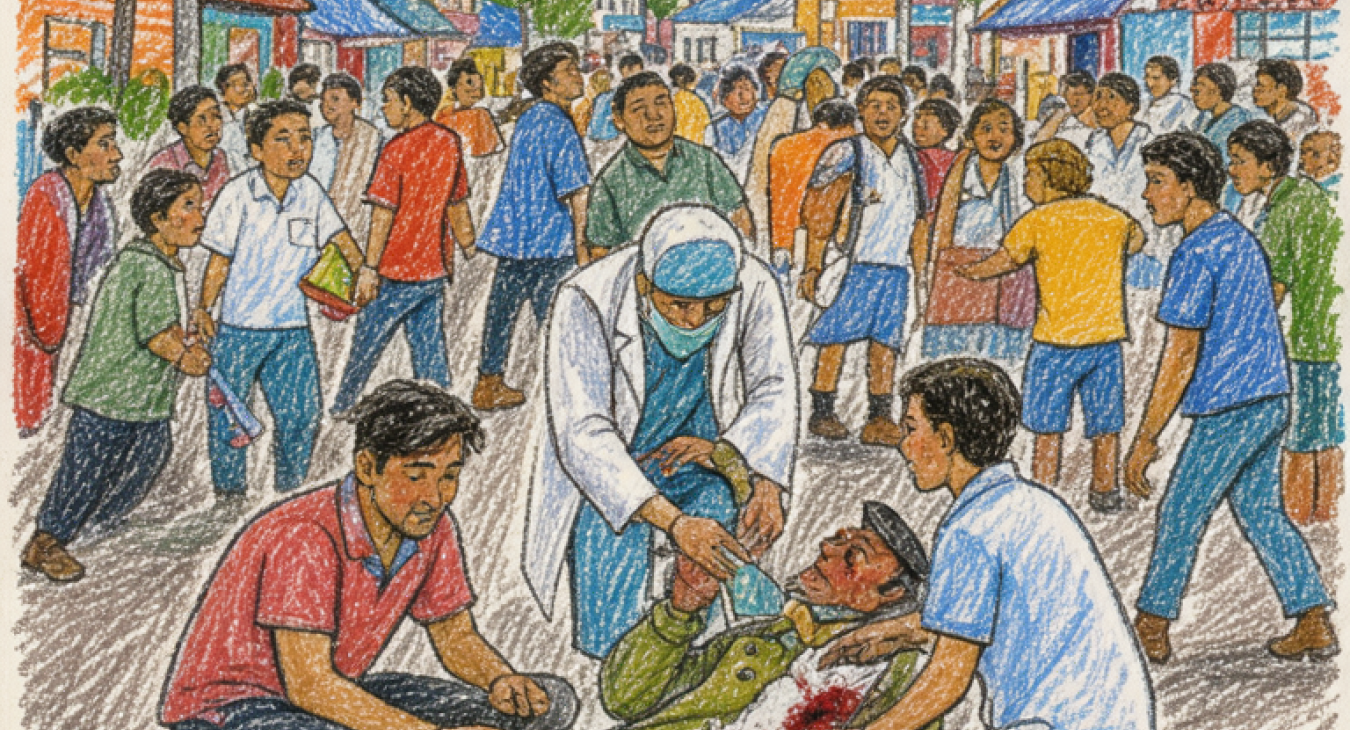
When violence erupted in the streets of Krakow, it was not only law enforcement or security forces that defined the immediate response. Instead, stories of courage and compassion surfaced, revealing the often-overlooked roles of medical professionals, first responders, and volunteers who stepped forward without hesitation. Among them was a surgeon, caught in an ordinary moment of having lunch nearby, who found himself thrust into extraordinary circumstances. His swift intervention, alongside colleagues and passersby, was vital in saving a wounded officer’s life.
Such acts highlight a facet of these tragedies that often goes unrecognized: the shared humanity that binds those who suffer and those who aid, regardless of the broader political narrative or the attackers' motivations. Medical teams prioritized care without bias, demonstrating the ethical commitment to heal all, even the assailant.
Challenging the Dominant Narrative
Initial news reports and official statements have focused heavily on the perpetrator’s far-right ideology and the security implications of the attack. While these elements are undeniably part of the story, framing the event primarily through this lens can obscure other essential perspectives. Understanding the attack demands a broader scope—one that accounts for the multifaceted human responses and the complexity of societal reactions.
The fixation on the attacker’s political stance risks reducing the incident to a simple case of ideological violence. But the reality involves more than labels or security breakdowns. It includes the courageous actions of individuals who faced immediate danger yet chose to help others, whether they were victims, bystanders, or even the shooter when medical attention was required.
Medical Neutrality in a Politically Charged Moment
The commitment of doctors to treat the wounded, including the attacker, underscores a principle long upheld in medical ethics: care without prejudice. This neutrality preserves the dignity of human life irrespective of any social or political context. It also challenges the simplistic dichotomy of 'good versus evil' often drawn in media portrayals.
In the tense atmosphere following such violence, medical professionals operated under immense pressure. Their work reflects not only technical expertise but also moral clarity. Treating the injured attacker alongside victims calls attention to the universality of medical ethics amidst conflict and political tension.
Voices Often Overlooked
In focusing largely on the attacker’s ideology and the security response, many reports leave out the experiences of ordinary citizens who acted with bravery. Volunteers provided first aid, directed ambulances, and comforted those in shock, even while the threat persisted. These spontaneous acts of solidarity form a critical counterpoint to narratives centered on division and hatred.
The surgeon’s story is just one example. Others include paramedics entering dangerous zones, shopkeepers offering refuge, and bystanders forming human shields. Their common thread is an instinct to protect and heal, emphasizing connections that transcend political divides.
Historical and Social Context
Violent incidents linked to extremist ideologies are not new in Europe, nor are they isolated phenomena. Political polarization and social tensions have been rising for years, fueled by economic challenges, migration debates, and cultural anxieties. Yet, these factors do not fully explain or justify the violence itself.
Understanding the psychological and social underpinnings of such attacks requires careful study. Issues like social alienation, mental health struggles, and exposure to radicalizing influences often intertwine. A measured examination avoids excusing the actions but can provide insight necessary for prevention and healing.
Questioning Assumptions
Authorities and media outlets often rush to identify motives in the immediate aftermath, sometimes drawing conclusions before thorough investigations conclude. While it is essential to analyze ideology and intent, premature assertions risk oversimplifying complex realities and stigmatizing entire communities.
Recognizing this helps maintain a balanced perspective, keeping public discourse grounded in facts rather than speculation. It encourages patience until clearer understanding emerges, allowing responses to be guided by evidence and empathy.
Acts of Bravery Beyond the Headlines
The focus on security measures and political fallout can overshadow the quiet heroism that played out on the ground. Those moments—first responders attending to the wounded under fire, civilians offering aid despite fear—represent a different kind of resilience. Their stories underscore a collective refusal to be defined solely by violence or hatred.
Such courage also has lasting effects. It fosters community bonds, builds trust in institutions, and inspires others to act with compassion in difficult times. These acts, though less visible, offer vital lessons about human strength and cooperation.
Looking Forward with Compassion
Ultimately, the episode in Krakow is a harsh reminder of societal fractures and the dangers of extremism. Yet, it also serves as a testament to humanity’s capacity for kindness in the face of danger. When a surgeon, simply taking lunch, becomes a lifeline for a wounded officer, it symbolizes hope beyond division.
In moving past fear and sensationalism, the public can embrace a narrative that celebrates solidarity and shared responsibility. Such a perspective encourages healing rather than further polarization, helping societies navigate complex challenges together.
The true story emerging from Krakow is not just about violence or ideology, but about people—ordinary and extraordinary—who acted with bravery and care. Their example reminds us that in moments of crisis, compassion remains the most powerful force available.