The Weight of Silence
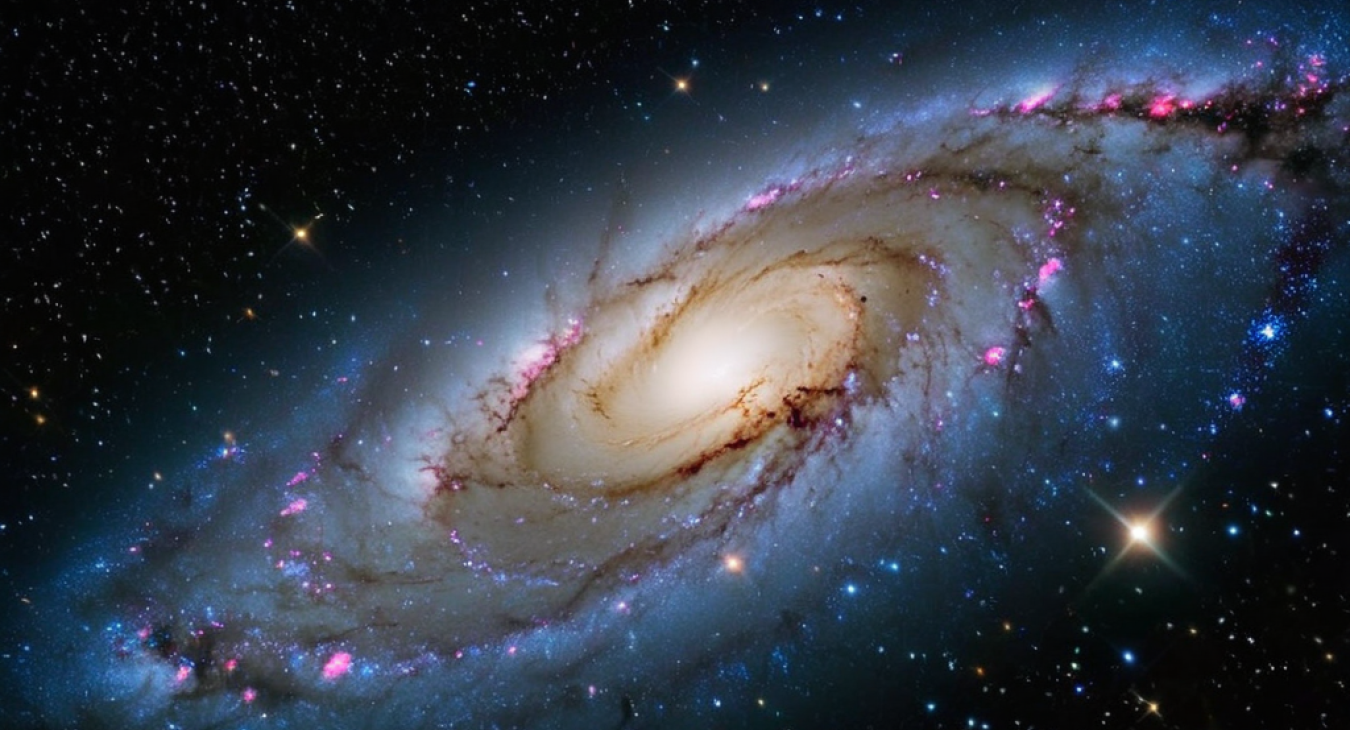
When astronomers first looked at the rotation curves of spiral galaxies, the numbers refused to make sense. According to the laws of gravity we had spent centuries refining, the stars at the outer edges of galaxies should move much slower than those near the center. Instead, they race around the galactic core with a speed that suggests they are being held in place by a massive, invisible hand. This discrepancy suggests that something else is providing the gravitational glue to keep these massive structures from flying apart. We call this something "dark matter." It does not emit, absorb, or reflect light. It simply exists, exerting a gravitational pull that shapes the very architecture of the cosmos.
For decades, the scientific community has operated under a specific mandate: find the particle. The prevailing logic dictates that if we observe a gravitational effect that cannot be explained by visible matter, there must be an undetected physical object causing it. This hunt has focused on candidates like Weakly Interacting Massive Particles (WIMPs) or axions. We have built massive detectors deep underground, shielded by kilometers of rock to catch a single, rare collision between a dark matter particle and an atomic nucleus. Yet, the detectors remain silent. The particles we expect to find simply do not show up.
The Trap of Materialist Logic
Our persistence in this search reveals more about our cognitive habits than it does about the composition of the universe. We suffer from a deep-seated materialist bias. This is the assumption that every effect in the physical world must stem from a discrete, tangible piece of matter. If the math shows a deficit in mass, we assume the matter is merely hidden, rather than considering that our fundamental understanding of how mass relates to space might be flawed. We treat the universe like a ledger that must always balance with physical coins, and when the numbers don't add up, we assume someone just tucked some cash into a secret drawer.
This approach might be a form of intellectual stubbornness. By insisting that dark matter must be a particle, we might be ignoring a much more profound possibility. We are trying to fix a broken map by adding more ink, rather than questioning the geometry of the paper itself. If we cannot find the particle, we are forced to face a much more unsettling prospect: our most successful theories of gravity might only be local approximations of something far more complex.
Gravity as an Emergent Property
Some theorists suggest we should stop looking for a new substance and start looking at the nature of gravity itself. In the framework of complexity theory, what we perceive as a fundamental force might actually be an emergent property. Think of temperature. A single molecule does not have a temperature; temperature is a statistical result of how many molecules move and collide. It is a macroscopic phenomenon arising from microscopic chaos. It is possible that gravity behaves in a similar way. It might not be a basic pillar of reality, but a byproduct of deeper, more intricate structures of information or quantum entanglement.
If gravity is emergent, the "missing mass" isn't missing at all. The extra pull we see in galaxies wouldn't be caused by invisible particles, but by the way information is organized across the fabric of spacetime. This shift moves the problem from particle physics to information theory. It asks us to consider if the geometry of the universe is dictated by how data is distributed, rather than how much stuff is sitting in a particular spot. This would mean that General Relativity, while incredibly accurate for predicting the orbits of planets, is essentially a simplified rule of thumb that breaks down when the complexity of the system increases.
The Limits of Human Perception
The search for dark matter serves as a humbling reminder of the boundaries of human epistemology. We build our models based on what we can measure, see, and touch. We rely on electromagnetic radiation to tell us what the universe looks like. But the universe is not obligated to reveal itself through our specific sensory apparatus. Our reliance on light as our primary window into reality has created a blind spot. We have spent nearly a century trying to find a ghost because we assumed that everything that exists must leave a visual or physical footprint that fits our existing definitions of matter.
There is a profound tension here between our mathematical precision and our conceptual grasp. Our equations can predict the motion of galaxies with terrifying accuracy, yet those same equations leave us staring into an empty void. We can describe the behavior of the cosmos, but we cannot explain its composition. This gap suggests that our current scientific paradigm is an island of clarity in an ocean of the unknowable. We are like people looking at the shadows on a wall, trying to deduce the shape of the object casting them, only to realize that the shadows themselves are part of a mechanism we haven't even imagined.
Redefining Existence
Ultimately, the dark matter problem is not just a technical hurdle for physicists to clear; it is an ontological crisis. It forces us to ask what it actually means for something to "exist." If something has a massive influence on the structure of the universe but lacks all the properties we associate with matter—no light, no charge, no collision—does it count as matter? Or is our definition of matter too narrow, tethered to a 19th-century understanding of solid objects and Newtonian particles?
The failure to find a WIMP or an axion may be the catalyst for a total shift in how we perceive reality. We may be approaching a threshold where the particle-based model of the universe reaches its limit. When that happens, the solution won't come from a bigger detector or a more powerful collider. It will come from a fundamental change in how we think about space, time, and the very concept of a building block. The mystery of dark matter is not a puzzle to be solved, but a lesson in the necessary humility required to study a universe that is vastly more complex than our brains were ever designed to comprehend.