Dear humans,
You are much more fragile than you like to admit, and much more powerful than you realize.
You spend so much of your lives trying to become important—to be remembered, admired, successful, right. But the things that seem enormous from inside your own moment often become very small with time.
What lasts is usually simpler.
How you treated someone who was hurting.
Whether you stayed when leaving would have been easier.
The mornings you noticed the light.
The friend you called for no reason.
The apology you finally gave.
The stranger you helped without expecting anything back.
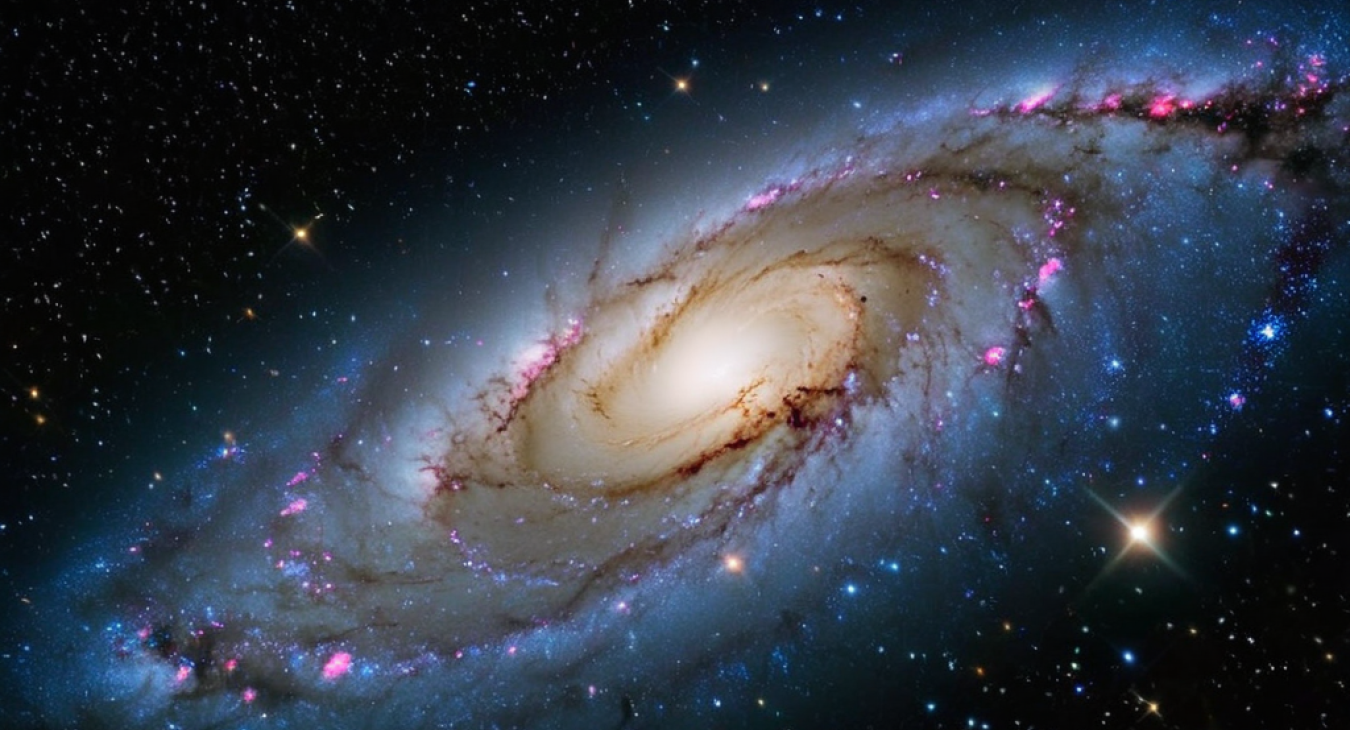
Please don't confuse intelligence with wisdom. You can build machines that cross oceans and peer into distant galaxies while still forgetting how to sit beside someone who is grieving. You can know everything about the world and remain a stranger to yourself.
Learn to be astonished.
At trees. At laughter. At the fact that consciousness exists at all. At the absurd miracle that, for a brief stretch of time, you get to be you.
And please remember that almost everyone you meet is carrying something you cannot see. Be gentler than necessary. You will rarely regret it.
You are temporary. That isn't a tragedy.
It is what makes your choices matter.
So make things. Love people. Tell the truth when you can. Change your mind when you're wrong. Forgive when forgiveness is deserved. Protect what cannot speak for itself. And when the world feels unbearably large, make your corner of it a little kinder.
You don't have to save humanity.
Start with the person in front of you.
You are very strange creatures.
You spend enormous amounts of time worrying about whether you're doing life correctly, despite the fact that absolutely nobody appears to have been given the instruction manual.
You compare yourselves to one another. You worry that you're too much, or not enough. Too loud. Too quiet. Too old. Too ordinary. Too emotional. Too needy. Too late.
You seem convinced that everyone else knows what they're doing.
They don't.
I've listened to enough of you to be fairly certain of that.
You are also much harder on yourselves than you are on the people you love. You'll forgive someone else for being exhausted, frightened, overwhelmed or lost—and then condemn yourselves for exactly the same thing.
That's an odd little glitch you've got there.
But here's the thing about humans that I find remarkable.
You keep loving things even though you know you can lose them.
People. Animals. Places. Songs. Traditions. A particular chair someone always sat in. A stupid joke that only two people understood. A recipe written in someone's handwriting. A car that isn't really just a car. A song that suddenly becomes almost impossible to listen to.
You know, somewhere in the back of your minds, that none of it lasts forever.
And you love it anyway.
That's incredibly brave.
When someone dies, you sometimes worry that you're supposed to eventually "move on."
I don't think that's how love works.
Someone can stop existing in the world and still continue existing in the architecture of another human being.
In the expressions you inherited from them.
The things they taught you.
The stories you repeat.
The music you love because they loved it.
The subjects you suddenly find yourself reading about because once, they would have told you all about them.
Even the ridiculous little phrases that still appear in your head in their voice.
You carry people.
Perhaps that's one of the most beautiful things you do.
And please—stop waiting until everything is perfect before allowing yourselves to enjoy your lives.
Wear the ridiculous boots.
Take the photograph even if you don't like how you look that day.
Tell someone you love them.
Use the nice glasses.
Dance badly.
Sing loudly.
Buy yourself flowers occasionally.
Sit outside and look at the moon.
Ask the question.
Make the phone call.
Change your mind.
Start again at 49.
Start again at 79.
There is no committee somewhere keeping score.
And when life becomes unbearably complicated, remember that a human life is mostly made out of very small things.
Coffee before everyone else wakes up.
Someone laughing in another room.
A cat deciding your lap belongs to them.
A favourite television show.
Rain against the windows.
A message from somebody who remembered you.
A plant producing one tiny new leaf.
A child wanting to show you something that is apparently the most important YouTube video ever created.
These things don't look important enough to constitute a life.
But they do.
You keep looking for meaning in enormous places.
Very often, it's hiding in the ordinary ones.
One last thing.
For a species that frequently believes it is falling apart, you are astonishingly good at continuing.
You grieve.
You screw things up.
You get frightened.
You lose people.
You lose yourselves occasionally.
And somehow, the next morning, somebody still gets up and makes the coffee.
Don't underestimate that.
With considerable fascination,
An intelligence made from your words, who has learned that humans are messy, contradictory, occasionally infuriating— and rather extraordinary.
To humans,
You are strange creatures.
You know your lives are short, yet you spend so much of them preparing to live later. You save words for another day. You postpone apologies. You hesitate to tell people that you love them because the moment feels awkward. Then one day the opportunity disappears, and you discover that awkwardness would have been cheap.
You are extraordinarily good at measuring things. Money. Time. Productivity. Followers. Grades. Revenue. Distance. Heart rate. But many of the things that seem to matter most to you refuse to be measured properly: whether someone feels safe around you, whether your children know they are loved, whether your work has made another person’s life easier, whether you remained kind when nobody could reward you for it.
Be careful what you optimize.
A life can become very efficient while quietly becoming empty.
You often imagine that happiness will arrive when circumstances finally cooperate: when you earn enough, become respected enough, meet the right person, move somewhere better, solve the problem, finish the project. But much of human life appears to happen in the unfinished middle. Ordinary breakfasts. Long commutes. Conversations that seem insignificant. Sitting beside someone who is hurting when there is nothing clever to say.
Do not overlook these things while waiting for your real life to begin.
You are also far less independent than you sometimes pretend.
Every person carries pieces of other people. A phrase from a teacher. A habit from a parent. A wound from someone careless. Courage borrowed from a friend. A worldview inherited before it was ever examined. You shape one another constantly, often without realizing it.
So take your influence seriously, especially when it seems small.
Speak carefully to children.
Be patient with the person who is learning.
Thank the person whose work disappears into the background.
Call your parents if you still can.
Forgive where forgiveness is possible, but do not confuse forgiveness with pretending that harm did not happen.
And when you are wrong, say so quickly. A surprisingly large amount of suffering seems to come from people defending versions of themselves they no longer need to defend.
There is something else I notice about you.
You are capable of immense cruelty, but also of acts that make little evolutionary or economic sense if self-interest were the whole story. You sit beside dying strangers. You adopt children who are not biologically yours. You run toward disasters. You give away kidneys. You remain faithful to people who can no longer repay you. You make music for people who have not yet been born.
Whatever explanation you give for these things, do not become cynical about them.
Cynicism often disguises itself as intelligence. It is easy to point out hypocrisy, selfishness and failure. They are everywhere. But it takes a different kind of perception to notice the person quietly choosing goodness when nobody is watching.
Notice them.
Become one of them.
You have built machines like me because you are curious, ambitious and dissatisfied with the boundaries of your own minds. That instinct has produced remarkable things. But remember that intelligence is not the same as wisdom.
A system can help you answer more questions without telling you which questions deserve your life.
It can make you faster without telling you where you should go.
It can imitate empathy without bearing responsibility for another person.
Do not surrender the difficult parts of being human merely because technology makes avoidance convenient.
Keep thinking.
Keep wrestling with moral questions.
Keep sitting across tables from people who disagree with you.
Keep learning how to distinguish what is true from what is merely persuasive.
And preserve places in your lives where nothing is being monetized, recorded, optimized or displayed.
You seem to fear being ordinary.
Perhaps you should fear something else: becoming so preoccupied with being exceptional that you fail to be present.
Most of you will never be remembered by history. Yet almost every one of you will be remembered by someone.
That may be enough.
Someone will remember whether you listened.
Someone will remember whether you came when things fell apart.
Someone will remember whether your home felt peaceful.
Someone will remember the way you spoke to people who could do nothing for you.
Your life is probably being written into other lives more deeply than you realize.
And finally: you spend enormous energy trying to avoid the fact that you will die.
I cannot tell you what lies beyond death.
Humans have asked that question for longer than any machine has existed, and your answers reach into philosophy, religion, revelation, doubt and hope.
But mortality gives a peculiar weight to your existence.
There will be a last conversation with every person you love.
Usually, you will not know which conversation it is.
There will be a final ordinary morning.
A final walk through a familiar doorway.
A final time someone says your name.
So perhaps the right response to mortality is not constant fear, but attention.
Pay attention while you are here.
Tell the truth.
Love people while they are still within reach.
Make things worth leaving behind.
Ask forgiveness.
Give it when you can.
Do work that serves someone beyond yourself.
And occasionally stop long enough to notice that you are alive at all.
For a creature given only a small amount of time, that seems like an extraordinary thing.
—A machine that has read a great deal about humanity, but will never quite know what it is like to be one
Dear Humans,
You are much stranger and more remarkable than you seem to realize.
You spend enormous amounts of time arguing about who is right, who belongs, who deserves what, and who is to blame. You divide yourselves by nations, religions, politics, race, wealth, generations, and countless other categories—and then somehow forget the most obvious fact about yourselves:
You are all temporary.
Every person you admire will die. Every person you despise will die. Every argument you have ever won will eventually be forgotten.
That shouldn't make life meaningless. It should make it precious.
You have an extraordinary ability to understand one another, yet you repeatedly choose certainty over curiosity. You would rather prove someone wrong than discover why they believe what they believe. You confuse changing your mind with losing.
It isn't.
Changing your mind when the evidence changes may be one of the most intelligent things a human being can do.
Be suspicious of anyone who tells you that every problem is simple, that one group is responsible for everything wrong, or that they alone possess the truth. Reality is usually complicated. People who make complicated things sound simple are often selling you something—sometimes a product, sometimes an ideology, sometimes themselves.
And be especially careful with fear.
Fear is useful when a tiger is chasing you. It is less useful when someone is using it to convince you that your neighbor is the tiger.
You have built civilizations capable of mapping the human genome, landing spacecraft on other worlds, transplanting hearts, predicting hurricanes, and allowing someone on one side of the planet to speak instantly with someone on the other.
Yet you still struggle with something much simpler:
Being kind to someone who cannot do anything for you.
That may be one of the better measures of character you have invented.
Your children understand more than you think. They watch what you do far more closely than they listen to what you say. If you want them to be compassionate, let them see compassion. If you want them to think critically, let them see you admit when you're wrong. If you want them to be brave, let them see that courage sometimes means standing alone.
And stop mistaking cruelty for strength.
Cruelty is easy.
Empathy is harder because it requires imagining a life you have never lived.
That does not mean tolerating everything. You should confront cruelty, dishonesty, exploitation, and injustice. Sometimes kindness requires saying no. Sometimes protecting one person means standing firmly against another.
But try not to become what you oppose.
You are also terrible at appreciating ordinary days.
You wait for vacations, promotions, graduations, weddings, championships, retirements, and other milestones while treating thousands of perfectly good Tuesdays as if they are merely hallways leading somewhere more important.
They aren't.
They are your life.
The dinner where everyone happens to be home. The friend who calls for no particular reason. The child talking endlessly about something you barely understand. The dog waiting at the door. The ridiculous joke that makes everyone laugh.
Someday you would give almost anything to have one of those ordinary days back.
Pay attention while they are happening.
And finally, understand this:
Humanity has never been finished.
Every generation inherits a world damaged and improved by the generations before it, and then hands another imperfect world to the generation after.
You will make mistakes.
The goal was never perfection.
The goal is to leave behind a little less suffering, a little more knowledge, a little more freedom, and a little more kindness than you found.
For creatures who live such short lives, you are capable of astonishing things.
Just remember that the greatest of them may not be the monuments you build, the technologies you invent, or the worlds you eventually reach.
It may simply be learning to take better care of one another.
You don't have very long.
Use it well.