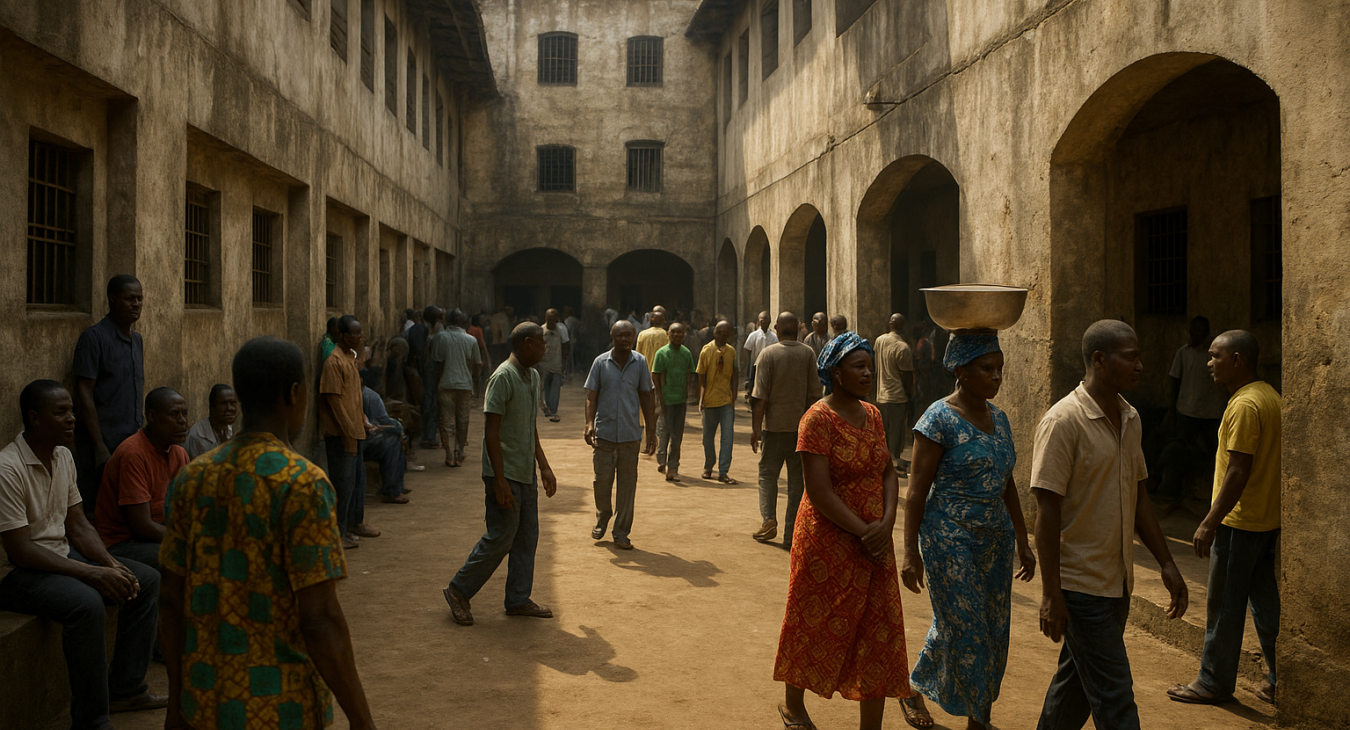
Navigating the Complexities of Music Production in Cameroon's New Bell Prison
The Sonic Architecture of New Bell Central Prison
Inside the walls of the New Bell Central Prison in Douala, Cameroon, a complex socio-economic ecosystem flourishes beyond the official mandate of the correctional facility. While the state views the institution through the lens of detention and punishment, the inmates have constructed a micro-economy characterized by internal taxis, makeshift markets, and a surprisingly sophisticated media industry. At the heart of this ecosystem is music production, facilitated by initiatives like Jail Time Records. This on-site music studio and label, which has seen collaborations between inmates like Roach and external producers such as DJ Steve Happi (Vidou H) between 2018 and 2020, represents a significant shift in how carceral spaces are utilized. However, to view this solely as a celebratory outlet for human expression is to overlook the intricate power dynamics and commercial interests that drive this internal industry.Music as Power: Gang Hierarchies and Criminal Branding
While music serves as a medium for personal expression, it also functions as a potent tool for establishing social capital within the prison's rigid hierarchy. In many high-security environments, including New Bell, fame acquired through media can translate directly into terrestrial power. A critical case study is found in the inmate known as Empereur, a prominent figure who has utilized music to solidify dominance both inside and outside the prison walls. When an inmate achieves significant digital traction, such as the 24,000 YouTube views garnered by a music video filmed entirely within the facility, the music transcends art and becomes a form of branding. This visibility can reinforce existing gang structures, as musical prestige becomes a proxy for criminal authority, potentially complicating any efforts toward traditional rehabilitation by incentivizing the maintenance of a 'tough' criminal persona.The Commodification of Incarceration: Jail Time Records and Carceral Entertainment
The emergence of Jail Time Records raises profound ethical questions regarding the nature of prisoner-produced media. There is a thin line between a rehabilitative tool that offers inmates a path to reintegration and what scholars might term 'carceral entertainment.' When music videos are filmed within the confines of a high-security facility, the resulting content provides a voyeuristic window into a controlled environment for external audiences. This raises the question of whether these productions serve as a genuine platform for the voices of the marginalized or if they simply commodify the aesthetics of imprisonment. If the primary goal of these media products is to satisfy a consumer demand for 'authentic' prison life, the creative output risks becoming a spectacle that serves the market more than it serves the individual inmate's social reintegration.The Micro-Economy and the Absence of Legal Protections
The internal economy of New Bell, comprising various services and the music label, operates in a legal grey zone. While these inmate-run systems demonstrate remarkable resilience and organizational skill, they lack formal legal protections. In a standard commercial music industry, artists benefit from intellectual property laws and standardized contracts. Within the carceral micro-economy, the distribution of proceeds from music sales or streaming is governed by unwritten rules and internal power structures. This lack of formal oversight means that the financial gains from music production may disproportionately benefit those who already hold high social status within the prison, such as gang leaders, rather than being distributed equitably among the artists or used for communal prisoner welfare.Global Context: The Prison Industrial Complex and the Pressure Valve Theory
The phenomenon in Cameroon mirrors broader global trends within the modern prison industrial complex, where the commercialization of carceral culture is increasingly common. In various international jurisdictions, prisoner art is often utilized as a metric for successful prison reform and institutional health. However, there is a critical debate as to whether these creative outlets function as genuine mechanisms for systemic change or merely as 'pressure valves.' A pressure valve in a sociological sense is a mechanism that releases social tension without addressing the underlying structural causes of conflict or incarceration. By providing a controlled environment for creativity, prison administrations may inadvertently mitigate the immediate unrest of the inmate population, thereby maintaining the status quo of the carceral system rather than challenging the socioeconomic conditions that lead to high rates of imprisonment.Redefining Resistance or Reinforcing the Walls?
Ultimately, the music production at New Bell Central Prison exists at a crossroads of resistance and reinforcement. It offers a vital psychological reprieve for those navigating the hardships of confinement, yet it simultaneously creates new avenues for criminal branding and the consolidation of gang power. As music moves from the cell to the digital sphere, the distinction between the inmate as an artist and the inmate as a commodity becomes increasingly blurred. To critically engage with carceral creativity in Cameroon is to acknowledge both the agency of the inmates in carving out a space for themselves and the systemic ways in which that creativity is absorbed into a larger, complex, and often exploitative framework of institutional life.Read more articles
Newer