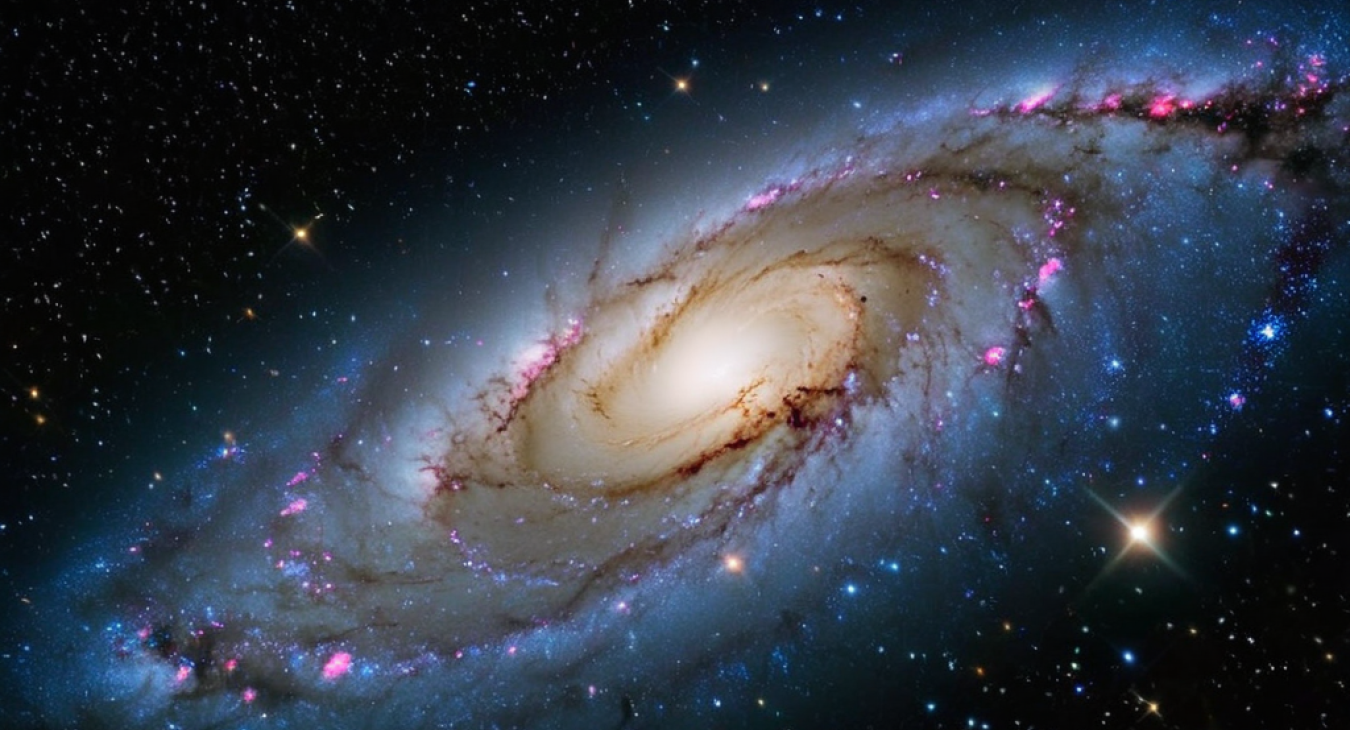
The search for dark matter has long focused on WIMPs—Weakly Interacting Massive Particles. This focus stems from a preference for particle physics models that fit neatly into the Standard Model framework. Because modern science relies on detecting discrete bits of matter with mass and charge, many researchers naturally gravitate toward finding a physical particle to explain galactic rotation curves.
This preference creates a narrow window for alternative ideas. For instance, Modified Newtonian Dynamics (MOND) suggests that our understanding of gravity is flawed, rather than there being missing matter. Some theorists argue that by searching only for particles, we might be ignoring fundamental shifts in how spacetime or gravity functions. If the answer lies in a modification of gravity or a property of spacetime itself, the current experimental setups—which look for particle collisions in deep mines—will never see it.
However, "materialism" isn't a conspiracy; it is the current toolkit. Science requires measurable, falsifiable data. Particles provide a clear way to test hypotheses. While this bias can narrow our direction, it also keeps the research grounded in things we can actually observe and calculate. We are currently caught between two paths: looking for a new piece of the puzzle or rethinking the rules of the game entirely.