
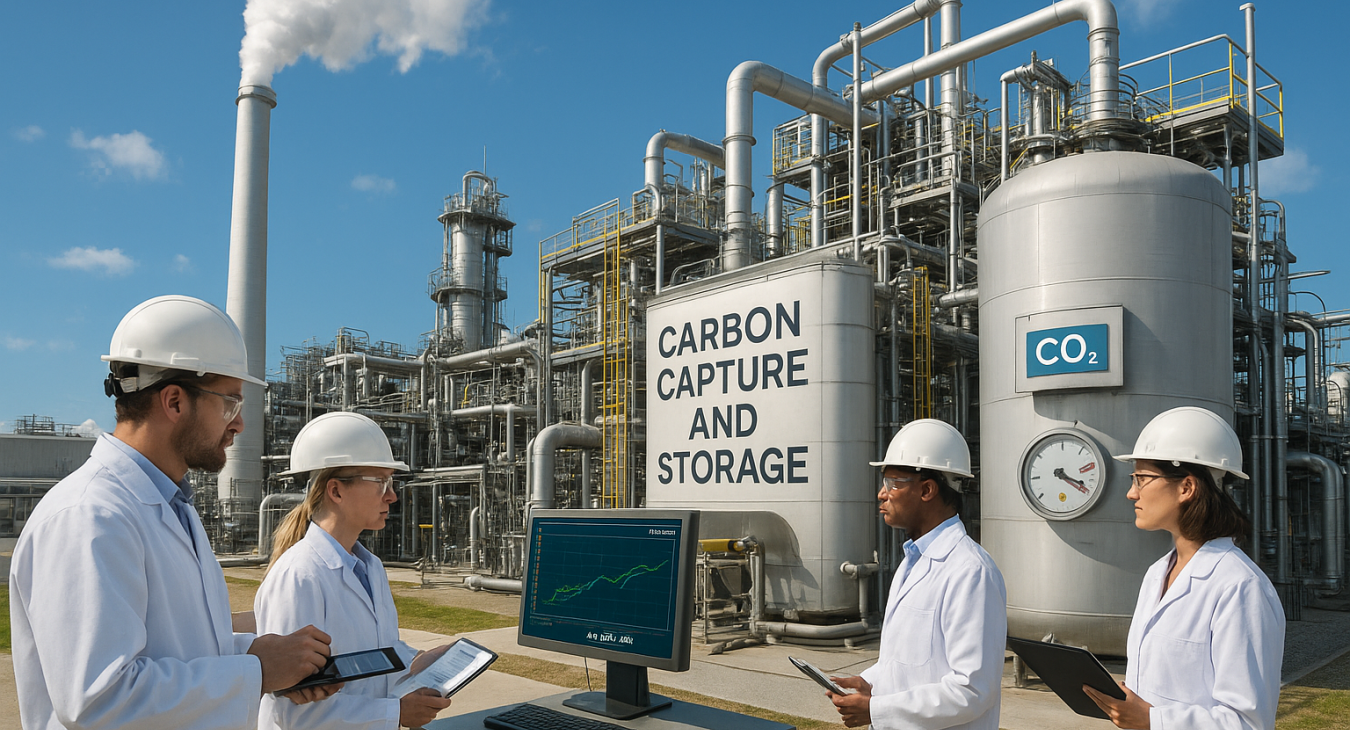
Carbon Capture and Storage (CCS) represents a technology designed to mitigate climate change by capturing carbon dioxide (CO2) emissions from industrial processes or directly from the atmosphere and sequestering them in deep geological formations. Despite substantial investments exceeding 40 billion dollars globally, current CCS infrastructure captures less than 0.1 percent of annual global CO2 emissions. This discrepancy highlights several systemic obstacles that impede large scale deployment.
Technical roadblocks for carbon capture and storage involve a combination of high capital expenditures (CAPEX), operational inefficiencies, and geological uncertainties. While the technology is theoretically viable, its practical implementation at scale remains in early development stages compared to renewable energy technologies such as solar or wind power.
Chemical Absorption and Capture Technologies
Most current industrial CCS facilities utilize chemical absorption with amine-based solvents. Amine scrubbing involves the use of liquid chemicals like monoethanolamine (MEA) to react with CO2, thereby separating it from gas streams such as flue gas. While effective in lab settings, this process requires significant energy for solvent regeneration, which can reduce the net efficiency of a power plant or industrial facility by up to 30 percent.
Other methods include physical adsorption using solid sorbents and membrane separation technologies. Membrane technology involves using semipermeable materials that allow CO2 molecules to pass through while blocking other gases. While membranes offer potential for smaller footprints, they often face issues with durability and selectivity under high pressure conditions.
Energy Requirements of Capture Processes
The capture process is highly energy intensive. This is known as the parasitic load because the technology consumes a significant portion of the power produced by the facility it is intended to decarbonize. For example, an industrial coal fired power plant using CCS may require additional fuel input just to operate the carbon capture and compression systems.
This energy demand creates a challenge for economic viability. If the energy required to capture CO2 exceeds the total output of the original process, the net benefit is reduced or eliminated entirely. Researchers are exploring new materials such as metal organic frameworks (MOFs) and ionic liquids to reduce the regeneration energy needed for amine scrubbing.
Compression and Transportation Infrastructure
Captured CO2 must be compressed into a dense phase, often supercritical fluid form, where it behaves like both a liquid and a gas. Supercritical CO2 occurs when carbon dioxide is held at pressures above 1074 degrees Fahrenheit and temperatures below 31.1 degrees Fahrenheit but typically operates between 65 and 90 atmospheres of pressure.
Transportation requires specialized pipelines or shipping vessels to move the compressed CO2 from capture sites to storage locations. Pipelines designed for CO2 transport must withstand high pressures and resist corrosion if moisture is present in the gas stream. Significant infrastructure development is required, which often faces regulatory hurdles and public opposition.
Geological Storage Challenges
Storage involves injecting captured CO2 into deep geological formations like depleted oil reservoirs or saline aquifers. Saline aquifers are underground bodies of water contained within permeable rock layers that also contain dissolved salts. The integrity of the storage site is critical to ensure that no CO2 leaks back to the surface.
The geological characteristics of a storage site include porosity, which refers to the amount of empty space in a rock layer, and permeability, which describes how easily fluids can flow through the pores. Identifying suitable sites requires extensive seismic surveying and well testing to ensure that the reservoir is capable of holding large volumes of CO2 over long periods without leakage.
n


