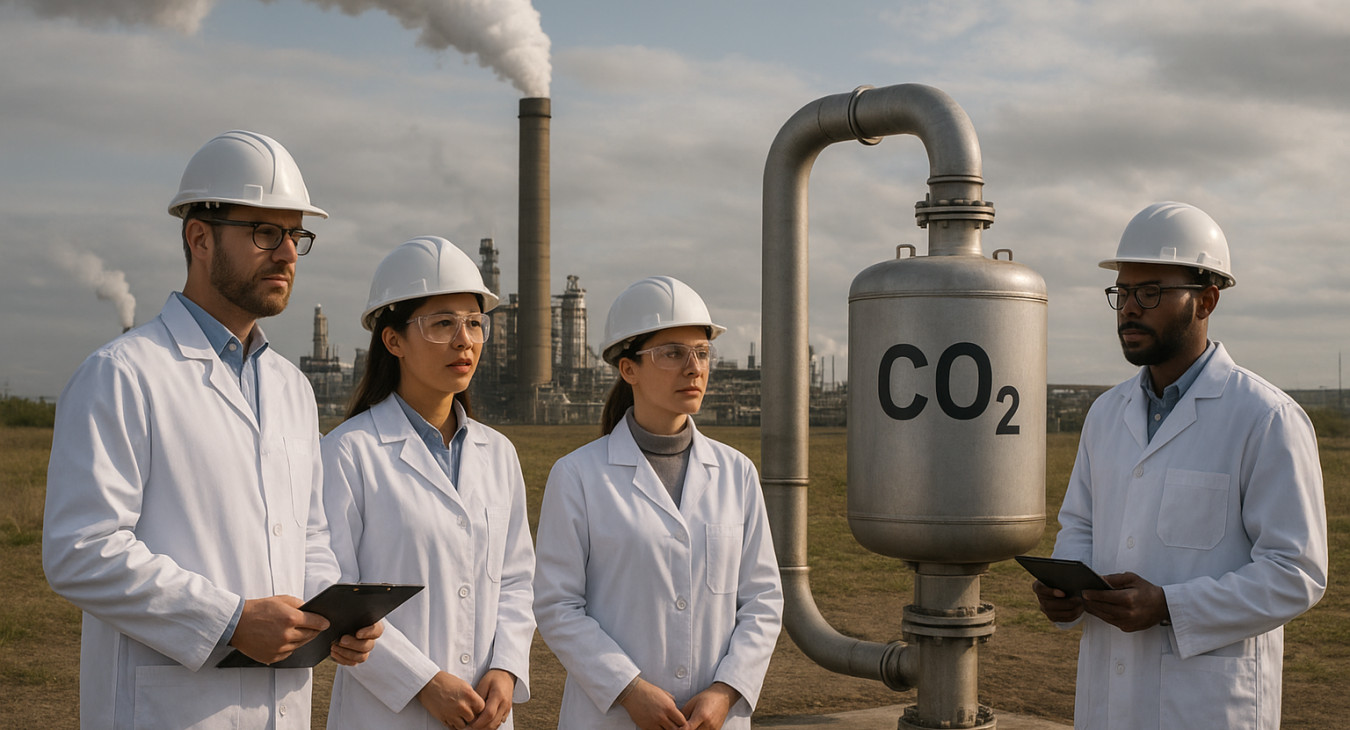
Carbon capture, use, and storage (CCUS) refers to technologies designed to capture carbon dioxide (CO2) from industrial sources or directly from the atmosphere and store it in underground geological formations. While CCUS is prioritized by the petroleum industry as a method for removing atmospheric carbon dioxide or preventing future emissions, significant challenges and risks currently restrict its advancement.
The technological components of CCUS include capture systems such as amine scrubbing, direct air capture (DAC), and storage mechanisms involving deep saline aquifers or depleted oil and gas reservoirs. Carbon sequestration is the process of trapping CO2 in these locations for long-term isolation from the atmosphere.
Economic Barriers to Deployment
The implementation of large-scale carbon storage projects involves substantial capital expenditures (CAPEX) and operational expenditures (OPEX). High costs are associated with capturing carbon dioxide from flue gases, which often requires chemical solvents such as monoethanolamine (MEA). The energy penalty refers to the additional power required to run capture systems, which can reduce the net efficiency of industrial processes.
Economies of scale may eventually lower the levelized cost of carbon capture and storage (LCCS), but current costs remain prohibitive for many industries without significant subsidies or tax credits. Price volatility in global carbon markets also introduces financial uncertainty into project feasibility studies.
Geological Risks and Leakage Scenarios
The primary risk associated with underground CO2 storage is leakage from the injection site into overlying geological formations or groundwater systems. Seal integrity refers to the ability of a caprock layer, such as shale or salt, to prevent the upward migration of captured carbon dioxide. Failure in seal integrity can lead to sudden releases that may pose risks to local environments and human health.
Subsurface modeling using seismic monitoring and pressure sensors provides data on CO2 plume behavior. However, geological heterogeneity means that subsurface conditions are not always uniform. This uncertainty complicates the long-term prediction of storage site stability and leak prevention over hundreds or thousands of years.
Environmental Impact Considerations
Large-scale CCUS projects may have indirect environmental impacts related to water usage and chemical waste generation during amine scrubbing processes. The production of chemicals like monoethanolamine creates hazardous byproducts that require careful management and disposal methods to prevent soil and water contamination. Additionally, the carbon footprint of constructing storage infrastructure can offset some of the captured carbon dioxide.
The use of direct air capture (DAC) systems requires significant energy input and may rely on fossil fuels if renewable electricity is not available. This increases the net emissions profile of DAC operations unless substantial improvements in energy efficiency are achieved to reduce the power consumption per ton of CO2 captured.
Infrastructure and Regulatory Challenges
The transport of captured carbon dioxide requires extensive pipeline networks that must be safe for public use and environmental protection. Pipeline integrity management ensures that pipes do not leak or corrode over time, especially when transporting compressed CO2 in high-pressure conditions. Building these pipelines across different jurisdictions introduces complex regulatory hurdles regarding safety standards and zoning permissions.
The lack of standardized monitoring protocols for long-term carbon storage sites complicates the assessment of project success and environmental safety. Establishing clear liability frameworks for leakage events is necessary to determine which entities are responsible for mitigation costs and remediation efforts in case of underground CO2 migration out of designated sequestration zones.