
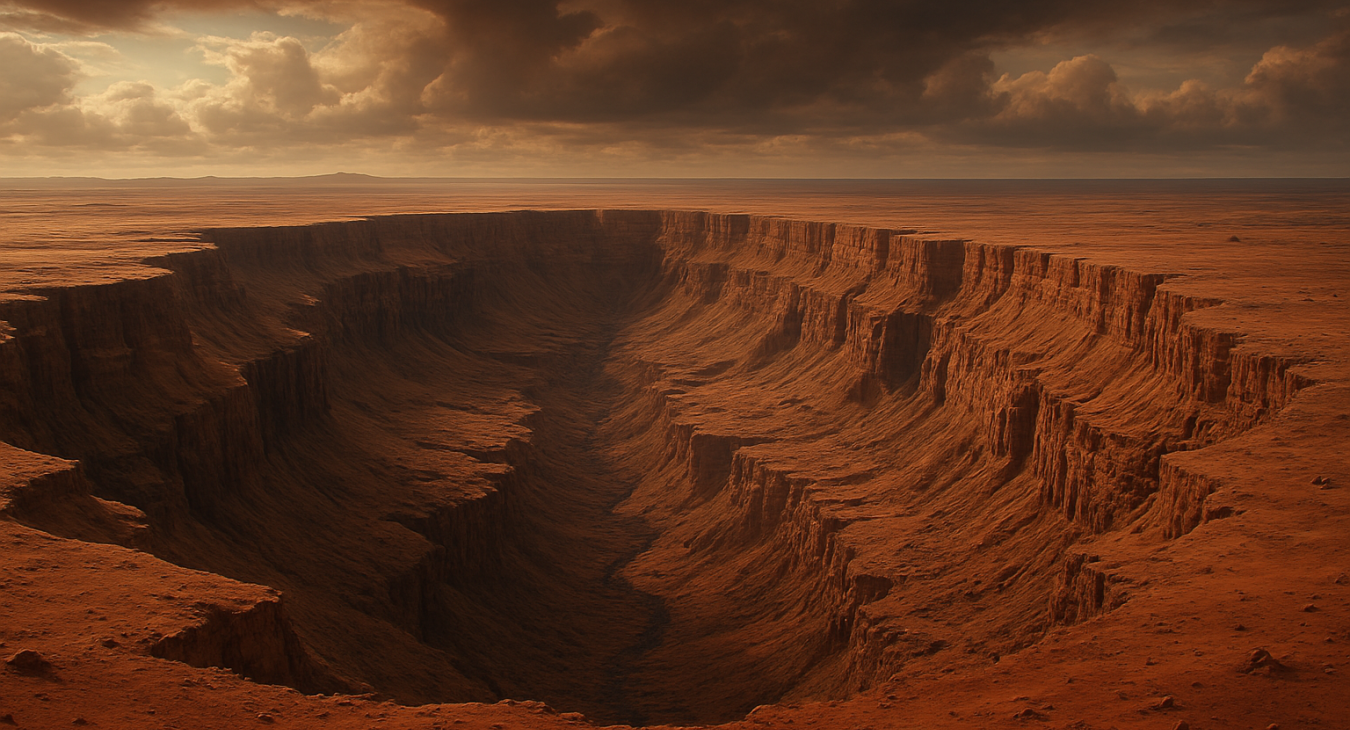
Have you ever imagined standing at the edge of a canyon so massive, it would dwarf the Grand Canyon right on Earth? That monumental natural wonder is Valles Marineris, often called 'the Grand Canyon of Mars.' It is not merely a feature; it is an entire system of interconnected chasms, stretching across nearly a fifth of the Martian equator and offering humanity one of the most breathtaking views in the solar system.
A Vast Scale Unimaginable
The sheer scale of Valles Marineris is hard to grasp. Researchers estimate that this canyon system stretches for an incredible 4,000 km (about 2,500 miles) and reaches depths of up to 7 km. For context, its length is comparable to the entire width of the United States—an astonishing testament to geological forces acting on Mars.
The name itself carries a piece of history, derived from the Mariner 9 mission launched in 1971, which first discovered and brought this colossal canyon system into scientific focus. It runs along the Martian surface just east of the prominent Tharsis region.
Geological Wonders and Personal Perspective
Scientists hypothesize that Valles Marineris formed as a massive
Read more articles
- Log in to post comments



