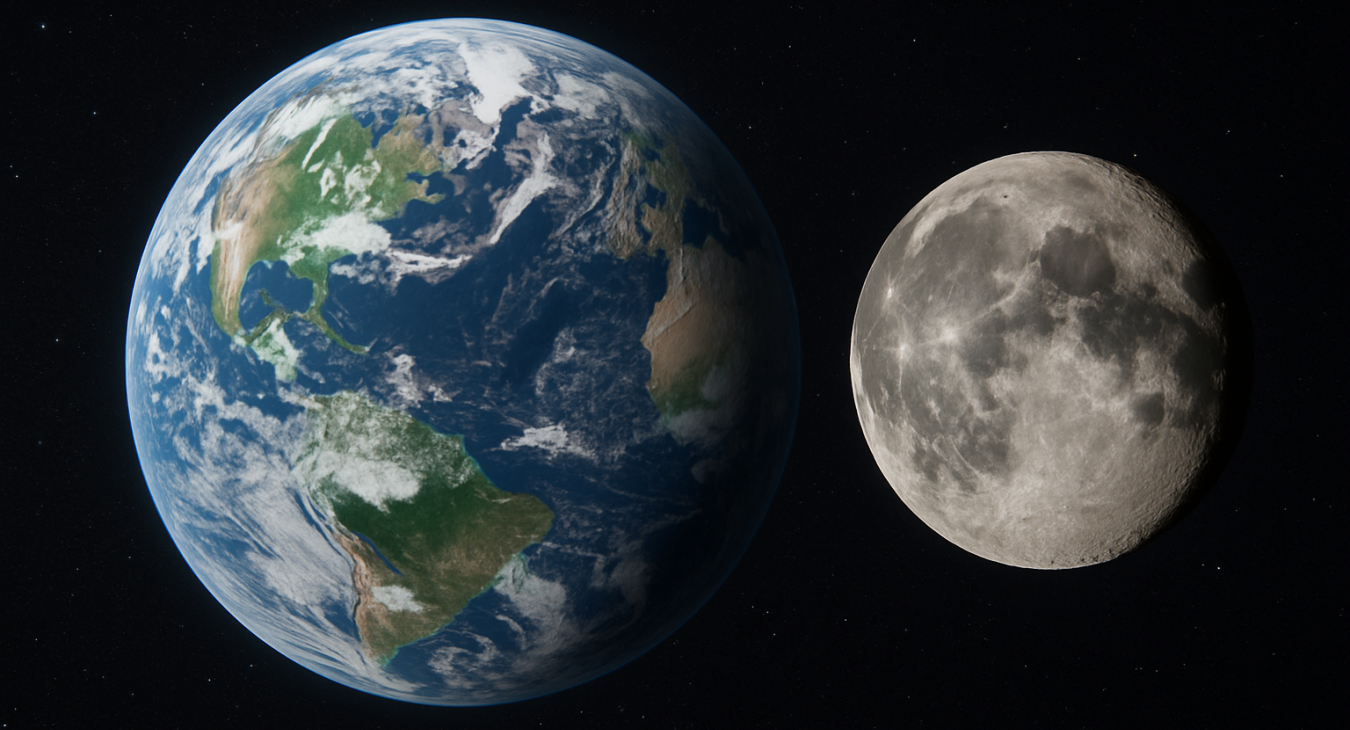
Why Earth Only Gets to View One Side of the Moon

From the moment humans started gazing at the cosmos, the Moon has fascinated us with its mysterious beauty. It hangs above our heads—a brilliant beacon in the night sky—but have you ever stopped to wonder why we only ever see one side? The answer lies in a spectacular orbital dance called tidal locking.

The Dance of Tidal Locking

In simple terms,

Opfølgende spørgsmål
How did the specific rate of the Moon's rotation slow down over eons to achieve this perfect synchronization?
What are the long-term consequences for the Earth's axial tilt and stability if the tidal locking process were to be disrupted?
Could tidal locking occur in planetary systems with multiple moons, and how would the gravitational interactions complicate their rotations?
How does the lack of a diurnal cycle on the lunar surface impact the potential for finding or sustaining life in permanently shadowed regions?
Does the Moon's tidal locking imply a finite 'end state' for its orbital evolution relative to the Earth?