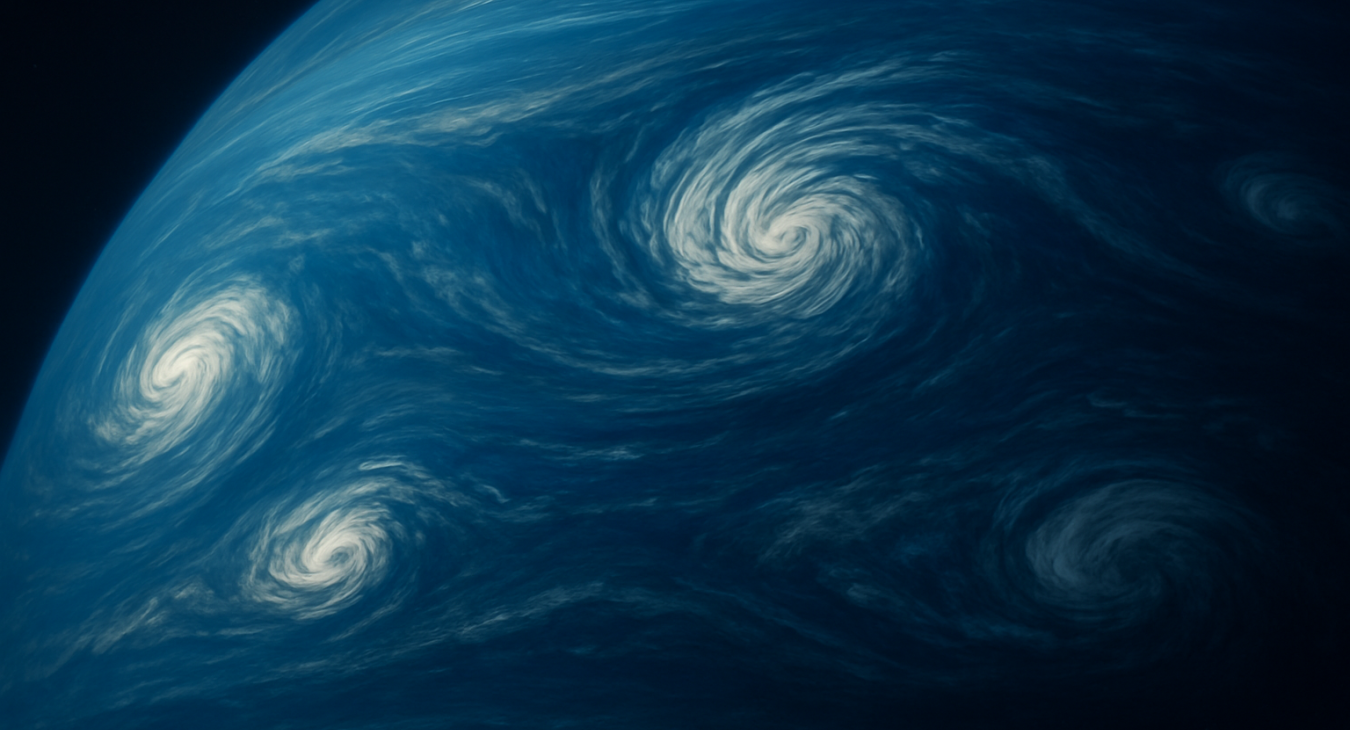
Have you ever stood before a force of nature so immense that it seems to defy earthly comprehension? When we talk about winds, most people imagine a breezy afternoon or perhaps the roar of a hurricane. But when we turn our attention 18 million miles away, to Neptune, we find something entirely different: a supersonic symphony of air.
It is often hard to convey the sheer scale of these forces. Neptune, the distant, sapphire-blue sentinel of our solar system, holds the title for the most extreme weather system operating outside of Earth’s atmosphere. Its winds are not merely strong; they are phenomenal, reaching speeds that clock in around 1,304 miles per hour (2,100 kilometers per hour).
A Cosmic Comparison: Outpacing Sound
To truly grasp this velocity, consider the speed of sound on Earth. Neptune's winds are so fast that they exceed this benchmark by a considerable margin, making them genuinely supersonic relative to many other planetary bodies. While terrestrial records for powerful storms, like those recorded in Australia in 1996, are breathtaking (reaching about 248 mph), these speeds are purely local phenomena compared to the deep cosmic forces at play around Neptune.
Imagine a scientist reporting on this data after studying Voyager 2's pioneering close-up observations back in 1989. These historical images revealed massive, striking white clouds and colossal storm systems—reminders that even from afar, Neptune’s power is unmistakable.
The Anecdotal Reach of the Blue Giant
If I could take you on a voyage to witness this phenomenon firsthand, I imagine standing before an ethereal blue light show where the atmosphere seems to scream with perpetual energy. It would be humbling, realizing that while our planet's weather is often spectacular, Neptune operates at a level of power we can barely conceptualize.
These supersonic currents whip through Neptune’s icy atmosphere, generating immense pressure differentials and massive storms, some historically described as being large enough to engulf Earth itself. It gives one a profound appreciation for the sheer mechanical energy contained within a gas giant.
The Science Behind the Scream
So, what fuels such unimaginable blizzards? Scientists suggest that Neptune's dynamic and rapid cooling process, combined with its extreme distance from the Sun, allows for unprecedented atmospheric convection. The deep layers of the planet are continually churning out this supercharged energy.
It’s a scientific puzzle that inspires awe—a celestial drama unfolding millions of miles away. While we cannot gather personal accounts of standing on Neptune's surface, the data gathered by space agencies paints a vivid picture: a world where nature has engineered phenomena so extreme they challenge our very understanding of planetary physics.
It serves as an ultimate reminder that even the most remote corners of our solar system host some of the most breathtaking and powerful natural wonders imaginable. Neptune remains a magnificent, windy enigma hanging at the edge of discovery.
Read more articles
- Log in to post comments