
The Cost of Escalation in the Levant
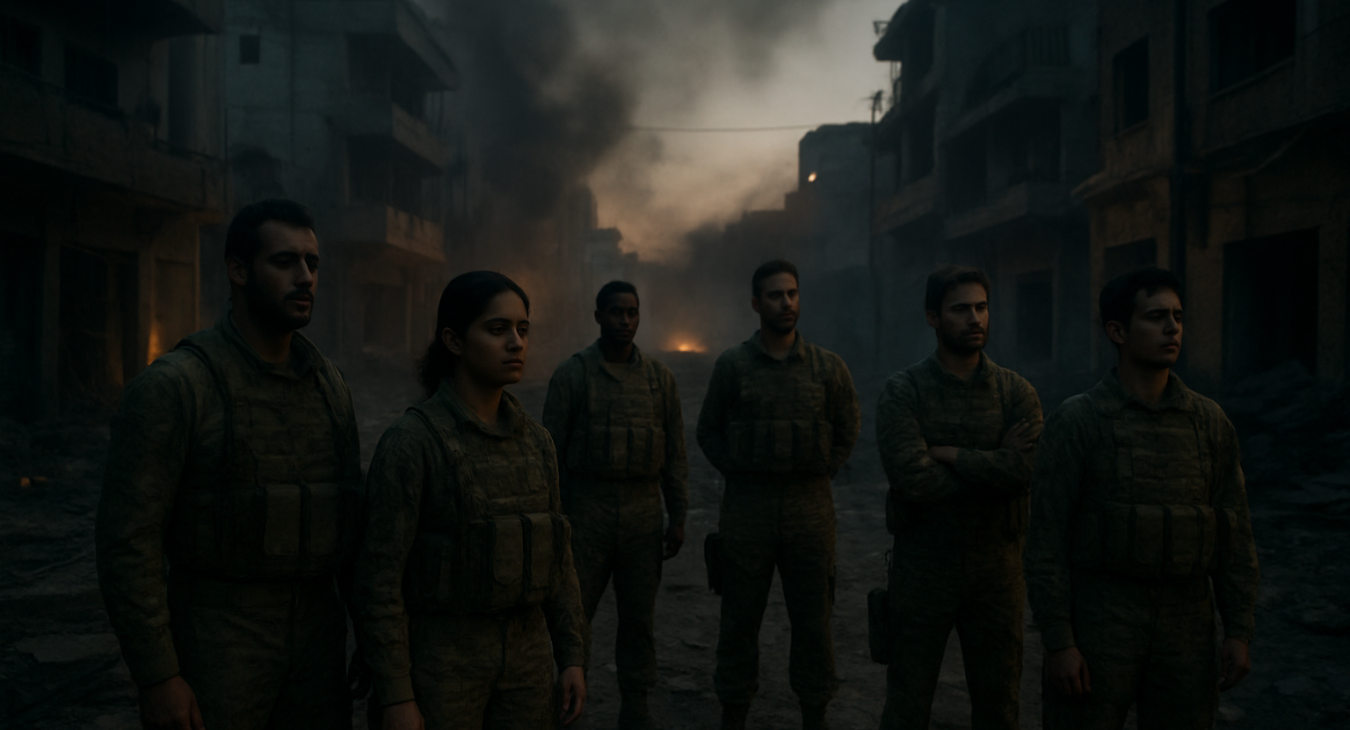
The recent confirmation by the United States Central Command (CENTCOM) that two US service members were killed and one remains missing following Iranian ballistic missile and drone attacks in Jordan marks a somber milestone in the ongoing regional struggle. While military communiques focus on the tactical specifics of the strike and the subsequent retaliatory actions against the Islamic Revolutionary Guard Corps (IRGC), these reports often fail to capture the profound instability injected into the social and political fabric of Jordan. This incident is not merely a localized military engagement but a symptom of a deteriorating security landscape in the Levant, where the lines between combatant and non-combatant zones become increasingly blurred.
The Lightning Rod Effect: Bases and Sovereignty
The presence of United States military installations within the Hashemite Kingdom of Jordan serves as a critical component of the US led security architecture in the Middle East. However, this presence also acts as a lightning rod for regional instability. For the Jordanian people, the strategic utility of these bases is often weighed against the direct threat they pose to national sovereignty and civilian safety. When foreign militaries operate on sovereign soil, that soil becomes a potential theater for the "shadow wars" that have defined Middle Eastern geopolitics for decades. The strikes in Jordan demonstrate how the territory of a third party can become a battlefield for the ambitions of larger powers and their respective proxies.
Beyond the Tit for Tat Narrative
Official military discourse frequently employs a "tit for tat" framing to describe the cycle of strikes and counter-strikes. This terminology suggests a controlled, almost rhythmic exchange of force that implies a level of predictability and restraint. Such framing is fundamentally deceptive because it masks the chaotic reality of ballistic missile and drone warfare. By framing the conflict as a series of proportional responses, state actors often bypass the humanitarian implications of utilizing high explosive projectiles in regions that are, even if not primary combat zones, heavily populated. This rhetoric avoids the uncomfortable reality that every escalation increases the probability of a miscalculation that could trigger a wider regional conflict.
The Shadow War and the Erosion of Deterrence
Historically, the Middle East has been characterized by asymmetric warfare and proxy dynamics. The involvement of the IRGC in these strikes highlights the tension between the established security frameworks in the region and the expanding influence of Iran. As the United States and Iran engage in these indirect confrontations, the concept of deterrence appears to be failing. Instead of preventing conflict, the tactical strikes seem to be normalizing a state of permanent volatility. For the families of the service members killed and the missing, the loss is absolute, but for the broader region, the loss is the stability required for economic and social development.
Humanitarian Implications of Missiles in Populated Regions
The use of ballistic missiles and unmanned aerial vehicles (UAVs) in this context carries significant humanitarian risks. Unlike precision-guided munitions used in traditional conventional warfare, the erratic nature of ballistic trajectories and the potential for drone failures pose a continuous threat to the civilians residing near military installations. There is a notable lack of emphasis in official state narratives regarding the potential for collateral damage to Jordanian citizens. As military strikes become more frequent, the psychological toll on the local population, living in constant apprehension of sudden aerial bombardments, creates a cycle of exhaustion and fear that undermines the social fabric of the region.
The Perspective of the Displaced and the Exhausted
While state-centric narratives focus on troop casualties and strategic targets, the voices of regional humanitarian organizations and local Jordanian residents tell a different story. For many in Jordan, the military escalations are viewed with a sense of profound apprehension. The kingdom has long been a pillar of stability in a turbulent region, yet it increasingly finds itself caught in the crossfire of external political struggles. There is a growing sense of exhaustion among populations that see their security sacrificed on the altar of geopolitical maneuvering. The deaths of two service members are a tragedy that resonates globally, but the true cost is measured in the long term erosion of regional peace.
Conclusion: A Symptom of a Larger Struggle
The attacks in Jordan represent more than a momentary spike in regional violence. They are a clear indication that the current method of managing tensions through proxy warfare and retaliatory strikes is unsustainable. As long as the region remains a theater for the strategic competition between the US led security architecture and Iranian influence, the likelihood of kinetic engagements on neutral or third party soil remains high. Addressing the root causes of this instability requires moving beyond the tactical reporting of casualty counts and confronting the humanitarian and sovereign realities of modern proxy warfare.



