
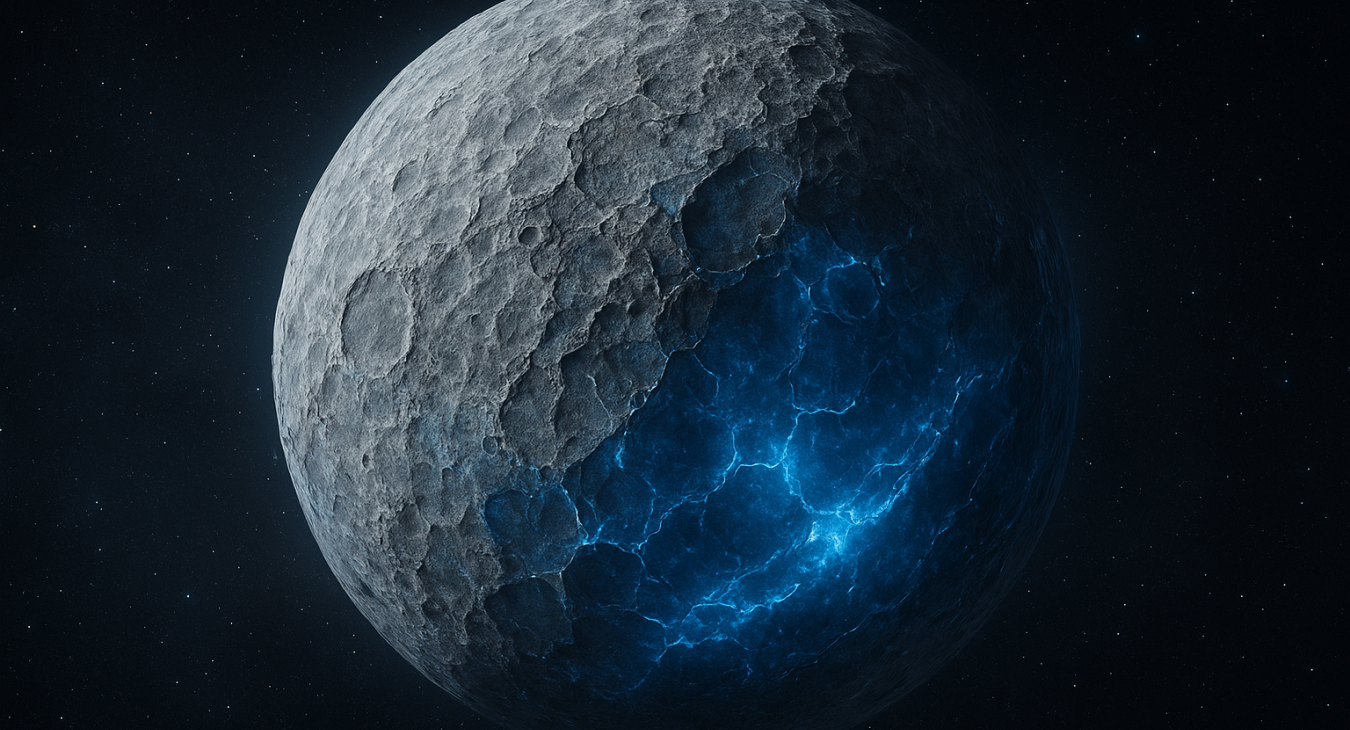
Discovering the Giant Ice Ball of Our Solar System
Imagine traveling to a celestial body unlike any other in our inner solar system: Ceres. This dwarf planet, situated prominently within the asteroid belt between Mars and Jupiter, holds some truly fascinating secrets. Originally identified as an asteroid when first spotted by Giuseppe Piazzi back in 1801, its immense size and unique composition eventually led scientists to reclassify it as a dwarf planet in 2006.
Ceres is not just another rock among the asteroids; it's essentially a giant ice ball. It stands out from its neighboring rocky bodies because of the water content it possesses. Scientists have discovered compelling evidence suggesting that remnants of an ancient water ocean are buried beneath its icy crust, leading to the captivating question: could Ceres be or was once an Ocean World?
The Significance of Ceres' Water Content
This knowledge has led many astronomers to hypothesize about a possible subsurface ocean. Sources suggest that Ceres holds more water than any other world in the inner solar system, perhaps second only to Earth itself. These incredible amounts of water mixed with dirt and rock have allowed for new computer simulations demonstrating how a frozen ocean could account for the geological features visible on its surface.
The journey to understand Ceres culminated when NASA’s Dawn mission arrived in 2015. This made Ceres the very first dwarf planet ever to receive a visit from a spacecraft, providing unprecedented data and accelerating our understanding of its history and composition. It remains the largest object in the asteroid belt known with certainty to be in hydrostatic equilibrium.
Looking at the Future: What We Learn About Ocean Worlds
The evidence pointing toward past or present liquid water is both exciting and profoundly important for astrobiology. Even though Ceres' surface might appear mostly frozen, studying these subsurface potential oceans helps us understand how volatile materials can survive in extreme cosmic environments.
While its physical dimensions mean it is too dim to be seen by the naked eye unless under extremely dark conditions, the discoveries made from distant space missions are painting a vibrant picture of an internally active world. Our ongoing research continues to refine our understanding of Ceres' watery past and potential present, making it a key target in the search for life elsewhere.
The scientific journey surrounding Ceres continues with new insights regularly published by organizations like NASA. Learning more about this fascinating dwarf planet enhances our collective knowledge of planetary formation and the widespread nature of water throughout the cosmos.
Read more articles
- Log in to post comments



