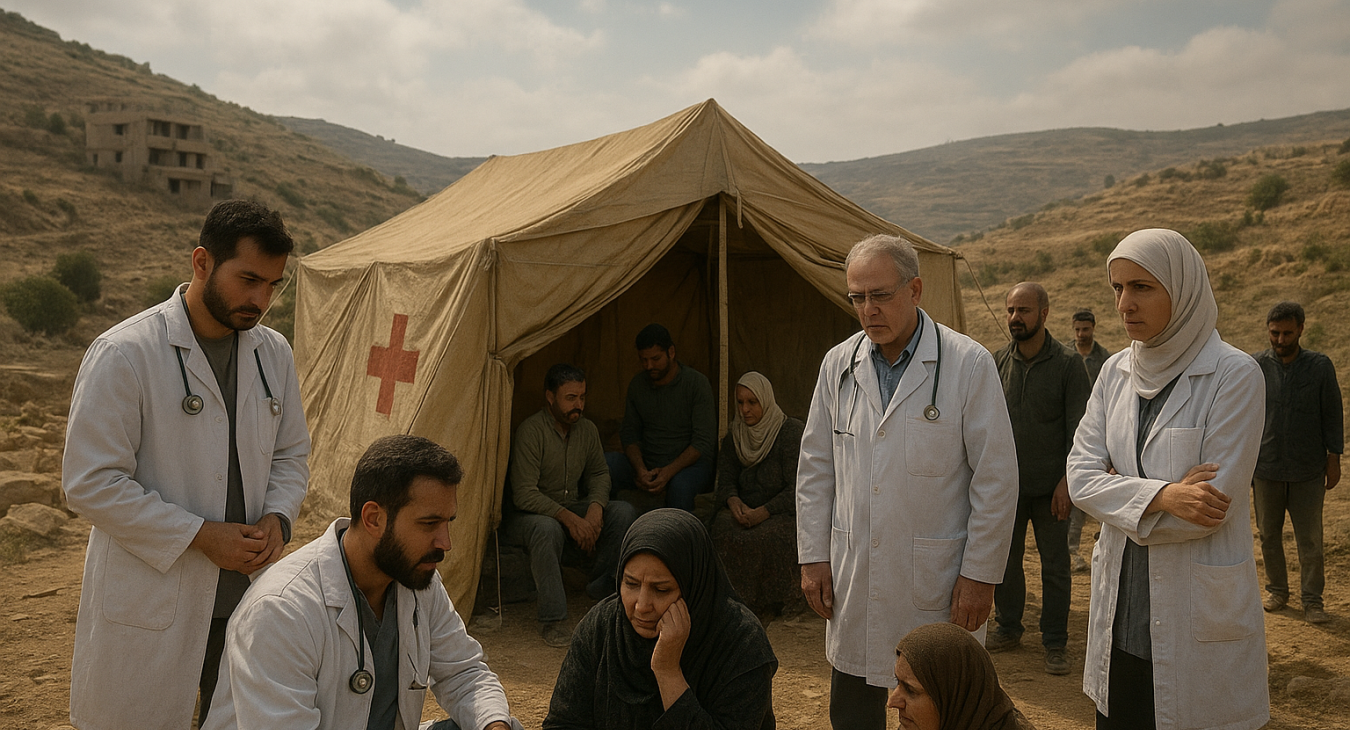
The Digital Resistance in the Shadows of Darfur
In the fractured landscape of North Darfur, the act of recording a human rights violation has become a high stakes gamble with life and death. As the Rapid Support Forces (RSF) intensify their campaign to seize El Fasher, a clandestine network of local activists, youth organizers, and digital investigators is operating under the radar to document what international observers describe as crimes against humanity. These individuals are not merely observers; they are the frontline of a digital resistance. Using encrypted messaging apps and satellite internet when possible, they capture fragments of evidence: a video of a looted settlement, a photograph of a wounded survivor, or a voice note detailing a mass abduction. The primary objective is speed. In an environment where paramilitary actors actively seek to erase evidence of their conduct, the race to archive these atrocities before they are destroyed is the only hope for future justice.From Janjaweed to RSF: The Evolution of Systematic Violence
To understand the current atrocities in El Fasher, one must look beyond the immediate chaos to the historical architecture of violence in Sudan. The tactics currently employed by the RSF are not novel inventions but are rather a refined evolution of the state sponsored militia warfare seen during the Darfur genocide in the early 2000s. The RSF is the institutional successor to the Janjaweed, the Arab-dominated militias that were weaponized by the central government to suppress insurgencies in Darfur. This lineage is critical to understanding the current conflict. The pattern of violence—targeting specific ethnic groups through displacement, mass killings, and sexual violence—reveals a structural continuity. What is happening today in North Darfur is the continuation of a long term strategy to consolidate territorial control through the systematic removal of populations deemed undesirable to the paramilitary leadership.The El Fasher Atrocities: A Record of Ethnic Cleansing
Reports from the UN Fact-Finding Mission and Amnesty International have painted a harrowing picture of the violence in El Fasher. The scale of the abuses includes mass killings and the systematic use of sexual violence as a weapon of war. Specifically, documentation has surfaced regarding mass gang rapes and the widespread abduction of women and girls. These are not incidental byproducts of urban combat but are described by human rights experts as components of a deliberate campaign of ethnic cleansing. The targeting of civilian populations in El Fasher represents a profound failure of the principle of distinction, a cornerstone of International Humanitarian Law (IHL). As the RSF moves through neighborhoods, the precision with which specific demographics are targeted suggests a level of coordination that points toward a centralized command intent on demographic reconfiguration.The Documentation Trap and the Cycle of Despair
There is a growing, quiet tension within Sudanese civil society regarding the efficacy of human rights reporting. This phenomenon is increasingly referred to as the 'documentation trap.' For many grassroots organizers, there is a psychological and moral cost to the constant cataloging of trauma. They participate in the grueling work of verifying testimonies and uploading evidence, yet they are acutely aware that this documentation often ends up in a digital archive that no one visits, or in a report that triggers no tangible change on the ground. When communities witness their most intimate and horrific violations being documented by international agencies, only to see those reports met with silence or ineffective rhetoric, it creates a profound sense of despair. The archive, while necessary for historical truth, can feel like a tomb for the living if it is not linked to direct protection.The Humanitarian Paralysis of the International Community
Despite the rapid gathering of evidence by secret networks, the transition from evidence collection to actual accountability remains non-existent. This period of 'humanitarian paralysis' is characterized by a disconnect between the capacity to prove crimes and the political will to stop them. The international community has mastered the art of condemnation while failing at the art of intervention. Every major report detailing RSF atrocities is met with calls for a ceasefire or calls for an international peacekeeping force, yet these measures have historically failed to materialize. This paralysis is not an accident of logistics; it is a byproduct of a global political order that prioritizes stability or the interests of regional powers over the protection of civilians in the Global South.Geopolitical Interests and the Shield of Impunity
The impunity enjoyed by the RSF is reinforced by a complex web of geopolitical interests. While international bodies call for sanctions, various regional powers and arms suppliers continue to engage with the warring factions, often for strategic access to resources or territorial influence. The flow of weapons and the tacit support provided by neighboring states ensure that the combatants have the means to continue their campaign regardless of the documentation produced. This creates a situation where the legal and moral frameworks of the United Nations (UN) are effectively bypassed by the hard realities of realpolitik. As long as the conflict remains a convenient tool for regional actors to pursue their own security interests, the evidence gathered by local networks will likely remain a record of what was lost rather than a catalyst for what could have been saved.The Peril of the Witness: The Risk of Digital Identification
For the individuals navigating this conflict, the tension between the need for documentation and physical survival is constant. The digital footprint required to prove a crime can also become a death warrant. In a landscape where the RSF utilizes sophisticated surveillance and intelligence gathering, any link between a digital file and a local source can lead to immediate retaliation. Local organizers must navigate a minefield of metadata, device security, and physical movement to ensure that they do not inadvertently expose themselves or their communities. This struggle highlights a fundamental flaw in current human rights methodologies: the reliance on local actors to perform the dangerous work of evidence gathering without providing them with the necessary physical or digital security umbrellas.Beyond Ceasefires: Seeking Real Accountability
The current crisis demands a shift in how the international community approaches Sudan. The traditional reliance on calls for 'ceasefires' is often ineffective because it assumes that all parties are acting in good faith and desire peace. In the case of the RSF, the conflict is an existential struggle for power and resource control, where violence is the primary currency. True accountability requires moving beyond the mere archiving of crimes toward a mechanism that actively disrupts the incentives for committing them. This includes robust, unavoidable sanctions that target the economic lifelines of paramilitary leaders and a concerted effort to decouple regional interests from the fueling of the conflict. Until the cost of atrocity exceeds the benefit of conquest, the secret battle to document these crimes will remain a tragic race against time.Read more articles
Newer
English