
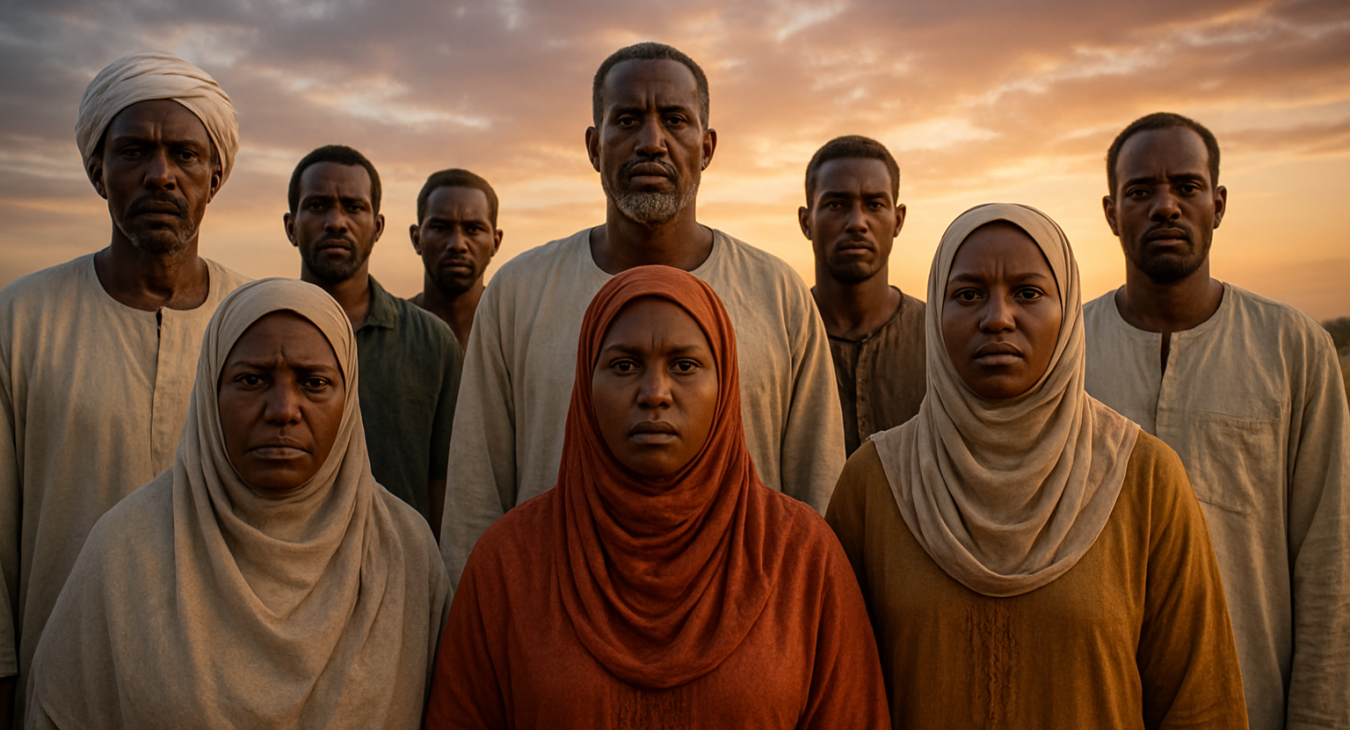
The Invisible Frontline of Testimony
While global news cycles often focus on the high-level political maneuvering between the Sudanese Armed Forces (SAF) and the Rapid Support Forces (RSF), a much quieter and more dangerous battle is being waged on the ground. This is not a battle of artillery, but a struggle for the truth. A decentralized network of local community leaders, medical professionals, and activists is working in the shadows to document atrocities that the world often only hears about through delayed and filtered reports. These individuals form a documentation underground, risking immediate execution to ensure that the systematic violence occurring in Sudan does not vanish into the ether of history.The High Cost of Being a Witness
For those operating within these covert networks, the act of documentation is a life-threatening endeavor. In regions like North Darfur, the breakdown of social structures has turned neighbors against neighbors, making the gathering of evidence an exercise in extreme paranoia. A doctor who records the specific nature of a sexual assault or an activist who captures video of a mass killing faces the constant threat of retribution. The RSF has been accused of systematic abductions and mass gang rapes, and those who attempt to verify these claims often find themselves targeted as enemies of the state or agents of foreign interests. The psychological burden of this work is immense, as witnesses must process their own trauma while simultaneously cataloging the horrors of others.Digital Verification versus Ground Truth
There is a growing tension between the methodologies used by international human rights organizations and the raw data collected by local actors. International entities often rely heavily on remote digital verification, using satellite imagery and social media analysis to bypass the dangers of physical presence. While this method is essential for covering vast territories, it can lack the granular detail provided by human testimony. Local networks provide the 'why' and 'how' that a satellite cannot see, yet these very details are what make their members targets. This reliance on remote technology creates a gap where systemic abuses in more isolated regions might be overshadowed by high-profile flashpoints like El Fasher, potentially leaving other zones of violence under-documented.The El Fasher Precedent and Systemic Violence
El Fasher has become a focal point for international concern due to reports of crimes against humanity and ethnic cleansing. Amnesty International and the UN Fact-Finding Mission for Sudan have both documented mass killings and targeted violence in this area. However, the focus on this specific city risks creating a hierarchy of suffering. While the violence in El Fasher is catastrophic, the methods employed by the RSF—including the weaponization of ethnic identity—are part of a long-standing pattern of cyclical violence in Sudan. The current conflict is not a spontaneous eruption but an evolution of historical tactics used to mobilize specific demographics against others, a strategy that has plagued the Darfur region for decades.The Documentation-to-Justice Gap
A critical question haunts the human rights community: does the creation of these digital archives actually lead to accountability? Many activists fear they are merely building a massive repository of evidence for a future that may never arrive. There is a profound 'documentation-to-justice' gap, where the accumulation of proof does not automatically trigger international intervention or legal prosecution. Even when the evidence of mass rapes and systematic killings is undeniable, the lack of political will from the international community often results in empty condemnations rather than tangible protection for the victims.The Failure of Early Warning Systems
The current humanitarian crisis in Sudan is a testament to the failure of international early warning systems. Patterns of ethnic mobilization and the buildup of paramilitary forces were visible long before the full-scale outbreak of hostilities. The transition of the RSF from a localized militia to a national paramilitary force was a known quantity, yet the international response remained reactive rather than preventative. This pattern of delayed reaction leaves the burden of documentation and survival almost entirely on the shoulders of the Sudanese people themselves, who are forced to fight a war of information while fighting for their lives.Agency Amidst Vulnerability
It is vital to view the Sudanese people not merely as subjects of human rights reports or passive victims of a territorial struggle. The documentation underground represents a profound exercise of agency. By refusing to let their experiences be erased, these individuals are reclaiming their narrative from the combatants and the international community alike. Their work is a refusal to let the world forget, even when the world seems to have turned its gaze away. The struggle to document RSF abuses is, at its core, a struggle to preserve the humanity of a nation under siege.Read more articles
Older



