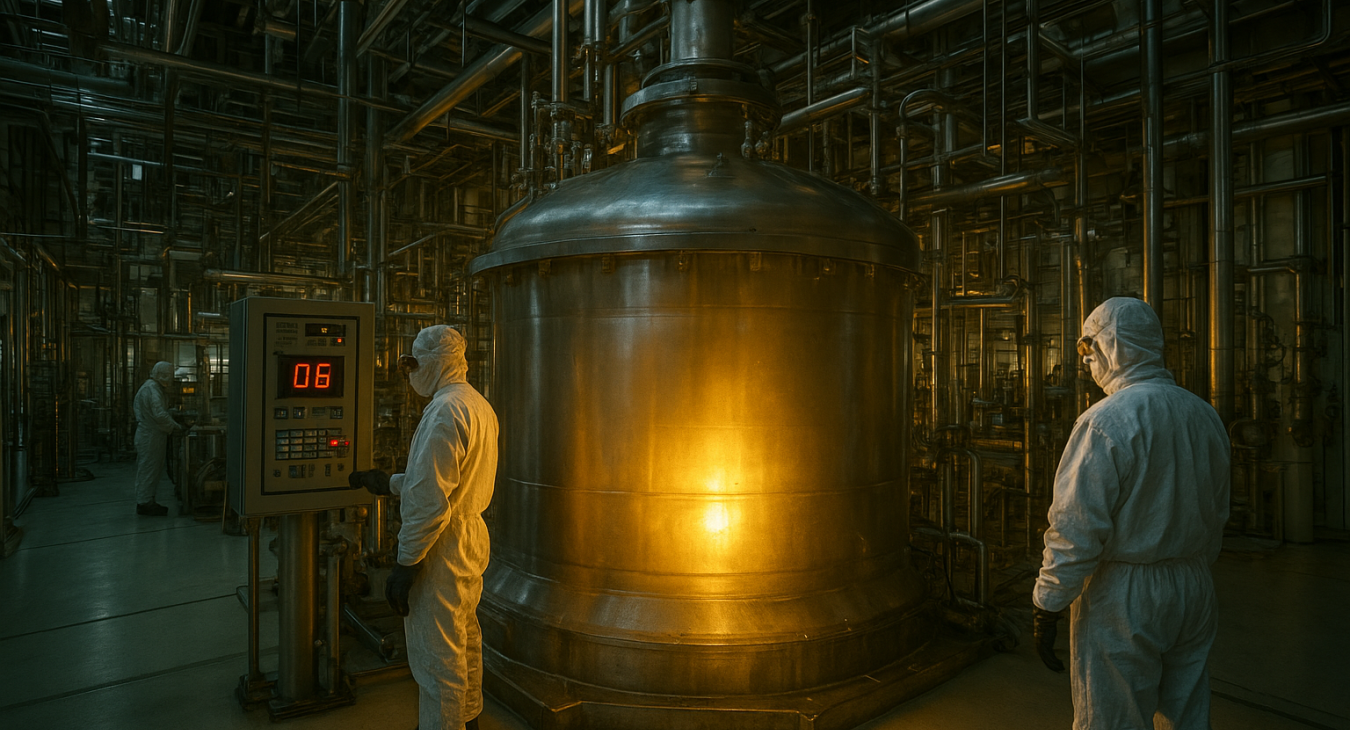
The incident that occurred on September 30, 1999, at the Tokaimura facility represents a significant learning experience in nuclear safety, highlighting the critical importance of procedural adherence and robust safety oversight. This event took place at a small fuel preparation plant operated by JCO (Japan Nuclear Fuel Conversion Co.), which was dedicated to supplying specialized research and experimental reactors, rather than being part of general electricity production.
The core process involved converting uranium oxide into usable solutions for fuel fabrication. Proper procedure dictated dissolving the uranium oxide powder in nitric acid within a controlled dissolution tank. This dissolved uranyl nitrate solution was then transferred through storage columns designed with criticality-safe geometries, before reaching a precipitation tank that featured a water cooling jacket to manage exothermic reactions.
The Path to Criticality: Deviations from Protocol
Investigations revealed that several unauthorized modifications contributed directly to the accident. Years earlier, the standard work procedure was changed without proper regulatory authorization, allowing uranium oxide to be dissolved in stainless steel buckets instead of the designated dissolution tank. Operators further accelerated the process by bypassing designed controls and tipping solutions directly into the precipitation tank. Instead of the safe mixing provided by the storage column, the material was mixed via mechanical stirring within the precipitation tank itself, circumventing established criticality safeguards.
Adding to these risks, workers that day were preparing a batch for the Joyo experimental fast breeder reactor using uranium enriched to 18.8% U-235. This enrichment level was significantly higher than what the experienced staff had previously handled (which was typically less than 5%). Critically, the team lacked proper qualification or training regarding the specific criticality implications of this high concentration.
The Self-Sustaining Reaction
At approximately 10:35 on September 30th, when roughly 40 liters of solution containing about 16 kg of uranium had accumulated in the precipitation tank, a critical mass was achieved. The nuclear fission chain reaction instantly became self-sustaining, causing an emission of intense gamma and neutron radiation and triggering alarms. It is important to note that while there was no physical explosion, fission products were released within the building.
The significance of this particular process being 'wet'—meaning water was present in the solution—was crucial because the water provided essential neutron moderation, which accelerated the chain reaction (most fuel preparation plants utilize dry processes). The criticality persisted intermittently for an extended period, estimated to be about 20 hours. This dangerous cycle continued as voids formed and disappeared within the boiling solution.
Mitigation and Aftermath
The critical reaction finally subsided when the surrounding cooling water was drained, which had acted as a neutron reflector. The emergency measures taken were highly effective: first, boric acid solution (a potent neutron absorber) was added to the tank to ensure the contents remained safely subcritical. This operation exposed 27 workers to some degree of radioactivity.
In the immediate aftermath, comprehensive safety procedures were implemented, including installing shielding against gamma radiation and monitoring facility integrity. The plant’s negative pressure ventilation system successfully collected particulate radionuclides via high-efficiency filters. Despite detecting low levels of iodine-131 released through the exhaust, authorities later made the decision to rely on passive confinement provided by the building structure itself.
Safety Lessons Learned
This accident underscored the critical need for strict regulatory oversight and a rigorous safety culture. The subsequent events led to massive systemic changes in nuclear regulation, including immediate removal of JCO's operational credentials. Furthermore, authorities enforced better procedures and conducted expansive education programs across the industry. Measures taken—such as redesigning process geometries and enforcing material control boundaries—are vital for preventing such severe incidents anywhere globally.
The response demonstrated resilience, leading to the evacuation of 161 people from 39 households within a 350-meter radius, ensuring that the community was safely guided until residual radiation hazards were eliminated by proper shielding measures.
Read more articles
- Log in to post comments