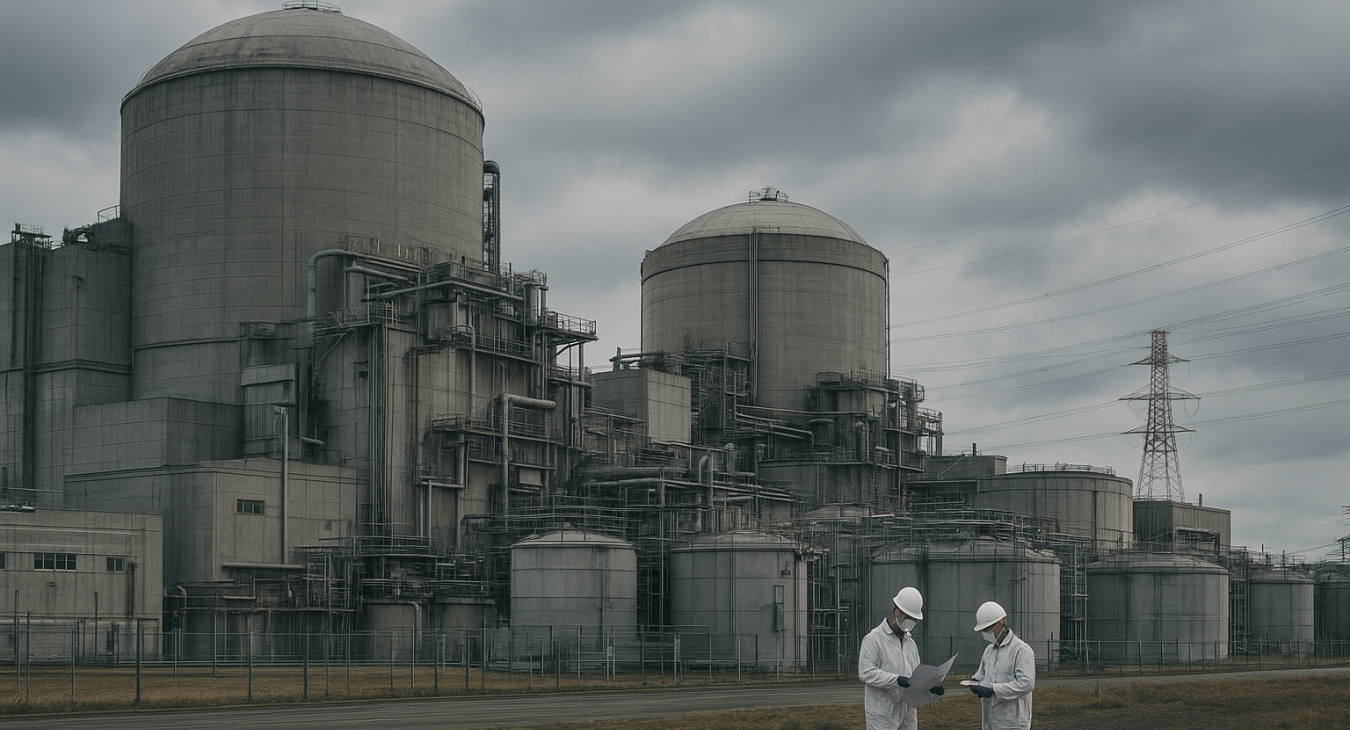
The village of Tōkai, located in Ibaraki Prefecture, Japan, played a vital role in Japan's nuclear energy landscape. Due to its location and available land, it became a central hub for research and development in the atomic industry. The complex history, punctuated by two significant incidents in 1997 and 1999, remains a profound reminder of the critical need for rigorous safety culture, operational oversight, and continuous learning within high-tech sectors.
The facility in question was situated in Tokaimura, Ibaraki Prefecture, at approximately 120km northeast of Tokyo. This site housed various uranium conversion buildings, designed to process materials necessary for generating electricity from nuclear energy.
The Incident of March 1997: The Radioactive Waste Fire
The first major incident occurred on March 11, 1997. It took place at the radioactive waste bituminisation facility operated by the Power Reactor and Nuclear Fuel Development Corporation (PNC). This site was designed to solidify low-level liquid nuclear waste in molten asphalt (bitumen) for storage. During an experimental trial involving a new asphalt-waste mixture ratio, a chemical reaction ignited within one fresh barrel, quickly spreading to others nearby.
Initial safety protocols failed when temperature controls were malfunctioning, and workers struggled with the fire. The situation escalated dramatically in the evening, resulting in an explosion that damaged walls and windows. This incident exposed many personnel to trace amounts of radiation and was designated as Japan's worst-yet nuclear accident at the time.
The Critical Lesson from 1997
Investigations revealed that the accidents stemmed from inadequate regulatory supervision, poor safety culture, and deficiencies in worker training. Furthermore, there were instances where management was accused of misrepresenting the severity or chronology of the events.
The Incident of September 30, 1999: The Criticality Disaster
Years later, on September 30, 1999, a second, highly significant accident occurred at the uranium fuel treatment facility. This was operated by Japan Nuclear Fuel Conversion Co. (JCO) and involved the purification of enriched uranyl nitrate solution for specialized research reactors.
The core issue stemmed from multiple deviations from established safety procedures. The process was designed with strict criticality controls—acting as a physical buffer to prevent an uncontrolled nuclear reaction. However, over time, operational modifications were made without proper regulatory approval. Instead of using dedicated tanks and controlled transfer methods, workers began manually mixing materials in stainless steel buckets and pouring the solution directly into the precipitation tank.
On this day, three workers—who lacked specific training for handling high-enrichment materials—loaded a volume far exceeding the safe limit. When the enriched uranyl nitrate reached critical mass, an uncontrolled nuclear chain reaction started, emitting intense gamma and neutron radiation. The criticality event lasted intermittently for approximately 20 hours.
Safety and Accountability
Both incidents highlighted a shared thread of vulnerability: deviations from strict protocols coupled with insufficient oversight. Following these two events, Japan mandated significant changes in its nuclear industry practices. New safety measures were put into effect, leading to rigorous inspections by the national atomic and nuclear commissions. The stringency surrounding procedures became paramount, ensuring that safeguards are maintained not just in principle, but in daily practice.
These historical incidents stand as critical educational case studies, promoting a continuous culture of vigilance among all stakeholders involved in nuclear processing and waste management. Their memory underscores the collective commitment required to safeguard public health and maintain industrial integrity.
Read more articles
- Log in to post comments