The Erosion of the Right to Health
In the West Bank, the fundamental right to health is not merely threatened by clinical shortages or medical complexities but is being systematically dismantled by administrative military policy. While international human rights frameworks emphasize that access to healthcare is a basic human right, for Palestinians living under occupation, this right is conditional. The intersection of military administrative policy and medical outcomes has created a landscape where the success of a life-saving treatment is often contingent on the political stability of a specific checkpoint rather than the clinical necessity of the patient. This structural reality transforms medical care from a guaranteed service into a high-stakes gamble against unpredictable closures.
Beyond Logistics: The Reality of Medical Apartheid
To frame the movement restrictions in the West Bank as mere 'logistical hurdles' or 'temporary security measures' is to ignore the systemic nature of the impediment. What appears on paper as security enforcement translates into a lived reality of medical apartheid. In this system, the ability of a person to reach a hospital or return home from a specialized clinic in Jordan is dictated by arbitrary military decisions. When checkpoints are closed or gates are installed, as seen in the case of Taybeh village near Ramallah following the events of October 7, 2023, the impact is not just a delay in transit. It is a direct intervention in the biological survival of individuals, where the density of checkpoints serves as a mechanism of territorial control rather than a simple security tool.
The Permitting System and Territorial Fragmentation
This current state of restriction is not an isolated phenomenon but the culmination of decades of evolving permit systems and the intentional fragmentation of West Bank territory. The structural evolution of the occupation has utilized movement restrictions to carve the West Bank into disconnected enclaves, making seamless travel between cities nearly impossible. This fragmentation ensures that any movement, especially for the purpose of medical necessity, requires navigating a labyrinth of military permits and physical barriers. This historical trajectory has turned the West Bank into a patchwork of restricted zones, where the very architecture of the land is designed to impede Palestinian cohesion and mobility.
The Failure of Security Justifications
The official military narrative frequently justifies these closures under the banner of 'temporary security enforcement.' However, a critical investigation into the necessity of these closures reveals a profound tension between stated security goals and the actual medical necessity of movement. When a woman is forced to give birth outside of a hospital because a road is blocked, or when a cancer patient cannot reach a specialist due to a sudden closure, the 'security' justification loses its legitimacy. These measures often function as a form of collective punishment, where the actions of a few result in the denial of essential services to an entire civilian population, regardless of their individual medical needs or security status.
The Economic Cycle of Medical and Existential Debt
The repercussions of these closures extend far beyond the immediate physical harm, creating a devastating economic ripple effect. Medical travel is already a massive financial burden for Palestinian families, often requiring significant savings or loans. When the King Hussein border crossing between the West Bank and Jordan is closed unexpectedly, patients treated abroad may find themselves unable to re-enter their homes. These patients are forced to stay in Jordan for extended periods, incurring massive costs for accommodation and food that they cannot afford. This creates a vicious cycle where the inability to move traps families in a permanent state of medical and economic debt, preventing them from ever regaining financial stability.
The Psychological Toll on Families and Individuals
Beyond the financial and physical impacts, there is an invisible, compounding psychological toll on West Bank families. Living in a state of perpetual unpredictability creates a chronic stress environment. Families must live with the constant anxiety that a scheduled surgery or a critical follow-up appointment might be canceled by a sudden military closure. For patients, the fear is not just of the disease itself, but of being trapped in transit or being unable to return to their support systems. This atmosphere of uncertainty erodes the sense of dignity and agency that is essential to the human experience, leaving many to express that they feel they have 'no freedom at all.'
Medical Professionals Under Siege
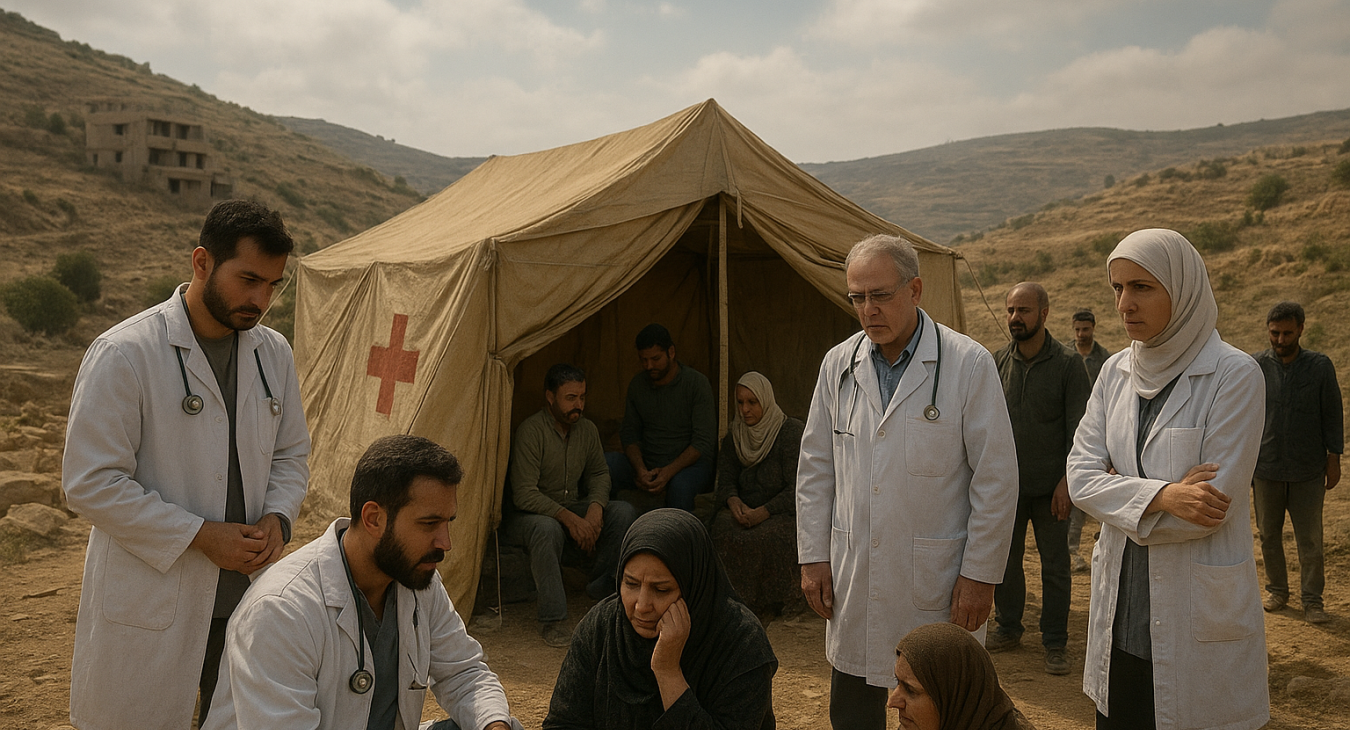
Medical professionals in the West Bank are forced to practice under conditions that are fundamentally unequipped for modern medical standards. Doctors and nurses must manage resource-strained environments where the supply chain for medication and equipment is often disrupted by the same movement restrictions that affect patients. They are forced to navigate the ethical dilemma of treating patients who arrive in critical condition because they were delayed at a checkpoint. These professionals are not just fighting disease; they are fighting a structural challenge that undermines the very foundations of medical ethics and the ability to provide dignified care to a population in crisis.
Conclusion: A Structural Challenge to Human Dignity
Ultimately, the situation in the West Bank cannot be viewed through the lens of isolated humanitarian incidents. The closures and checkpoints constitute a structural challenge to the basic human right to life. When movement is used as a tool of control, health becomes a privilege granted by an occupying power rather than an inherent right. As the fragmentation of the West Bank continues to deepen, the intersection of military policy and medical necessity will continue to create a landscape where survival is not determined by medicine, but by the opening or closing of a gate.