
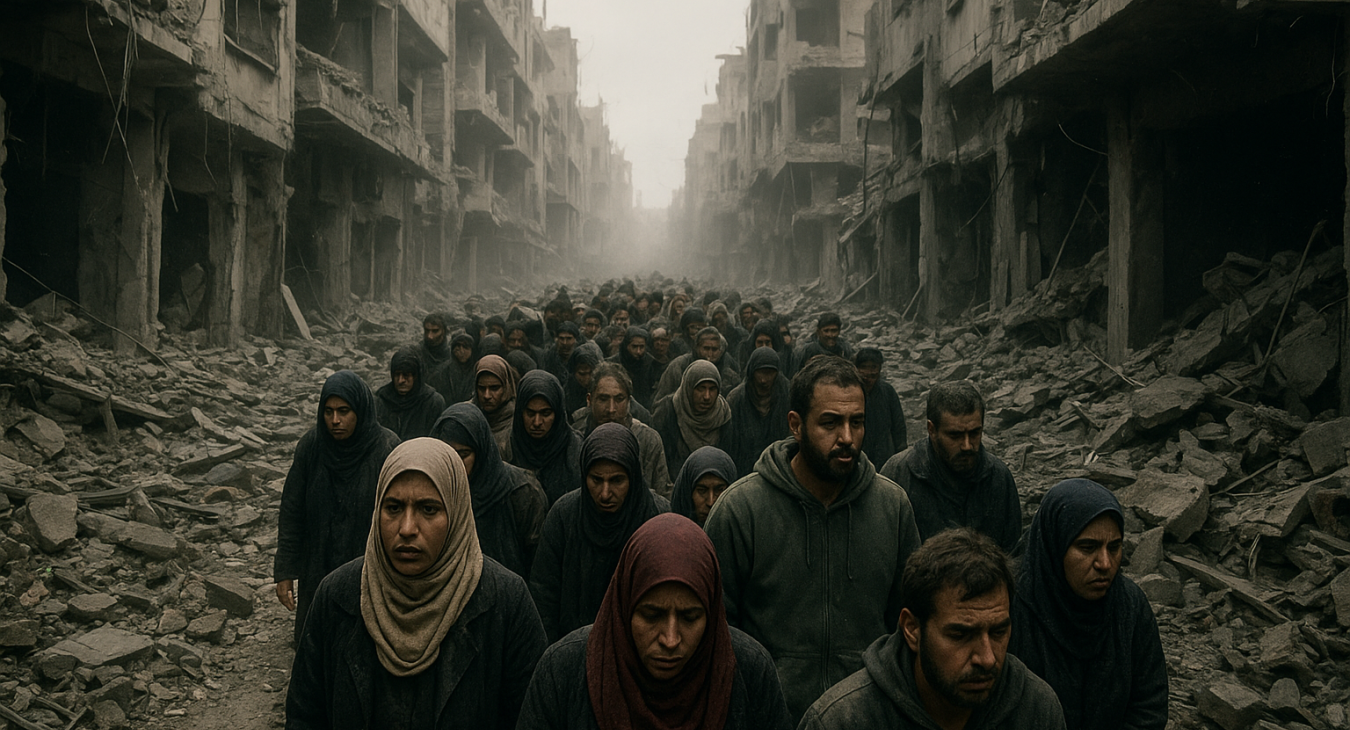
The Vanishing Concept of Safe Zones
In the urban landscape of the Gaza Strip, the concept of a 'safe zone' is rapidly becoming a legal and physical impossibility. Recent military operations, including an Israeli airstrike that resulted in the death of at least one Palestinian and injured over twenty others, have highlighted a grim reality: the distinction between combat zones and civilian refuges is blurring. When an airstrike strikes a mosque and adjacent tent camps sheltering hundreds of displaced persons, the impact extends far beyond the immediate casualty count. It signals a broader pattern where the traditional protections afforded to non-combatant sites under International Humanitarian Law (IHL) are increasingly compromised. The destruction of these sites challenges the fundamental tenets of distinction and proportionality, which are central to the laws of armed conflict.
The Myth of Feasible Evacuation
Official military narratives often rely on the premise of 'forced evacuations' to justify strikes in densely populated areas. The logic suggests that by notifying civilians to move, the military fulfills its duty to protect non-combatants. However, an investigation into the ground reality suggests that these evacuations are often more symbolic than functional. When the targets of these strikes include the very structures meant to provide refuge, such as mosques and tent camps, the notion of a safe destination disappears. For a population already undergoing mass displacement, being ordered to move from one contested area to another does not constitute a viable safety measure if the destination is equally susceptible to kinetic operations. The systematic dismantling of civilian infrastructure makes the act of evacuation a journey from one danger zone to another, rather than a transition to safety.
Religious Sites as Community Anchors
The destruction of religious sanctuaries, such as the Khalid bin al-Walid mosque or the striking of the Church of Saint Porphyrius, represents more than the loss of architectural heritage. In the Palestinian context, mosques and churches serve as essential community anchors and psychological refuges. These sites are the social fabric of the community, providing not just spiritual guidance but also a sense of continuity and collective identity in times of extreme trauma. When these structures are leveled, the sociological impact is profound. The loss of a mosque is not merely the loss of a building; it is the destruction of a communal hub that facilitates mutual aid, mourning, and social cohesion. This erasure contributes to a sense of 'placelessness' among the displaced, making the psychological recovery of a population significantly more difficult.
Legal Dilemmas in Urban Warfare
The recurring strikes on religious sites and shelters raise urgent questions regarding the legal application of 'proportionality' and 'distinction.' Under the Geneva Conventions, military necessity must be balanced against the anticipated harm to civilians and civilian objects. Critics argue that the scale of destruction observed in Gaza, where mosques and tent camps are frequently caught in airstrikes, suggests a failure to uphold these principles. The debate centers on whether the military advantage gained by a strike outweighs the devastating impact on the civilian population. As urban warfare becomes more complex, the line between a legitimate military target and a protected civilian object becomes a central point of contention in international legal debates, particularly when the infrastructure being destroyed is vital for the survival and dignity of the civilian population.
The Sociological Impact of Systematic Dismantling
Beyond the immediate reports of strikes and casualties, there is a long-term sociological phenomenon occurring in Gaza: the systematic dismantling of the foundations of civilian life. The cumulative effect of losing homes, religious sites, and basic infrastructure creates a state of perpetual instability. This is not just a series of isolated tactical events but a broader trend that erodes the structural basis of Palestinian society. When residential areas, places of worship, and humanitarian shelters are destroyed, the ability of a society to maintain its internal order and provide for its most vulnerable members is severely compromised. The long-term consequence is a cycle of displacement and trauma that hinders any possibility of social or economic reconstruction for generations to come.
Conclusion: Beyond the Casualty Count
To understand the crisis in Gaza, one must look past the daily updates of death tolls and focus on the systemic erosion of the civilian environment. The destruction of mosques and the targeting of displacement camps represent a fundamental shift in the nature of the conflict, where the traditional boundaries of protection are being stripped away. As religious and residential foundations are dismantled, the humanitarian crisis evolves from a struggle for immediate survival into a struggle to preserve the very structures of human community and identity. The international community faces an increasing challenge in holding actors accountable to the principles of IHL when the physical landmarks of civilian life are being systematically removed from the map.



