
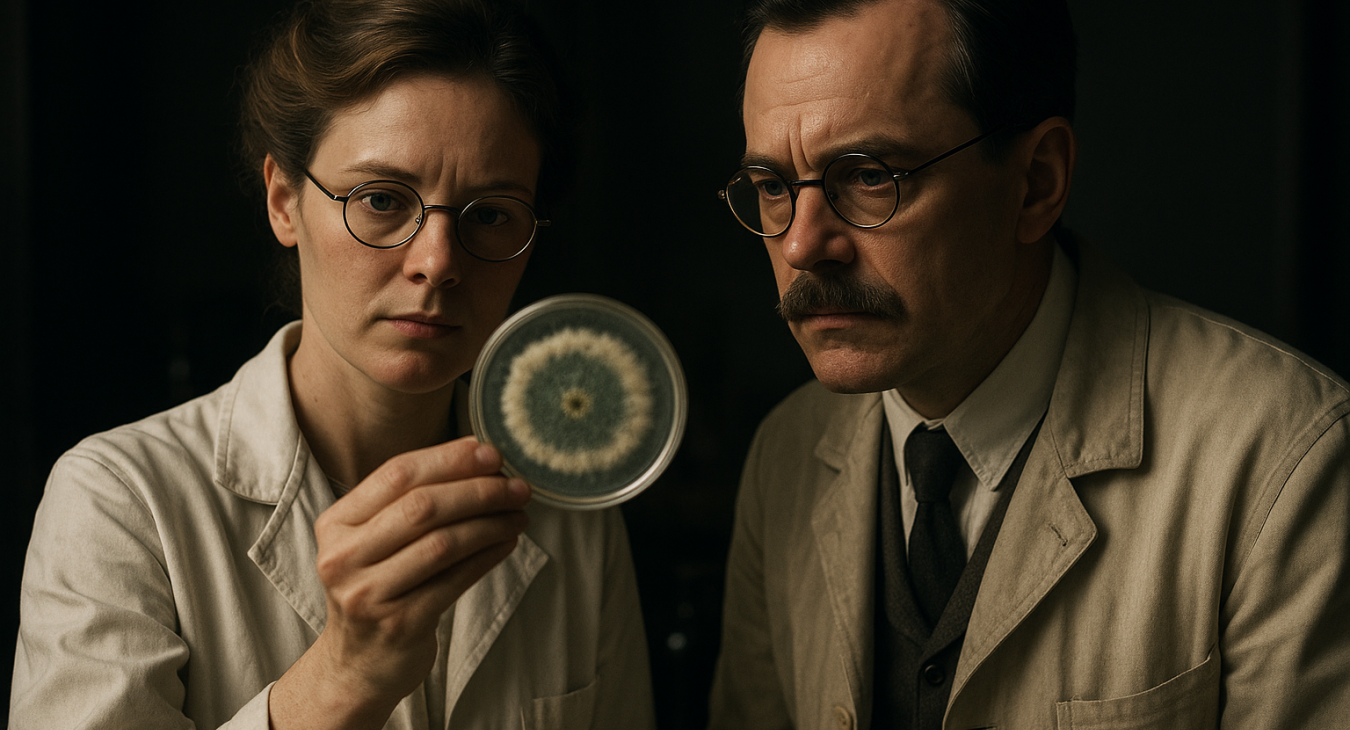
The discovery of penicillin stands as one of the most significant milestones in medical history. It transformed how we treat bacterial infections and paved the way for modern pharmacology. This revolution began not with a complex chemical synthesis but with a simple observation of nature.
The Accidental Discovery
In 1928, Alexander Fleming returned to his laboratory at St. Mary's Hospital in London after a vacation. He noticed that one of his Petri dishes containing Staphylococcus bacteria had been contaminated by mold. Interestingly, the area surrounding the mold was clear of bacterial growth. This observation led him to identify the mold as Penicillium notatum and conclude that it produced a substance capable of killing bacteria.
The Mechanism of Action
Penicillin works by inhibiting the synthesis of bacterial cell walls. It targets the peptidoglycan layer, which is essential for structural integrity in many types of bacteria. Because human cells do not possess this specific structure, penicillin can effectively eliminate pathogens without harming the host organism.
From Lab to Pharmacy
While Fleming identified the active agent as penicillin, it took years for other scientists to isolate and purify the substance. This process eventually led to the development of a family of widely used antibiotics that are still essential today in treating various infections.



