The Mechanics of a Warming Cycle
Meteorologists often describe El Niño as a shift in the ocean-atmosphere system. In its simplest form, it involves the warming of surface waters in the central and eastern equatorial Pacific. This thermal anomaly disrupts the Walker Circulation, shifting precipitation patterns across the globe. For some, it brings torrential rains; for others, it brings a searing, bone-dry heat. While scientists study these shifts through sea surface temperature (SST) anomalies, the physical reality for those on the ground feels less like a scientific cycle and more like an inevitable siege.
Current projections suggest that this specific El Niño event could be linked to 451,000 excess deaths globally. That number functions as a grim placeholder. It is a mathematical estimate, a calculation of mortality that rests on the most conservative assumptions. However, viewing these figures in isolation misses the broader tragedy. The data tells us how many people might die directly from heatstroke, but it struggles to account for the quiet, slow-motion disasters that follow: the failure of maize crops in the Sahel, the contamination of groundwater during sudden floods, or the exhaustion of a laborer who can no longer work during the mid-day peak.
The Invisibility of the Indirect Toll
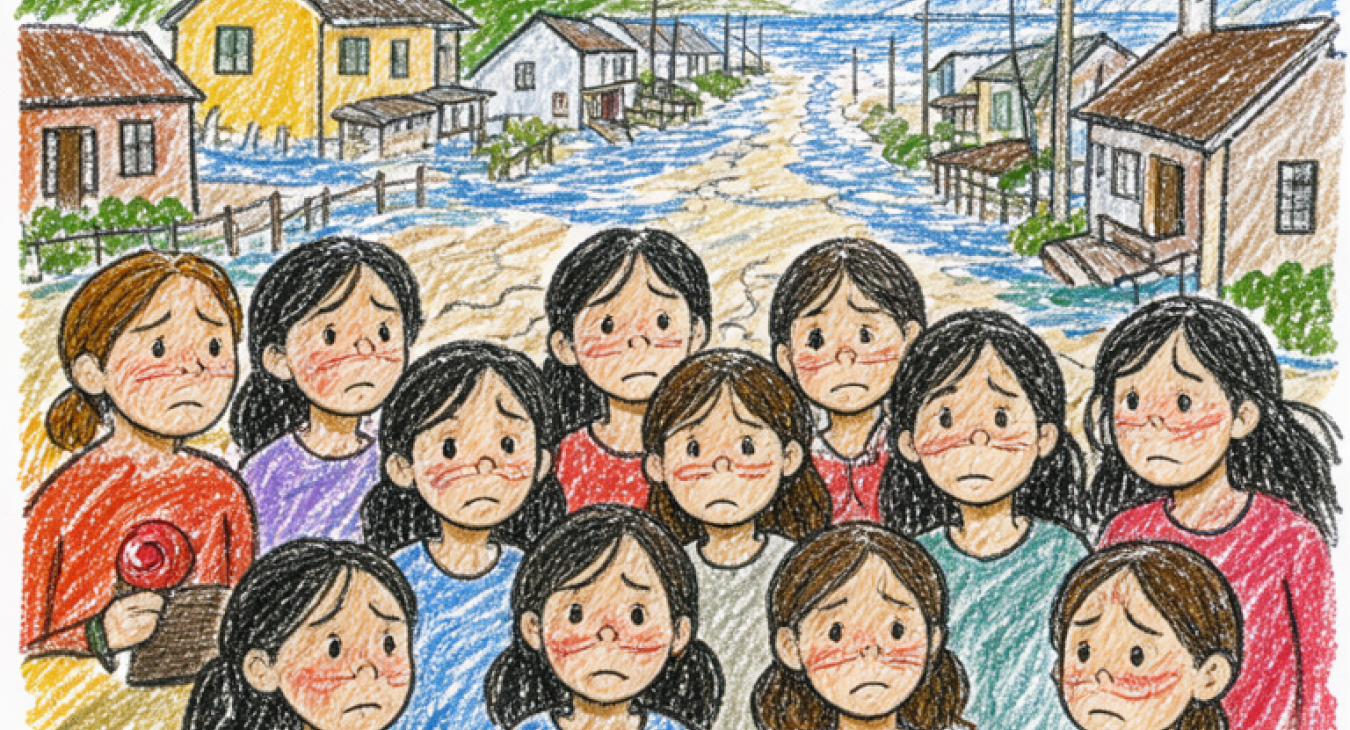
Standard mortality statistics are notoriously narrow. A death caused by heat exhaustion is recorded by a hospital; a death caused by a famine resulting from a failed monsoon is often categorized under malnutrition or general disease. In regions like South Asia or sub-Saharan Africa, local health registries are often underfunded and overburdened. When a village in a low-income country loses its residents to cholera after an El Niño-induced flood, the link to the climate cycle is frequently lost in the paperwork. This creates a "statistical shadow," where the true human cost of extreme weather remains unrecorded and, therefore, unaddressed by international aid.
We must look beyond the direct heatstroke to see the real vulnerability. A lack of data doesn't mean a lack of death. It means the mechanisms of climate impact are layered. A farmer in the Deccan Plateau might survive the heat itself, only to succumb to the economic ruin of a dry season that prevents them from paying for medical care for a child. The 451,000 figure is merely the tip of an iceberg made of systemic fragility.
The Adaptation Gap and Urban Inequality
The ability to survive a heatwave is not a biological trait; it is a product of infrastructure. In a wealthy metropolitan area, a heatwave is a discomfort managed by air conditioning and a stable power grid. In a crowded informal settlement in Lagos or Mumbai, heat is a physical weight. These urban environments often suffer from the "urban heat island" effect, where concrete and asphalt trap warmth, keeping nighttime temperatures dangerously high. For residents in these areas, there is no cooling-off period, even when the sun goes down.
Energy poverty turns temperature into a matter of life and death. In many parts of the Global South, even if an individual can afford a cooling device, the electrical grid may be too unstable to support it. When the lights flicker or go out during a peak heat event, the protection vanishes. This is the essence of the adaptation gap: the distance between the ability to mitigate environmental stress and the necessity of enduring it. We are witnessing a world where survival depends on one's proximity to a steady current and a thick wall of insulation.
A Postcard from a New Normal
Some researchers call these extreme events a "postcard from the future." This phrasing suggests that what we are experiencing during this El Niño cycle is a preview of a permanent state. We are moving away from a world of erratic, predictable weather patterns and toward a reality of