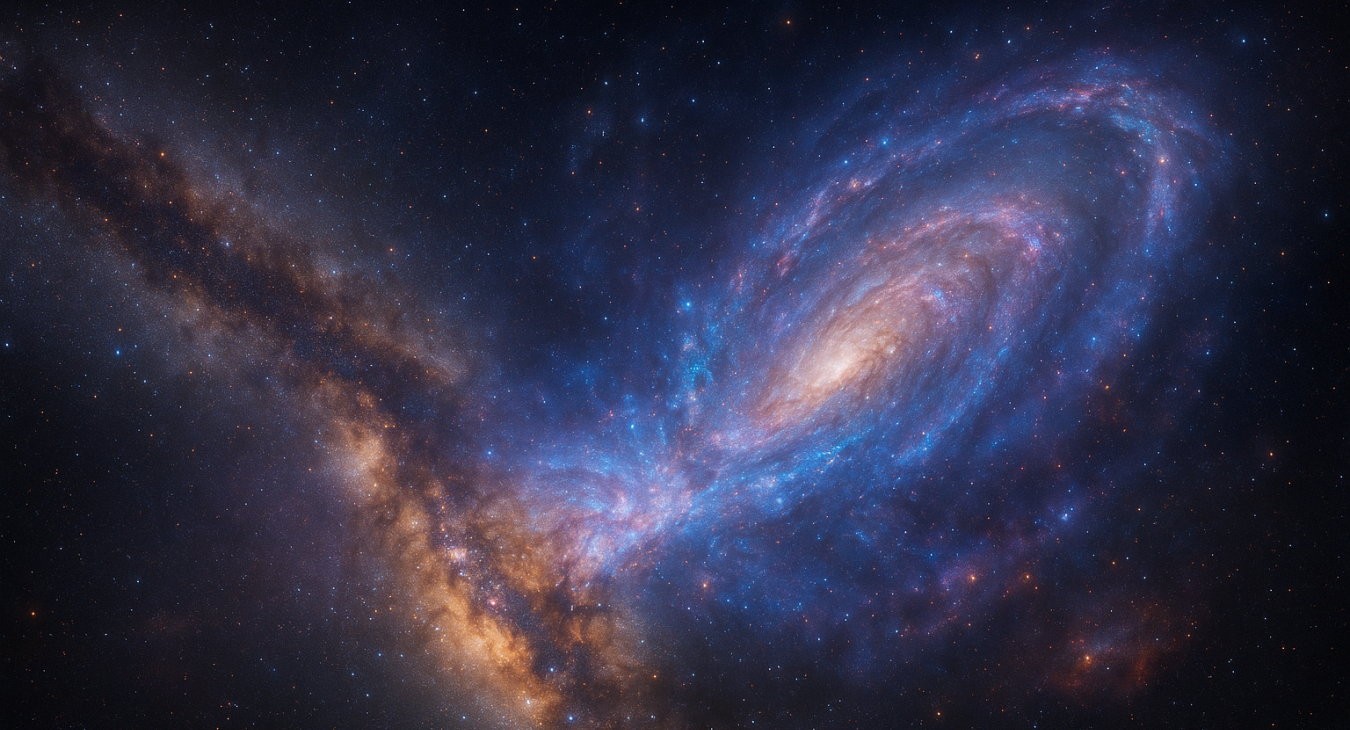
The structural disruption of the Small Magellanic Cloud (SMC) is a complex process driven by multiple gravitational influences. Astronomers have long debated whether the primary cause of this distortion is the tidal forces exerted by the Large Magellanic Cloud (LMC) or the massive gravitational pull of our own Milky Way galaxy.
Current scientific consensus suggests that the interaction between the two Magellanic Clouds plays a dominant role in the SMC's current state. The LMC exerts significant tidal forces that cause significant distortions in the gas and stellar distribution within the SMC. This close interaction often leads to tidal bridges of material connecting the two galaxies.
While the Milky Way provides the overarching gravitational field that keeps the entire Magellanic system in orbit, the specific internal structural irregularities seen in the SMC are more directly linked to its frequent and close encounters with the LMC. Therefore, while the Milky Way influences the orbital path, the LMC is the primary driver of the SMC's internal structural disruption. Understanding these complex gravitational dances helps scientists map the history of our local galactic neighborhood.