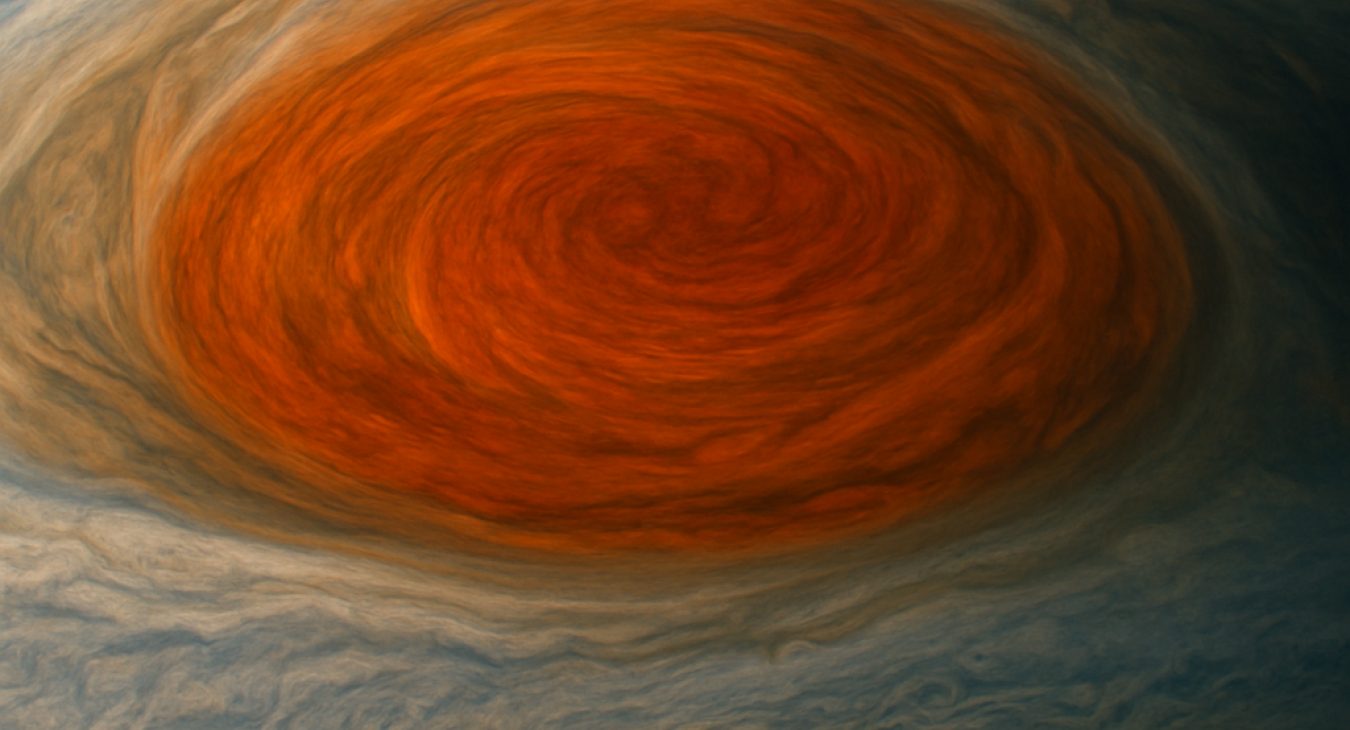
The sheer scale and persistence of Jupiter’s Great Red Spot (GRS) make it one of the most astonishing natural phenomena in our solar system. This massive, swirling storm, larger than Earth, has captivated humanity for centuries. It is a window into planetary weather dynamics on an unimaginable scale, constantly reminding us of the colossal power at play.
A History Forged by Giants
The Great Red Spot’s longevity is almost unbelievable. While astronomers first began its detailed study in the 17th century, observations suggest this swirling vortex has raged for at least 350 years, possibly much longer. Unlike Earth’s hurricanes, which dissipate after making landfall or over time, Jupiter’s atmosphere lacks a surface to slow down these colossal storms. This allows features like the GRS to maintain their power and structure for centuries.
The Science Behind the Swirl
Located far south of Jupiter's equator, this region is classified as a persistent high-pressure anticyclonic storm. The powerful winds within the spot can reach astounding speeds of up to 496 km/h (308 mph). Scientists believe the main cloud layer is likely ammonia, though the exact chemistry responsible for its signature red-orange color remains a subject of intense research.
According to modern observations, the GRS is not static. Using tools like NASA's Hubble Space Telescope, astronomers have captured high-resolution images showing that the spot is continuously wobbling and fluctuating in size. This suggests an incredibly complex, dynamic internal engine driving its perpetual motion.
Personal Connection to Cosmic Wonders
While we cannot take a selfie with Jupiter's storms, the anticipation of discovering them through technology creates a profound sense of connection. Imagine receiving detailed data showing how this giant vortex continues to gobble up smaller neighboring storms—it feels like witnessing an epic drama played out over eons. The persistence and magnitude dwarf any weather event experienced on our own planet.
Exploring Jupiter’s Majesty
For those with a deep fascination for planetary science, consulting reputable astronomical sources can deepen your understanding of this celestial spectacle. Although specific local addresses aren't relevant here, learning from these established resources allows us to follow the ongoing scientific narrative surrounding Jovian storms.
To delve deeper into the sheer scope of Jupiter’s atmospheric mechanics and storm evolution, checking professional astronomical archives is highly recommended. You can explore general planetary data sources online at www.nasa.gov, an amazing resource that continually updates our knowledge about cosmic phenomena like the Great Red Spot.
The GRS truly stands as a breathtaking reminder of nature's limitless power and the enduring wonder of space exploration.
Read more articles
- Log in to post comments