• Dansk
  • English
Home
Thinkiverse
Where every subject connects
  • Front Page
  • Subjects
  • FAQ
  • Contact
  • Search

Breadcrumb

  1. Home

Whispers of Resilience: Remembering the Aftermath of Fukushima Daiichi

Accidents
Nuclear Energy
Nuclear Waste
Environment
June 14, 2026
by Editor
Massive tsunami waves crashing over the heavily damaged Fukushima Daiichi nuclear power plant complex after the 2011 earthquake, showing ruined industrial infrastructure.

The tragedy at Fukushima Daiichi on March 11, 2011, was not just a nuclear accident; it was a devastating intersection of nature’s fury and human vulnerability. The powerful Magnitude 9.0 Great East Japan Earthquake initiated an overwhelming tsunami that fundamentally altered the landscape and the lives of thousands near the Pacific coast.

A Community Defined by Loss

The immediate impact was immense, resulting in profound displacement and a disruption of daily life. Many people, forced to evacuate their homes, found themselves adrift in uncertainty. While radioactive material was released, comprehensive international assessments, including the UNSCEAR 2021 Report, have continually reinforced that the radiation did not cause direct impacts on human health from the accident itself.

The Human Cost of Displacement

However, the true struggle lay in the fallout—the social and emotional toll. For those who fled, the challenges included lack of access to routine healthcare, managing chronic stress, and rebuilding a sense of normalcy far from their familiar surroundings. Personal stories speak not only of the physical threat but of the quiet loss of community life, gardens, and livelihoods that underpinned the culture of the Fukushima Prefecture.

A Journey Toward Recovery

In the wake of the disaster, Japanese authorities faced one of history's most complex clean-up and recovery operations. The work since 2011 has been monumental, focusing on stabilizing the damaged reactors, decommissioning the site, and undertaking comprehensive remediation across neighboring prefectures. This effort required massive collaboration among experts globally.

Lessons in Resilience

From this profound crisis emerged global improvements in nuclear safety standards. The international community analyzed these events to develop more robust power systems, advanced fuel designs, and better emergency protocols for handling external hazards. These lessons have strengthened preparedness worldwide.

The path forward is one of incredible resilience. Remembering Fukushima Daiichi means acknowledging the profound loss while celebrating the enduring spirit of its people—a deep commitment to recovery, rebuilding both physical infrastructure and the cherished bonds of community life.

Read more articles

Chernobyl’s Echo: Lessons from Resilience in Modern Ukraine
Newer
Chernobyl’s Echo: Lessons from Resilience in Modern Ukraine
Inside the Three Mile Island Partial Meltdown
Older
Inside the Three Mile Island Partial Meltdown
Rating
1.08
  • Log in to post comments
Editor

Related Subjects

Smart Ways to Protect the Nighttime Darkness and Save Stars
The Dark Side of Light
The Vanishing Night
Tiny Night Hunters
Night Guardians
Reducing Bats Threatens Crop Health
Nature's Silent Guardians
Combatting Bats Wisely
Understanding Bat Removal
The Truth About Bat Removal
  • Two women in professional roles examining shielded, downward-facing lights while looking up at a breathtakingly dark, starry sky at dusk, depicting community efforts to reduce light pollution.

    Smart Ways to Protect the Nighttime Darkness and Save Stars

    Sep 10, 2026
    Editor
  • A group of men and women stand on a shore, looking up at a vast, detailed starry sky over dark water, emphasizing existential scale.

    The Dark Side of Light

    Sep 09, 2026
    Editor
  • Small group of women with warmly lit faces gazing at a clear, pollution-free Milky Way over a coastal landscape at night.

    The Vanishing Night

    Sep 09, 2026
    Editor
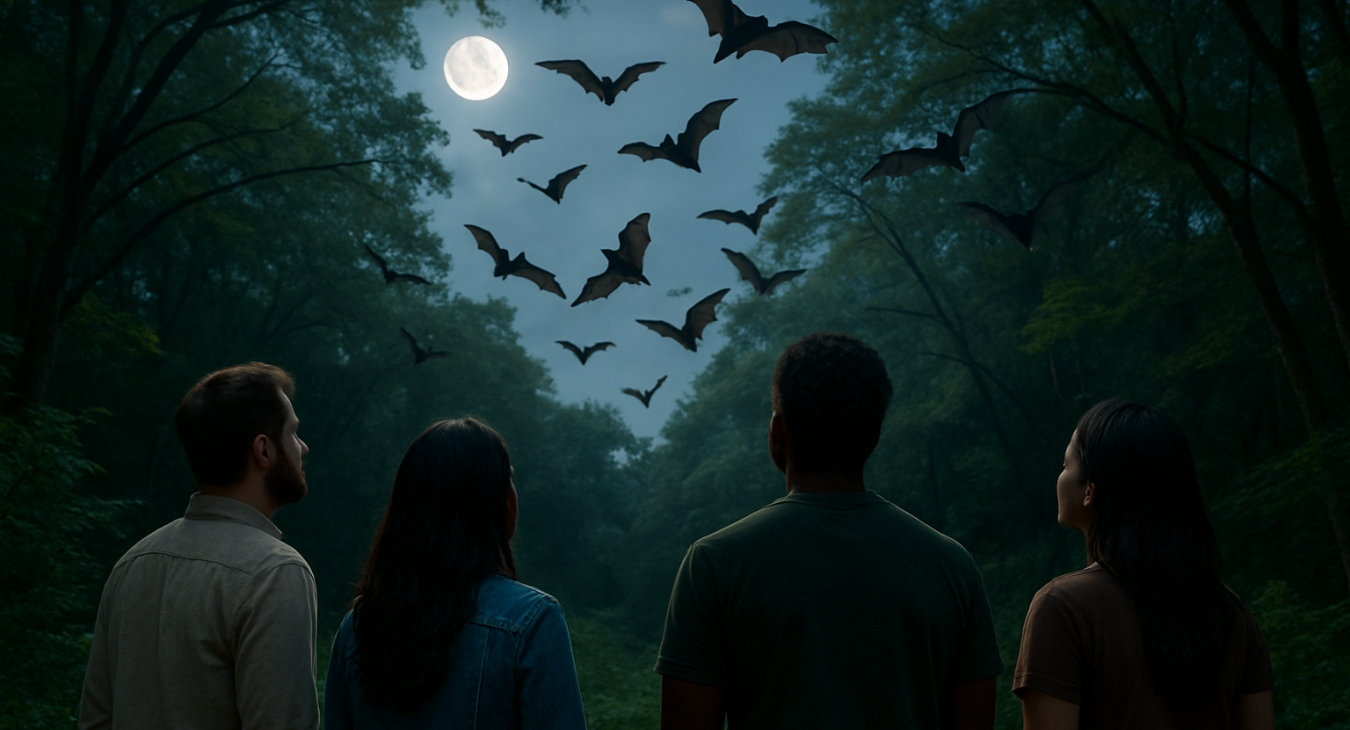
  • A diverse group of men and women observing a colony of bats flying through a moonlit forest canopy, capturing a moment of ecological wonder.

    Tiny Night Hunters

    Aug 11, 2026
    Editor
Home
Thinkiverse
Where every subject connects

Frequently asked questions we try to answer on thinkiverse.dk

How to offset temperature spikes from reduced sulphate aerosols?

How do massive datasets cause bias in AI?

What is the chemical composition of the dark dust lane, and how does it influence the rate of new star formation within the Sombrero Galaxy?

How do cultural norms affect the psychological benefits of naturism?

How did economic reliance on nuclear energy affect protests in Tokai-mura?

Popular Categories

Technology
Politics
Science
Psychology
Health
Law
Artificial Intelligence
Finance
Security
Environment
Biology
Sustainability
 
Copyright ©, thinkiverse.dk 2026

What is Thinkiverse.dk?

Terms of usage