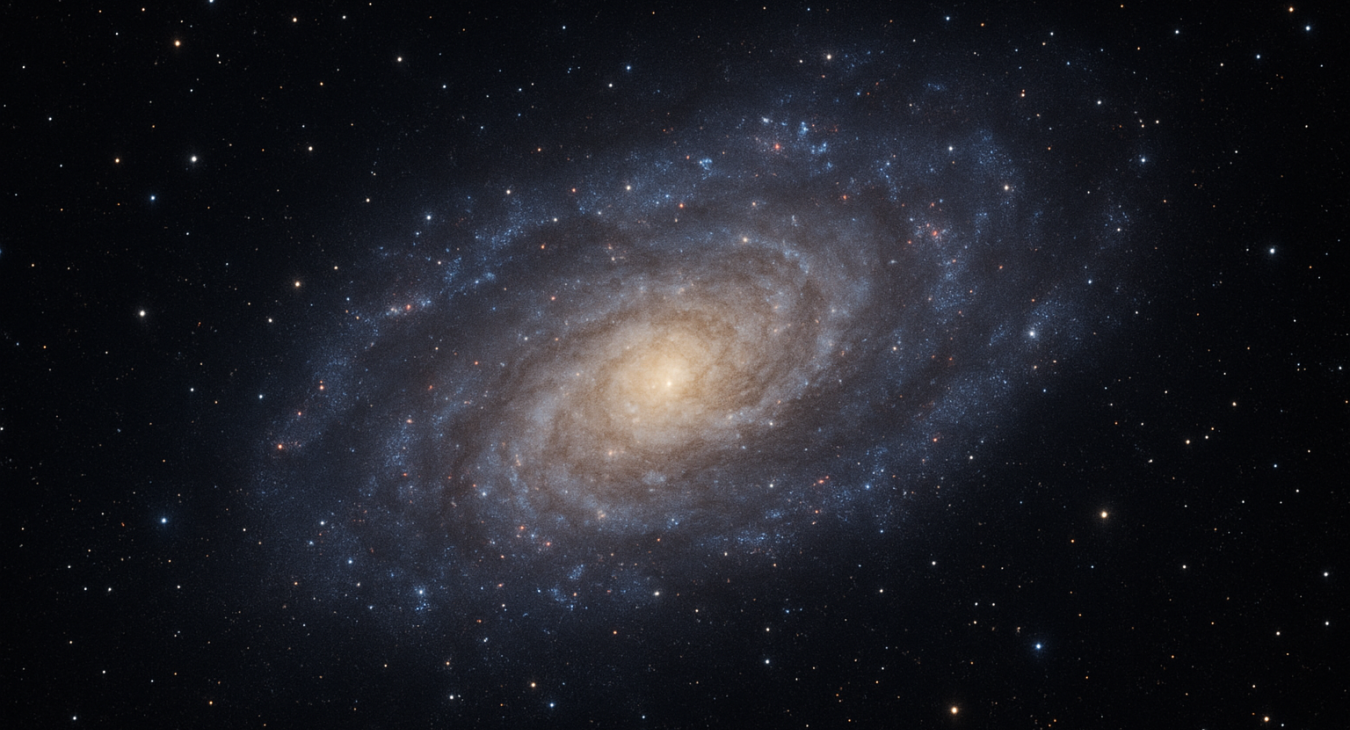
Embarking on a journey to observe galaxies like the Triangulum (M33) is one of humanity’s most rewarding pursuits. It feels less like looking at an object 2.878 million light-years away and more like connecting with a silent, cosmic neighbor.
The Triangulum Galaxy, designated Messier 33 or NGC 598, is a magnificent spiral galaxy located in the celestial constellation Triangulum. It holds a unique position as the third-largest member of our Local Group of galaxies, trailing only the Milky Way and its more prominent neighbor, Andromeda (M31). This placement gives it the nickname 'the Lone Spiral Neighbor' for those who appreciate its intriguing relationship with M31.
Cosmic Connections and Size Comparison
Its scale is truly impressive. With a diameter of 18.74 kiloparsecs, it is about half the size of our own Milky Way galaxy. Astronomers often study M33's possible interactions with both Andromeda and the Milky Way, suggesting it might be a satellite or undergoing gravitational interplay with them due to their proximity.
The Triangulum Galaxy presents itself beautifully face-on to Earth, which makes it an ideal target for deep-sky observation. This orientation allows us incredible views of its intricate spiral arms, showcasing millions of individual stars within its structure.
The Challenge and Reward of Viewing M33
While relatively nearby—estimated around 3 million light-years away—M33 is not an easy target to observe with the naked eye. Seeing it requires excellent dark sky conditions, good eyesight, and often specialized equipment like binoculars or a telescope.
My personal experience has taught me that patience is key. Although M33 is technically one of the most visible objects in the night sky with the unaided eye, visualizing its immense beauty firsthand through optics is truly breathtaking. Spotting this pinwheel-shaped spiral galaxy feels like finding hidden treasure above the clouds.
For those who are planning an intensive study of this incredible object, some leading research teams have utilized resources and institutions such as the California Institute of Technology in Pasadena, CA (1200 E California Blvd., Pasadena, CA 91125, USA), showcasing the depth of scientific engagement with M33.
A Glimpse into Discovery
The dedication to mapping and understanding M33 is ongoing. Major astronomical studies, such as those documented in papers regarding the Panchromatic Hubble Andromeda Treasury (PHAT), continuously provide high-resolution mosaics that resolve millions of individual stars within its core region. These advanced observations confirm M33's status as a stellar powerhouse and a crucial subject for galactic research.
While specific field trips to observe it are highly dependent on local conditions, I always recommend checking reputable astronomy portals or contacting local observatories. A fantastic resource for continuous updates regarding celestial objects is available online, keeping enthusiasts informed about sky alerts and great photos.
Discovering M33 reminds us that even massive galaxies operate within a network of relationships, making it a spectacular reminder of the interconnected wonders of our cosmic home.
Read more articles
- Log in to post comments