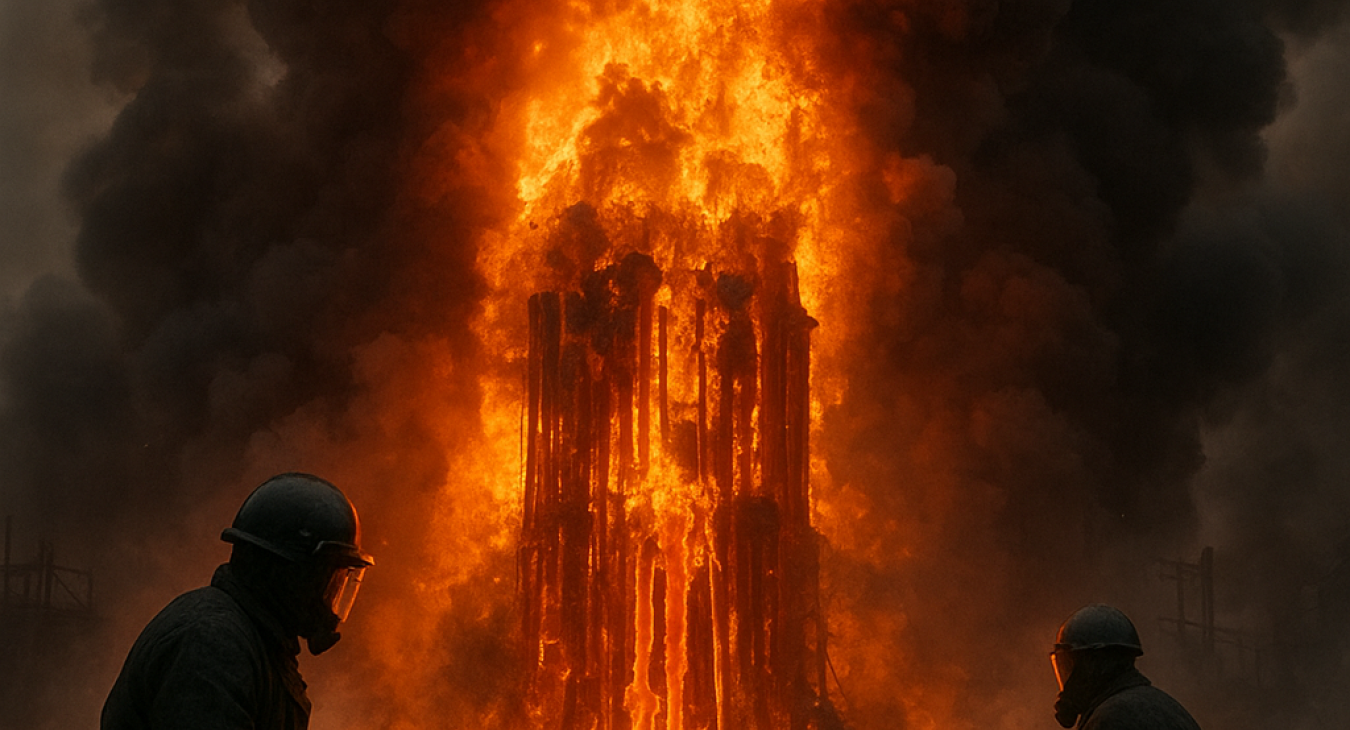
The Windscale fire of October 1957 stands as a profound and difficult chapter in British industrial history. It remains officially recognized as the worst nuclear accident in the United Kingdom’s modern history, an event that sent ripples of radioactive concern across Britain and parts of Europe.
Located at Windscale Works on the north-west coast (now part of Cumbria), this site was initially established not for civilian power generation, but crucially to produce plutonium for Britain's atomic weapons program. The two reactors, known as 'piles,' were built with extraordinary speed in the post-war period.
The Build-Up and Oversight Failures
Like many projects driven by national urgency, the Windscale initiative emphasized speed over absolute caution. Although Sir John Cockcroft's insistence on adding filters to the reactor chimneys was initially seen as an expensive setback—derisively called 'Cockcroft’s Follies' at the time—this foresight proved vital in mitigating environmental damage later.
The core of the issue lay with novel technology: the graphite moderator components were prone to building up energy known as Wigner energy. Scientists, unaware of this inherent risk, needed periodic heating processes (annealing) to release it. The catastrophic event began on October 7th during a routine annealing procedure in Pile 1. When subsequent attempts failed to adequately control the rising temperatures, critical problems accumulated.
The Night of the Fire
By October 10th, operators realized what was happening: the uranium fuel within the reactor had ignited. Despite concerted efforts—including attempting to push molten fuel cartridges into a cooling pond and flooding the reactor with water—the initial attempts failed to control the intense heat reaching around 1,300 degrees Celsius. As a desperate final measure, all air circulation and cooling were shut off, eventually starving the blaze of oxygen until it died out.
The immediate public impact centered on iodine-131 contamination. Radioactive particles spread into the surrounding countryside. The most visible consequence was the necessary ban on milk from areas around the plant for nearly a month, protecting residents from potential exposure to radioactive isotopes that could affect the thyroid gland. This restriction, while causing local disruption, highlighted an early public response mechanism.
Aftermath and Lessons Learned
The government at the time heavily controlled information regarding the incident, fearing it would damage international relations. However, subsequent investigations revealed that although initial fears of widespread catastrophic harm were overstated by predictions, the event was a stark historical lesson in nuclear safety protocols.
Today, the site remains significant as it undergoes a complex, centuries-long decommissioning process. The story of Windscale serves as a powerful, natural reminder that even moments of high national ambition require meticulous attention to scientific detail and absolute commitment to public safety. It speaks volumes about resilience, recovery, and the continuous evolution of knowledge in managing the power we harness.
The legacy of this event continually drives advancements in nuclear engineering and protective science globally.
Read more articles
- Log in to post comments