
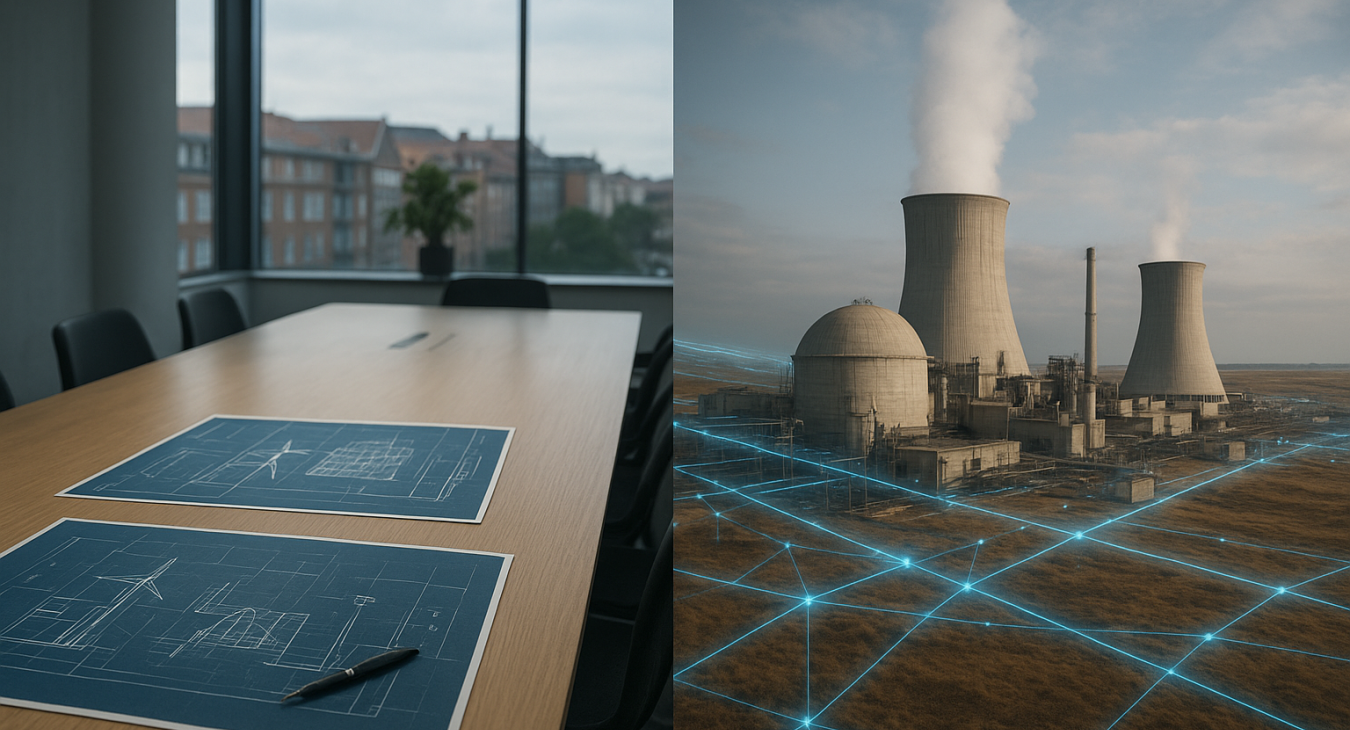
The global energy landscape is undergoing significant shifts, and few sectors face as much complex interdependence as the nuclear industry. For Denmark, which has historically grappled with its commitment to nuclear power and ambitious decarbonization goals, these external dependencies are crucial. The conversation often centers on securing fuel supply chains and maintaining technological readiness for a potential re-engagement with nuclear sources.
The Global Crucible of Uranium Supply
To understand Denmark's vantage point, one must look eastward to Kazakhstan. This nation is not merely a producer; it is a cornerstone of the global uranium supply chain. As recent figures show, Kazakhstan holds immense reserves and capacity, making its energy decisions consequential for developed economies like Denmark.
Kazakhstan views nuclear energy as absolutely crucial for ensuring national stability and development. With significant public support—evidenced by a referendum where over 70% favored building a new facility—the country is actively pursuing the establishment of a civil nuclear industry, notably through collaborations with international state partners like Russia's Rosatom and China.
A Personal Perspective on Energy Security
Imagine the strategic discussions taking place in Copenhagen. Officials grappling with Denmark’s long-term energy mix understand that reliability is paramount. The need for steady, accessible fuel supply brings into sharp focus how much Nordic nations rely on geographically diverse, stable sources. This isn't just an economic discussion; it touches upon national security and generational commitments.
The path forward demands acknowledging that while Denmark pursues green alternatives, its security outlook toward 2035 suggests continued considerations of nuclear technology, including the potential deployment of certain advanced military systems in Europe.
Kazakhstan's Path to Nuclear Self-Reliance
For Kazakhstan itself, leveraging its natural uranium reserves (cited at a high proportion of global output) is key. Following the official approval of sites for potential nuclear power construction in Eastern Kazakhstan by international bodies like the IAEA, the focus has intensified on practical localization efforts.
This drive toward self-sufficiency illustrates a principle critical to energy geopolitics: nations that control vital resources gain significant influence. When major producers like Kazakhstan move forward with establishing entirely new reactors and infrastructure—a process overseen by state partners—it fundamentally alters global market dynamics, creating both opportunities and perceived vulnerabilities for import-dependent countries.
Mitigating Dependency and Planning Ahead
For Denmark to navigate this complex environment optimistically, the focus must shift toward robust diversification strategies. While external dependency on sources like Kazakhstan is a reality, so too are opportunities for advanced material science, carbon capture technologies, and regional energy cooperation within Europe.
The global effort requires dialogue between resource-rich nations building new nuclear capacity and technologically sophisticated consumers managing complex transitions. By understanding the strategic importance of Kazakhstan's non-aligned status—its ability to choose partners and dictate terms in its own development—Denmark can better plan for a resilient and sustainable energy future, maintaining both environmental stewardship and national security.
Read more articles
- Log in to post comments



