
Uranus and Neptune, often overshadowed by their massive counterparts Jupiter and Saturn, are mesmerizing ice giants that captivate the imaginations of astronomers. They represent some of the most enigmatic worlds in our solar system.
The Theory Behind the Diamond Rain
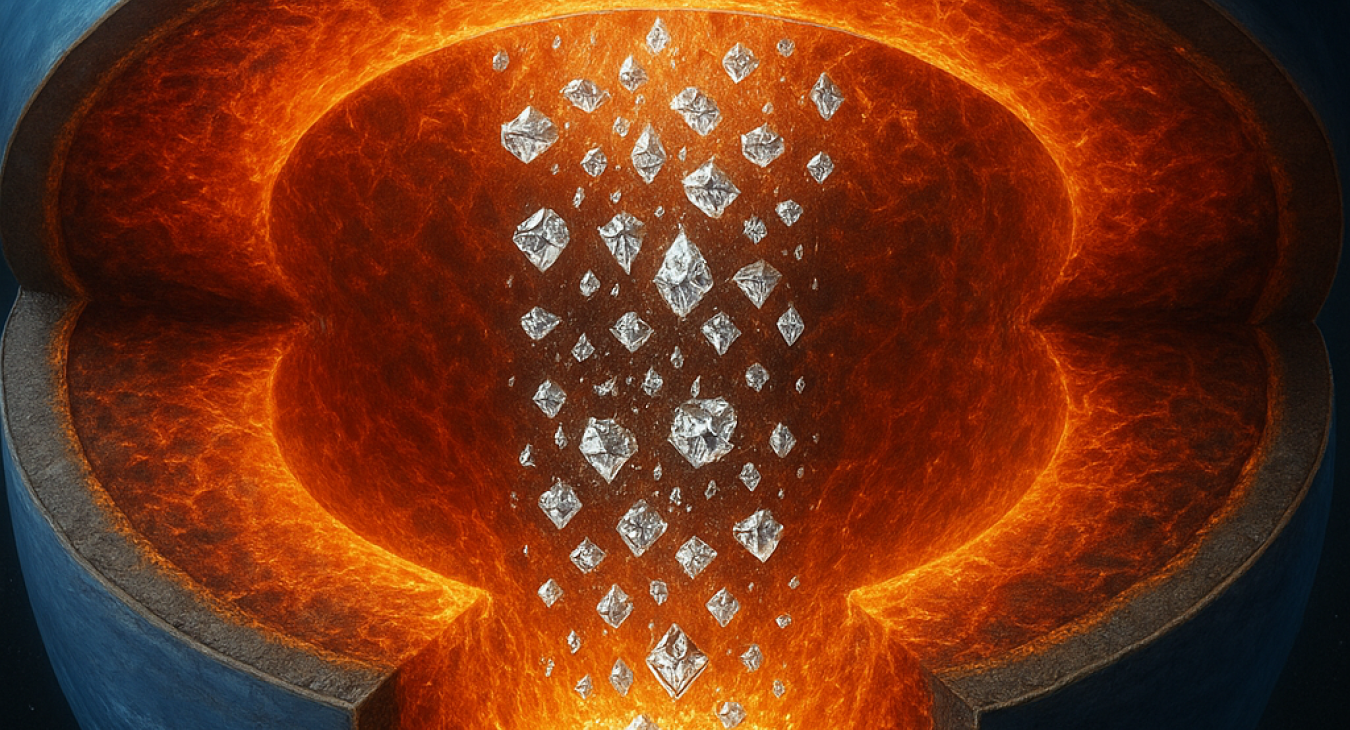
For nearly four decades, scientists have theorized about a spectacular phenomenon: the possibility of diamonds raining down deep within Neptune and Uranus. This hypothesis is rooted in the extreme conditions found beneath their thick atmospheres.
These ice giants possess incredibly intense pressure and temperature environments. Scientific studies using advanced techniques like diamond anvil cells (DACs) combined with laser heating have provided crucial evidence. These experiments demonstrate that under pressures ranging from 10 to 80 GPa, methane can indeed form diamonds at temperatures exceeding 2000 Kelvin, conditions consistent with the predicted interiors of these planets.
Observational Evidence and Current Status
While the appearance of diamond rain remains a scientific hypothesis rather than a definitively proven fact, astronomers have found compelling evidence to support it. The limited exploration of Uranus and Neptune—with only missions like Voyager 2 having flown past them—means that understanding their interiors is still largely based on theoretical models.
The sheer depth and exotic nature of these planets' atmospheres make direct observation challenging. However, the scientific community considers this diamond rain an exciting frontier in planetology, enhancing our overall understanding of solar system composition and planetary formation.
Why This Mystery Matters
The study of Uranus and Neptune is fundamentally important because planets of their size are extremely common throughout the Milky Way galaxy. Understanding how these
Read more articles
- Log in to post comments



