
  • Dansk
  • English
Home
Thinkiverse
Where every subject connects
  • Front Page
  • Subjects
  • FAQ
  • Contact
  • Search

Breadcrumb

  1. Home

Money Down the Reactor

Finance
Technology
Science
June 16, 2026
by Editor
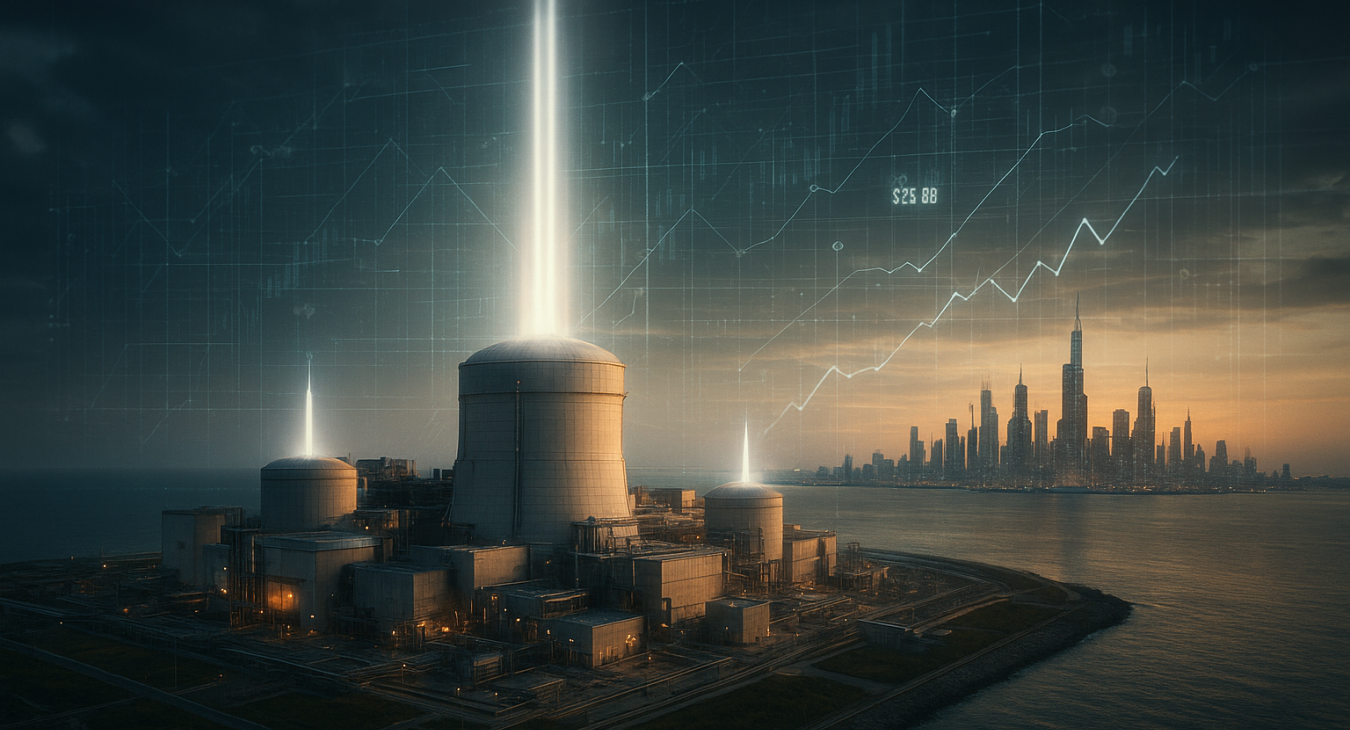
Massive advanced nuclear reactor on a coast emitting brilliant clean energy beams toward a futuristic city skyline, with a subtle dramatic overlay.
Navigating the Financial Realities of Nuclear Energy

The discussion surrounding nuclear power often highlights its immense potential to decarbonize electricity production and provide a stable alternative to burning fossil fuels. People are rightly enthusiastic about its ability to mitigate climate change risk, which is critical since more than three-quarters of the EU’s greenhouse gas emissions stem from energy consumption.

The Financial Hurdles and Hidden Costs

However, a detailed look at global nuclear projects reveals significant financial challenges. The history of nuclear plant construction has been marked by considerable cost overruns, delays, and cancellations. In fact, global studies indicate that 97% of nuclear projects have ended with final costs exceeding initial budgets, accompanied by an average overrun of $1.3 billion.

Furthermore, the industry faces a complex issue known as “negative learning.” This means that instead of becoming more efficient or cheaper to build over time, the cost of building plants has escalated dramatically even as the underlying technology and scientific understanding have improved. Historically, in the 1980s alone, American utilities lost $100 billion on nuclear plants that were never completed.

Understanding Capital Intensity

Nuclear energy remains a capital-intensive technology. While it offers the potential for stable, low-cost electricity and reduced grid disruption risks from weather events, affording it is not feasible for all countries globally.

The initial investment itself is substantial. The overnight cost of an advanced reactor involves significant expenses, including Engineering, Procurement, and Construction (EPC) costs—which typically account for about 80% of the total overnight cost. These EPC costs cover direct physical plant equipment with labor and materials, as well as indirect costs like site preparation and project management.

The Path Toward Economic Viability

To sustain the global relevance of nuclear power, efforts must focus intently on increasing its economic viability. Experts suggest that standardized designs and downsized reactors are key strategies to mitigate the massive capital risks associated with these projects.

Despite these financial headwinds, the potential remains promising. Nuclear power still holds a vital place in addressing both growing electricity demand and the intensifying challenge of climate change. The industry must continue to build upon proven solutions while rigorously controlling costs and streamlining development processes to ensure its future success.

Why does nuclear technology face negative learning instead of economies of scal…
Can SMRs or new tech reduce high nuclear capital costs?

Read more articles

When the Cooling Fails: Remembering Fukushima's Unplanned Catastrophe
Newer
When the Cooling Fails: Remembering Fukushima's Unplanned Catastrophe
No Backup, No Hope: The Lessons from Germany's Nuclear Phaseout
Older
No Backup, No Hope: The Lessons from Germany's Nuclear Phaseout
  • Log in to post comments
Editor

Related Subjects

The Alignment Problem
Smart Ways to Protect the Nighttime Darkness and Save Stars
The Vanishing Night
The Orbital Dilemma
The Convergence of Nature and Innovation
Connecting the Dots
AI, Free Will, and the Meaninglessness of Punishment in Machines
Combatting Bats Wisely
Understanding Bat Removal
Effective Bat Control
  • A photorealistic landscape of a diverse group of Somali men and women in a modern urban setting, gazing thoughtfully at glowing holographic digital symbols and encrypted data streams floating in the air.

    The Alignment Problem

    Sep 11, 2026
    Editor
  • Two women in professional roles examining shielded, downward-facing lights while looking up at a breathtakingly dark, starry sky at dusk, depicting community efforts to reduce light pollution.

    Smart Ways to Protect the Nighttime Darkness and Save Stars

    Sep 10, 2026
    Editor
  • Small group of women with warmly lit faces gazing at a clear, pollution-free Milky Way over a coastal landscape at night.

    The Vanishing Night

    Sep 09, 2026
    Editor
  • Space debris and junk floating in orbit.

    The Orbital Dilemma

    Aug 01, 2026
    Editor
Home
Thinkiverse
Where every subject connects

Frequently asked questions we try to answer on thinkiverse.dk

How does intentional friction impact the socio-economic divide?

How can urban planning mitigate economic distress in tech clusters?

How to create a secure and memorable family code word?

What are the risks of satire-based movements like the Cockroach Janta Party?

What should I avoid during a thunderstorm?

Popular Categories

Technology
Politics
Science
Psychology
Health
Law
Artificial Intelligence
Finance
Security
Environment
Biology
Sustainability
 
Copyright ©, thinkiverse.dk 2026

What is Thinkiverse.dk?

Terms of usage



