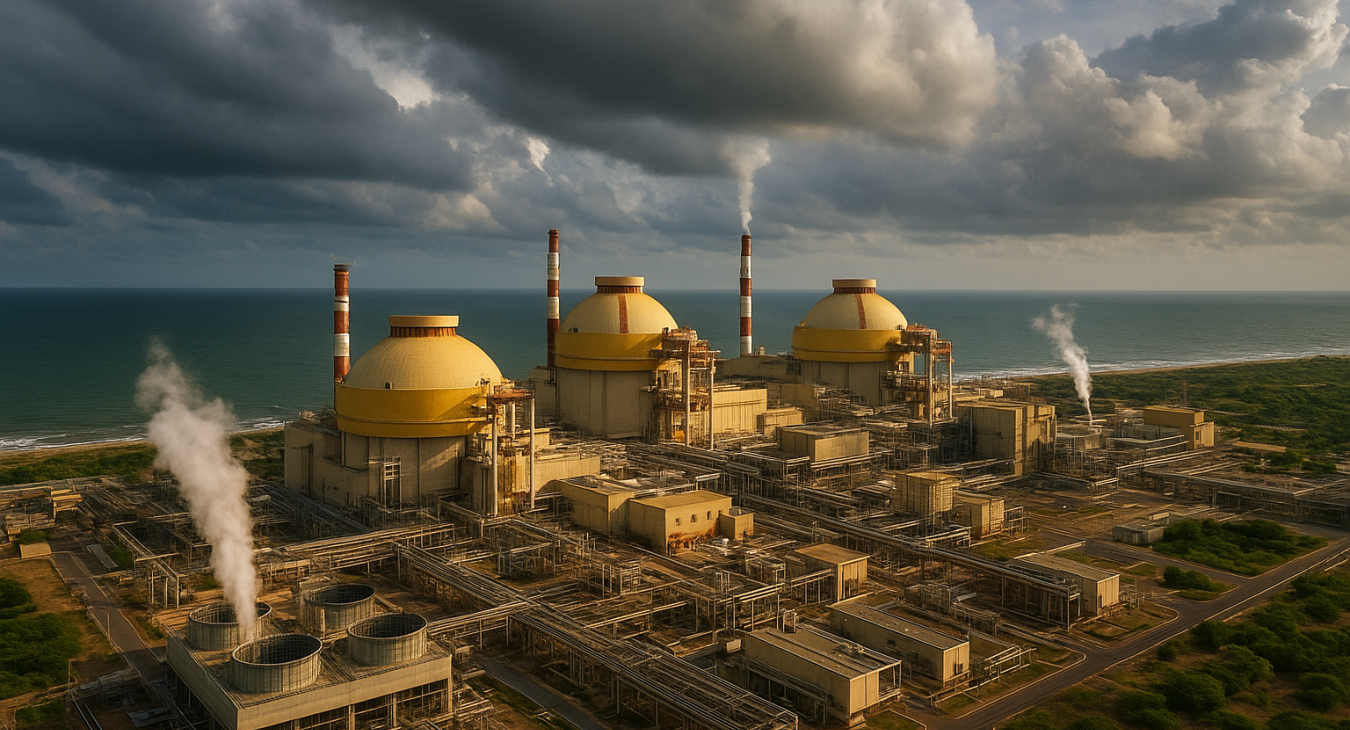
The Kudankulam Nuclear Power Plant (KKNPP), located near Kanyakumari in Tamil Nadu, India, represents a monumental step towards enhancing the country’s energy security. As one of India's largest nuclear power stations, it is a testament to complex engineering and sustained collaboration.
Initially proposed back in 1980, the project faced significant delays due to deep-rooted opposition from various community groups, including local fishermen and environmentalists. This protracted period saw debates about safety and necessity that kept the project stalled for decades, illustrating how non-technical factors can significantly impact mega-projects.
A History of Resilience and Progress
The vision to establish nuclear power at Kudankulam evolved over time. A proposal for two Russian VVER reactors was first made in 1988 but stalled following the Soviet collapse. Efforts were revived starting around 1998, leading to initial construction with one reactor nearing criticality by 2011. Following this milestone, agreements were subsequently established to build six more such reactors.
The project's scale is vast: it is designed to have six VVER-1000 reactors built in partnership between the Russian state company Atomstroyexport and India’s Nuclear Power Corporation of India Limited (NPCIL). These units hold an impressive total installed capacity of 6,000 MW of electricity.
The Journey to Commissioning
Despite the considerable opposition—which sometimes led activists to question why protests intensified just months before initial reactors were set to operate—the focus of national bodies, such as the Department of Atomic Energy (DAE), has remained on safety and successful implementation. The progression from simple scrubland to a massive industrial complex highlights incredible progress.
The sheer magnitude and technical complexity required for safe operation necessitated thorough regulatory oversight. Authorities ensure adherence to strict international safety standards, crucial steps that build public trust in the reliability of the power source. This steady march toward commissioning underscores the commitment to reliable energy supply for India's developing infrastructure.
Conclusion: A Path Forward
The successful operation of these twin and subsequent reactors is not just an engineering feat, but a socio-economic triumph. By managing political turbulence, local community concerns, and technical challenges over decades, Kudankulam has emerged as a vital contributor to India’s energy mix, promising stable power generation for future generations.
Read more articles
- Log in to post comments