
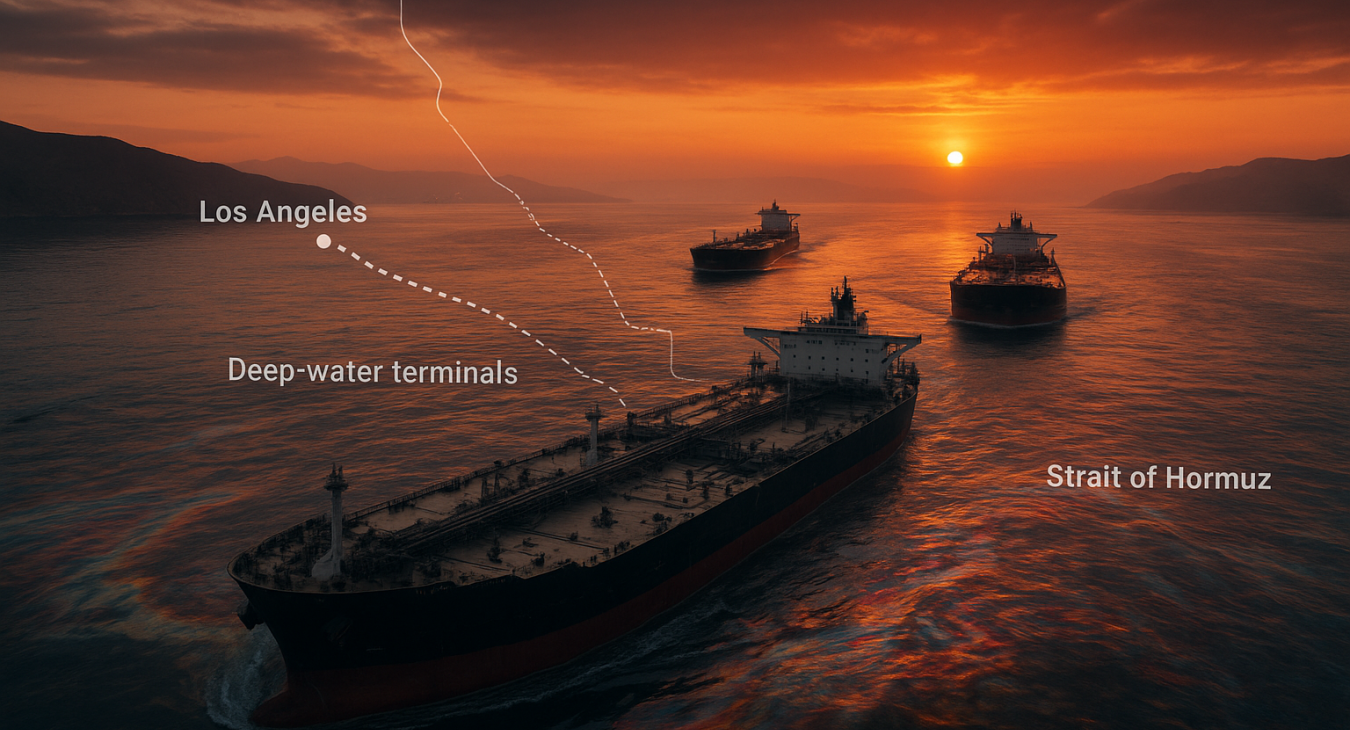
The concept of energy security in the United States often conjures images of immense domestic reserves, such as those found around Houston. However, the vast majority of American oil and natural gas—the kind that keeps our nation running from the industrial heartland to West Coast consumers like Los Angeles—depends critically on global maritime passages. Among the most vital, yet vulnerable, is the Strait of Hormuz.
The Vulnerability of a Global Chokepoint
The Strait of Hormuz, situated between Iran and Oman, is one of the world's most crucial energy chokepoints. This narrow waterway handles an enormous volume of global trade, transporting approximately 18 to 20 million barrels per day of crude oil. Given its geopolitical importance, it is estimated that this strait controls about 20% of the world's total daily traded oil and LNG (Liquefied Natural Gas).
A disruption in this passage does not just affect global markets; it has immediate, cascading consequences for American consumers and industry. Should a major conflict or political crisis lead to the closure of the Strait—as modeled in scenarios involving Iran declaring it closed—the impact on global oil supply would be catastrophic.
The Shockwave Through U.S. Reserves and Prices
A hypothetical closure of the Strait of Hormuz could immediately cut millions of barrels per day of oil flow, triggering an unprecedented energy crisis. Economic models predicting such a disruption have shown extreme instability in commodity markets. Specifically, cutting even 10 million barrels of oil per day from this passage alone has been linked to forecast price surges, with predictions suggesting Brent crude averaging $86 per barrel.
This spike in global prices rapidly consumes the buffer provided by strategic reserves. While the U.S. maintains Strategic Petroleum Reserves (SPR), these reserves are designed to provide a limited time window of supply stability; they are not intended to indefinitely sustain American demand during prolonged international blockades, particularly when considering the necessary imports needed for modern consumption patterns.
Beyond Oil: The Ripple Effect on Key Industries
The crisis originating in Hormuz would not only empty the oil tanks but would threaten essential components of American infrastructure. Since many industries rely on refined petroleum products, disruptions ripple outward. Furthermore, this energy shockwave is projected to significantly spike costs for critical inputs like fertilizers, which are vital for domestic agriculture and food supply.
The journey of oil from production fields in the Middle East, through Hormuz, and finally arriving at deep-water terminals near Los Angeles—or indeed any American consumer point—is a finely tuned global operation. A sudden cessation of this flow would paralyze sectors far beyond simply running out of gasoline, threatening food security and industrial output nationwide.
Conclusion: The Imperative for Diversification
The vulnerability exposed by the Strait of Hormuz illustrates that America's energy security cannot be viewed merely through the lens of domestic reserves. It necessitates robust geopolitical planning, diversification away from single maritime routes, and continued investment in alternative energy sources to mitigate the crippling risks posed by these vital global chokepoints.
Read more articles
- Log in to post comments



