
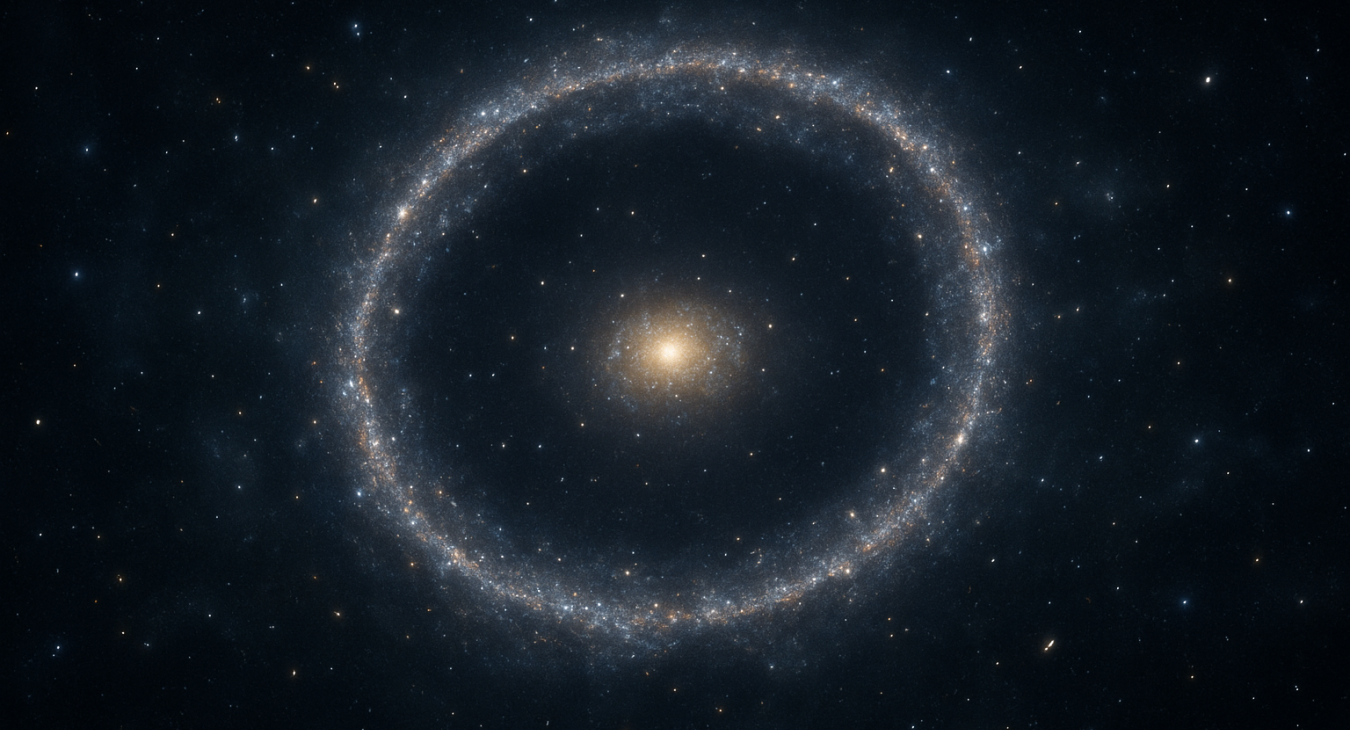
In the vast cosmic tapestry of Serpens Caput dwells an astronomical enigma known as Hoag's Object. This structure is far from a typical galaxy; it is a ring-shaped wonder whose very nature challenges our current understanding of galactic evolution and stellar remnants.
A Mystery in the Night Sky
The object gained its name through the tireless work of astronomer Arthur Hoag. He first documented it in 1950, initially struggling to classify it. Was it a nascent planetary nebula—the ghostly shroud cast by an aging star—or was it something entirely different: a peculiar type of galaxy? Its unusual morphology suggested that textbook definitions did not apply.
Size and Scale
Despite its ethereal appearance, Hoag's Object possesses significant cosmic scale. It spans an estimated 100,000 light years in diameter. This impressive size places it within a remote corner of the universe, approximately 600 million light years away.
Observational Clues and Conflicting Data
Analysis across different wavelengths of light provides vital, yet often contradictory, clues. Radio wave observations have been particularly telling, suggesting a peculiar history for the object. These studies indicate that in the past billion years, Hoag's Object has not experienced significant accretion—meaning it has not incorporated or consumed any smaller satellite galaxies.
The Galactic Puzzle
Its ring structure is perhaps its most compelling feature. Rings in galactic astronomy can be formed by various processes, such as stellar explosions or the gravitational sweeping of gas clouds. However, the overall uniformity and sheer scale of Hoag's Object defy a simple explanation. The consensus remains that it represents a fundamental challenge to astrophysicists.
Hoag's Object stands as a monumental cosmic question mark—a captivating blend of structural perfection and unexplained mechanics. It continues to motivate research, serving as a celestial beacon reminding humanity of the profound mysteries still hidden within our galaxy and beyond.
Read more articles
- Log in to post comments



