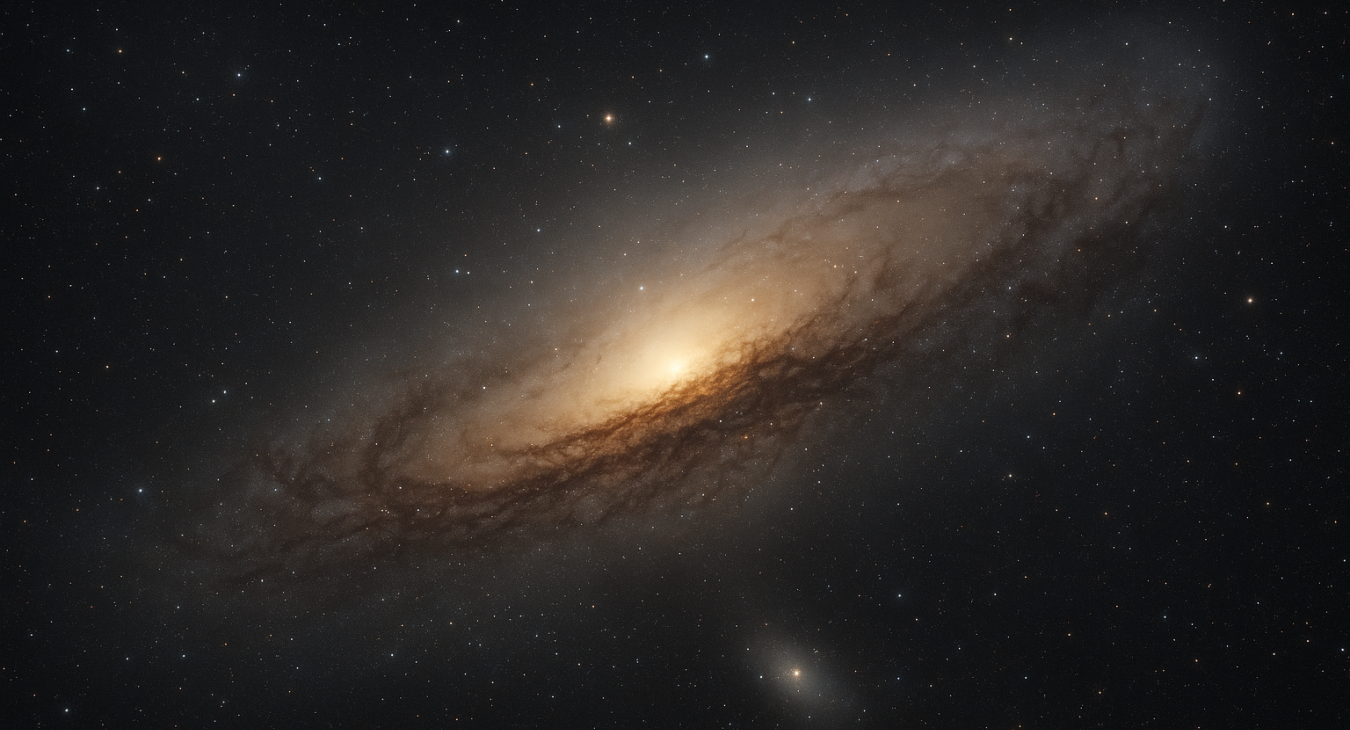
A photorealistic depiction of the massive elliptical galaxy Centaurus A, showcasing dark interstellar dust lanes and interaction scars from violent galactic collisions.
The Magnificent Secrets of Centaurus A's Dust Lanes and Radio Lobes

When we look out into the vast expanse of space, encountering a celestial object as magnificent and complex as Centaurus A (NGC 5128) is truly breathtaking. Located in the constellation Centaurus, this peculiar massive elliptical galaxy offers astronomers a living lesson in galactic evolution, stellar life cycles, and the sheer power emanating from supermassive black holes.

A Collision’s Masterpiece: Understanding the Dust Lanes

Centaurus A is not merely a passive cosmic backdrop; it's an active site of extraordinary galactic processes. Its dark lanes of dust are physical testaments to violent celestial events. Evidence strongly suggests that this galaxy has undergone past mergers and collisions with other galaxies. This impact has resulted in a

Opfølgende spørgsmål
How do the specific gravitational dynamics of a galaxy merger dictate the final shape and orientation of the resulting dust lanes?
What are the specific electromagnetic signatures used to differentiate between dust formed in situ and dust deposited by a captured companion galaxy?
How does the presence of these massive dust lanes influence the overall rate of star formation within the elliptical structure of Centaurus A?
To what extent does the active supermassive black hole (AGN) feedback regulate the cooling of the gas within these dust lanes?
Could the current morphological state of NGC 5128 be used to predict its ultimate evolutionary fate—whether it will become a massive, featureless elliptical or undergo further transformations?