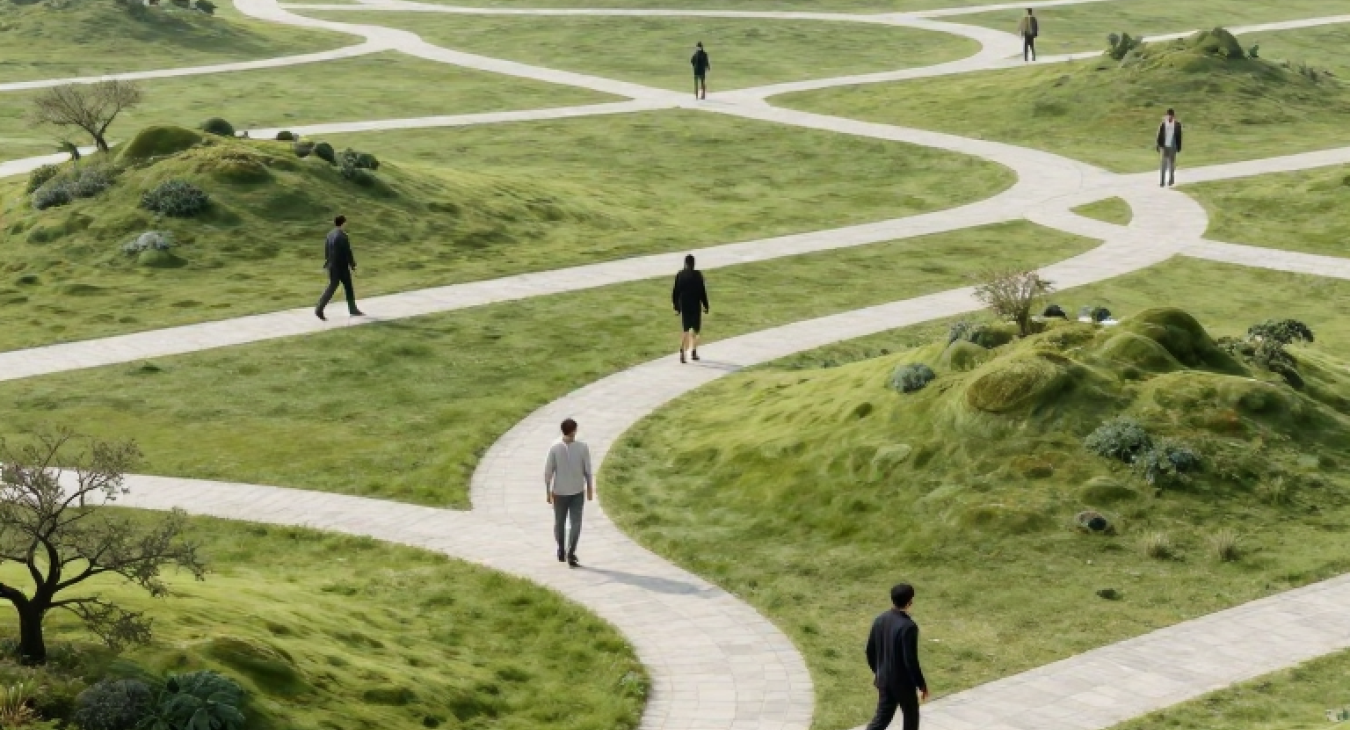
Quantifying the spatial intelligence characteristic of the Raumdeuter style involves moving from subjective observation to objective biometric measurement. Eye-tracking technology can be utilized to map visual attention patterns. While a standard viewer might focus on central subjects, a Raumdeuter typically demonstrates a highly organized scanning pattern that emphasizes the relationship between objects and the surrounding empty space. By analyzing saccadic movements and fixation durations, researchers can identify the precise way these individuals navigate complex three dimensional environments.
Neuroscientific mapping, specifically functional Magnetic Resonance Imaging (fMRI) or Electroencephalography (EEG), provides deeper insights into the neural architecture of spatial reasoning. Researchers can monitor activation in the parietal lobe, which is critical for processing spatial relationships and navigating space. High levels of connectivity between the visual cortex and the dorsal stream can serve as a biological marker for the unique ability to perceive depth and structural volume. Integrating these technologies allows for a data driven approach to defining spatial intelligence, transforming the qualitative concept of the Raumdeuter into a measurable cognitive profile based on neural efficiency and visual search strategies.