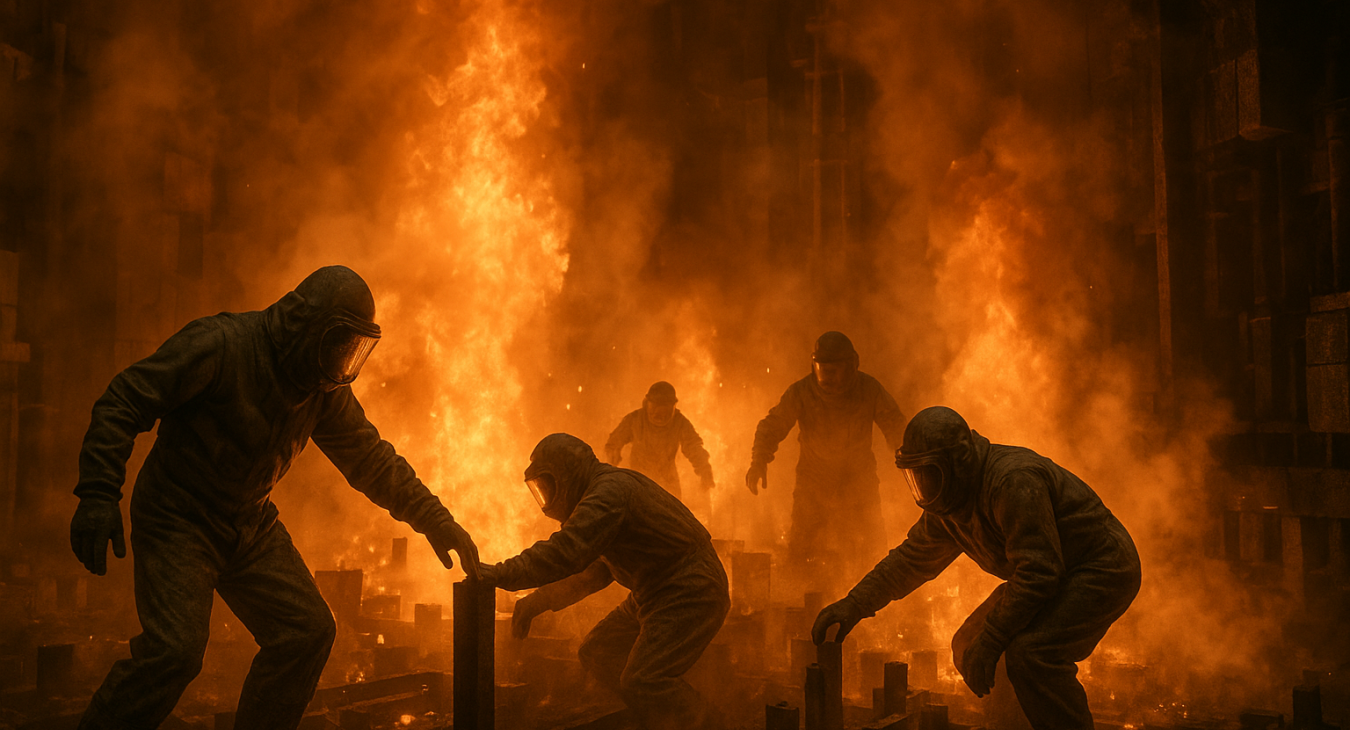
In the 1997 incident, the failure of the temperature control systems was the primary driver of the chemical ignition. Bitumen must be maintained within a very narrow temperature range to remain stable. When the control systems failed, the temperature of the bitumen rose uncontrolled, leading to a phenomenon known as thermal runaway.
As the heat increased, the chemical composition of the bitumen began to change. High temperatures triggered exothermic chemical reactions within the substance. This means the bitumen started producing its own heat through internal chemical changes. Because the cooling systems were non functional, this heat could not be dissipated.
This created a feedback loop where the increasing temperature accelerated the chemical reactions, which in turn generated even more heat. Eventually, the temperature reached the auto-ignition point of the material. At this critical stage, the bitumen ignited spontaneously without an external spark or flame. This sequence of events highlights why precise thermal monitoring is vital when handling volatile hydrocarbon materials in industrial settings.