The Foundations of Empiricism and the Blank Slate
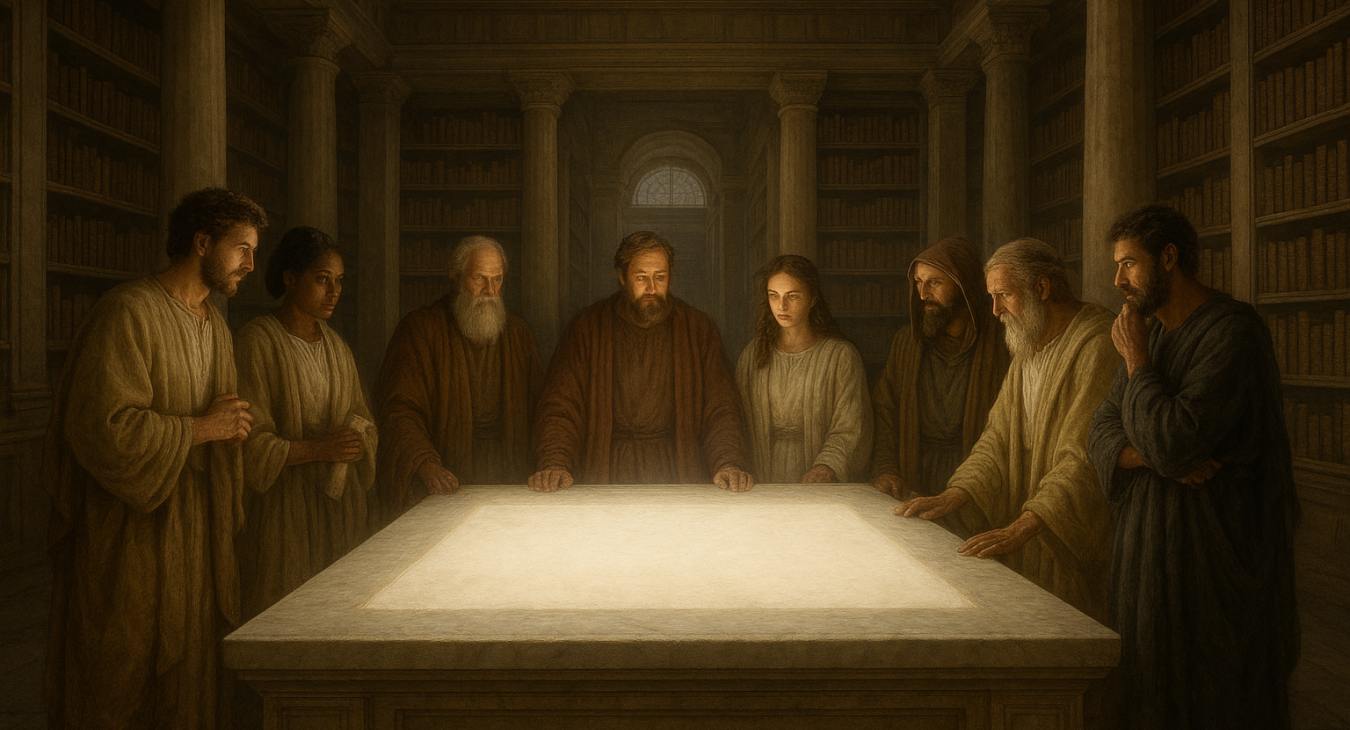
The history of Western thought is profoundly shaped by the debate over the origin of human knowledge. One of the most influential figures in this discourse was John Locke, an English philosopher who proposed the concept of the Tabula Rasa. This term, which translates to "blank slate," suggests that the human mind at birth contains no innate ideas. Instead, Locke argued that all human knowledge and concepts are derived strictly from sensory experience and subsequent reflection. By emphasizing the role of perception in building the intellect, Locke laid the groundwork for much of modern empiricism, suggesting that our understanding of the world is a construction built upon the accumulation of external stimuli.
The Subjective Reality of Perception
Building upon the themes of sensory experience, George Berkeley, an Anglo-Irish philosopher, took the concept of empiricism to a radical extreme. Berkeley developed a theory known as Subjective Idealism, often expressed through the Latin phrase "esse est percipi," which means "to be is to be perceived." He challenged the very notion of material substance, arguing that what we call "matter" does not exist as an independent entity outside of the mind. According to Berkeley, objects are merely collections of perceptions or ideas in the mind of an observer. In this view, the physical world is fundamentally mental, and the continuity of existence is maintained through the constant perception of a higher intelligence.
The Skepticism of David Hume
The radical implications of empiricism reached a peak with the Scottish philosopher David Hume. Hume was a profound skeptic who applied rigorous scrutiny to the fundamental pillars of human reasoning. He famously challenged the concept of causality, arguing that we do not actually observe one event causing another, but rather observe a constant conjunction where one event follows another. Hume also questioned the existence of a stable "self" and the reality of material substance, viewing them as mental constructs rather than objective truths. He urged that any metaphysical claims lacking an empirical or logical basis should be discarded, pushing philosophy toward a more strictly scientific and observational methodology.
Kant and the Synthesis of Reason and Experience
Immanuel Kant, a towering figure of the Enlightenment, sought to resolve the tension between rationalism and empiricism. In his monumental work, the Critique of Pure Reason, Kant introduced a transformative way of understanding human cognition. He argued that while all knowledge begins with experience, it is not all derived from experience alone. Instead, the human mind possesses inherent structures that organize and process sensory input. Kant established a distinction between phenomena, which are things as they appear to us through our mental faculties, and noumena, which are things as they are in themselves. This distinction suggested that while we can achieve certain knowledge regarding the natural world through reason and observation, the ultimate nature of metaphysical reality remains beyond human reach.
Social Equality and the Philosophical Voice of Women
Philosophy is not limited to the mechanics of epistemology or the nature of being; it also encompasses the ethics of social organization and human rights. Mary Wollstonecraft, a prominent English writer and philosopher, redirected philosophical inquiry toward the societal structures of her time. She is widely recognized for her advocacy for women's equality, arguing that many of the perceived intellectual differences between genders were merely the result of unequal access to education. By applying rationalist principles to social ethics, Wollstonecraft challenged the status quo, asserting that women are rational beings entitled to the same fundamental rights and social considerations as men, a move that remains foundational to modern feminist theory.
The Legacy of Philosophical Communication
The complex ideas of these thinkers have been preserved and transmitted through centuries of scholarship and public education. In the 20th century, figures like Bryan Magee played a crucial role in making these dense concepts accessible to the wider public. Magee, an educator who taught at Oxford University, was a prolific popularizer of philosophy. Through works such as The Great Philosophers and Talking Philosophy, he bridged the gap between academic rigor and general interest. His efforts ensured that the intellectual trajectories of thinkers ranging from Plato to Karl Popper remained part of the contemporary cultural dialogue, proving that the journey through the minds of philosophers is an ongoing process of human inquiry.