
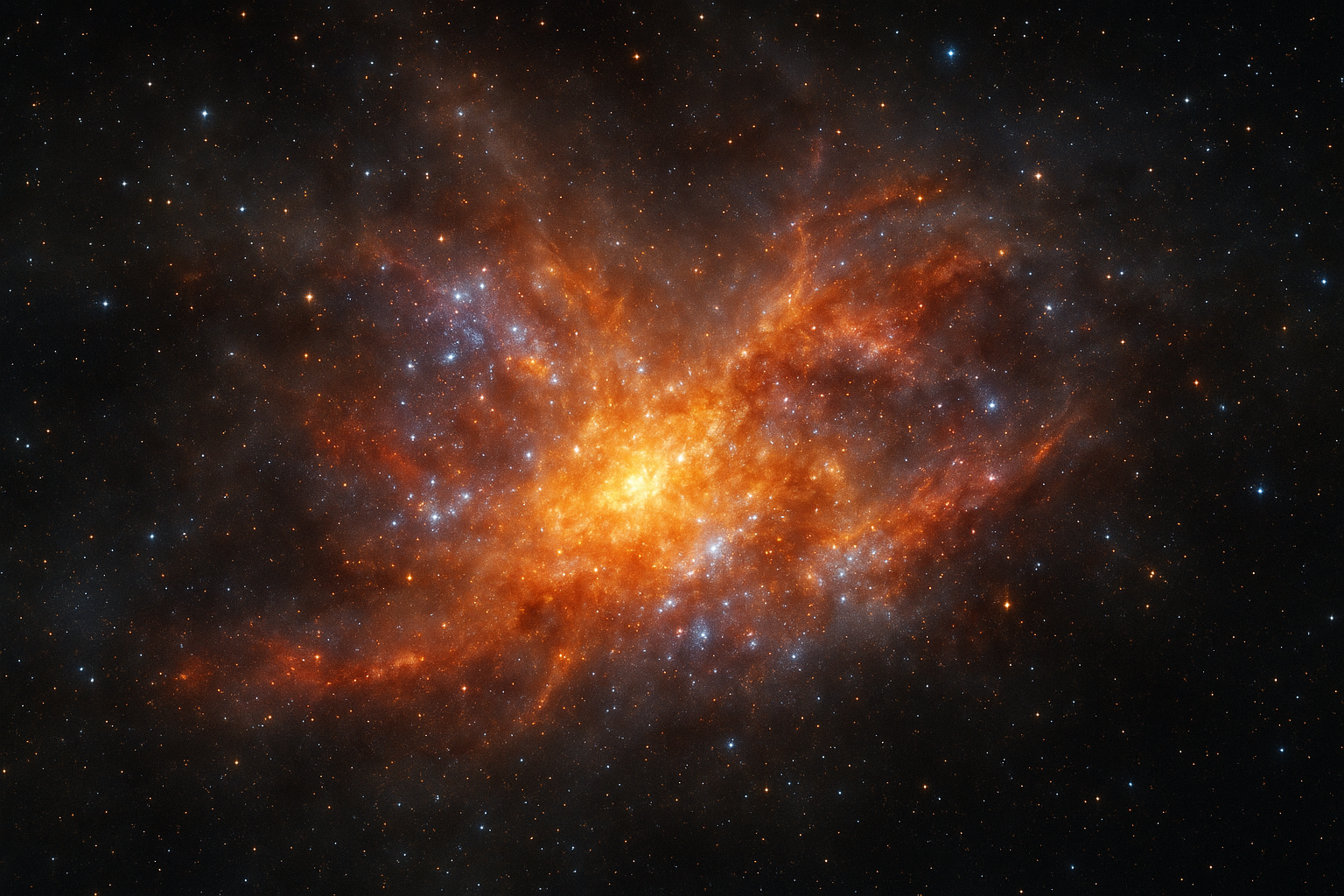
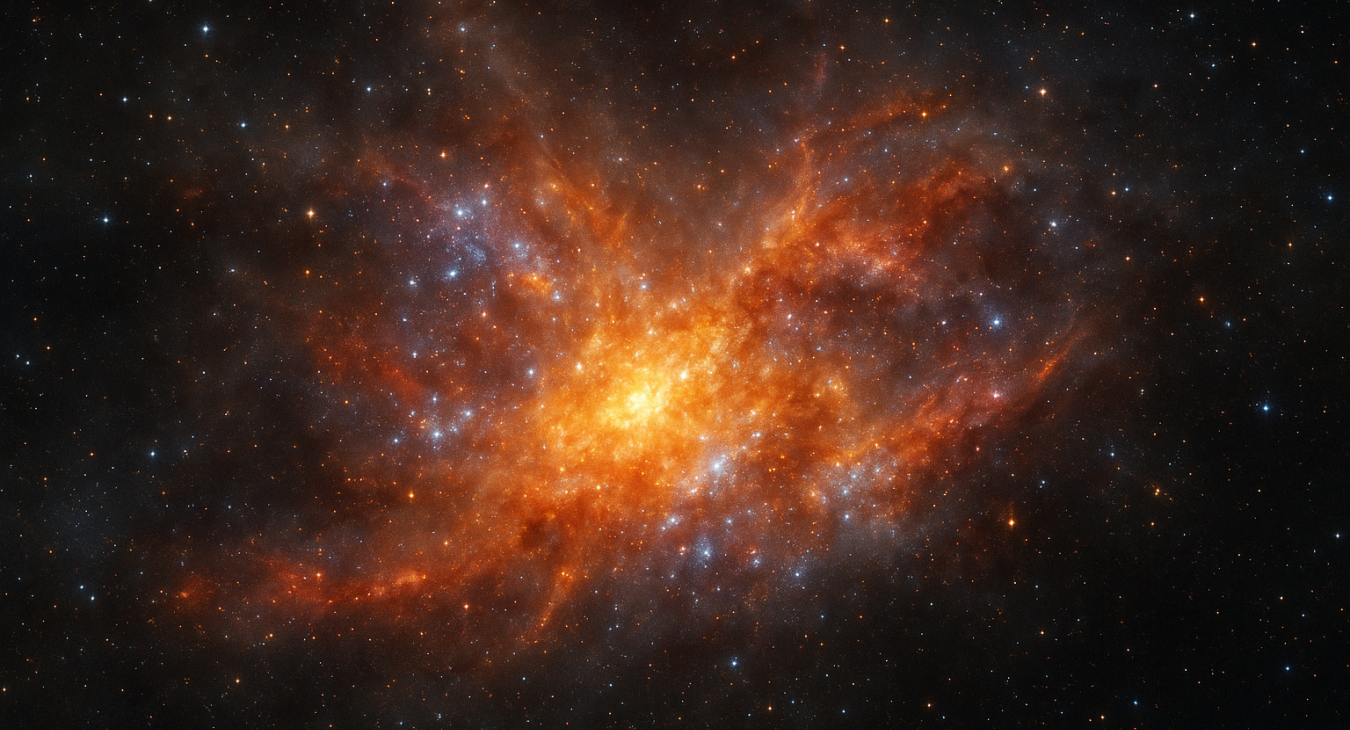
Have you ever looked up at the night sky and felt that incredible sense of scale? When we talk about celestial events like galactic collisions, it feels almost unimaginable. But there is an object called Arp 220—the closest Ultra-luminous Infrared Galaxy (ULIRG) to Earth—that gives us a truly breathtaking window into such cosmic drama.
Located in the constellation Serpens, roughly 250 million light-years away, Arp 220 is not actually one galaxy, but the dramatic aftermath of two spiral galaxies colliding and merging. This makes it a remarkable natural laboratory for astronomers to study star formation on an epic scale. Its sheer luminosity, which can exceed a trillion suns, means it glows with incredible brilliance, particularly in infrared light.
The Science of Stellar Mergers
For observers back on Earth, Arp 220 appears as a single, complex object. However, the reality is a magnificent fusion event. The collision itself was initiated around 700 million years ago and has fueled an intense burst of star formation—a 'starburst.' Imagine the resources involved: the tiny region of merging stars holds enough gas to equal the entire amount found in our own Milky Way Galaxy! This process is nature's ultimate foundry for new stars, generating countless bright clusters.
One incredible insight came from the Atacama Large Millimeter/submillimeter Array (ALMA). ALMA was able to observe an outflow emerging from one of Arp 220’s nuclei in three dimensions. This research provided crucial details about how gas and energy are being expelled during such a massive, compact stellar event, challenging our understanding of galactic mergers.
Why Infrared Light Matters
If you look at images from the James Webb Space Telescope (JWST), Arp 220 shines like a brilliant beacon. This is because much of its energy output is absorbed and re-emitted in infrared light. For us, viewing it through this specific spectrum allows scientists to peer through the dense clouds of cosmic dust that obscure visible light, giving us an unobstructed view of the star formation taking place.
A Personal Connection to Cosmic Scale
Thinking about Arp 220 really puts our own Milky Way into perspective. While we feel comfortable within our galaxy, knowing that such intense processes are ongoing just a quarter of a billion light-years away reminds us of the vast and dynamic nature of the universe. It’s deeply inspiring to know that these stellar events are not just theoretical models, but observed realities.
Studying objects like Arp 220 through projects involving advanced instruments like ALMA and JWST offers humanity an unparalleled chance to witness some of the most powerful, beautiful natural processes imaginable. Every piece of data gathered about this merging giant helps rewrite our understanding of cosmic evolution, reminding us that even across unimaginable distances, science keeps revealing the universe's deepest secrets.
Read more articles
- Log in to post comments