How Rising African Temperatures Threaten Livelihoods and Historical Patterns of Adaptation
The Thermal Threshold: Beyond the Biological Impact
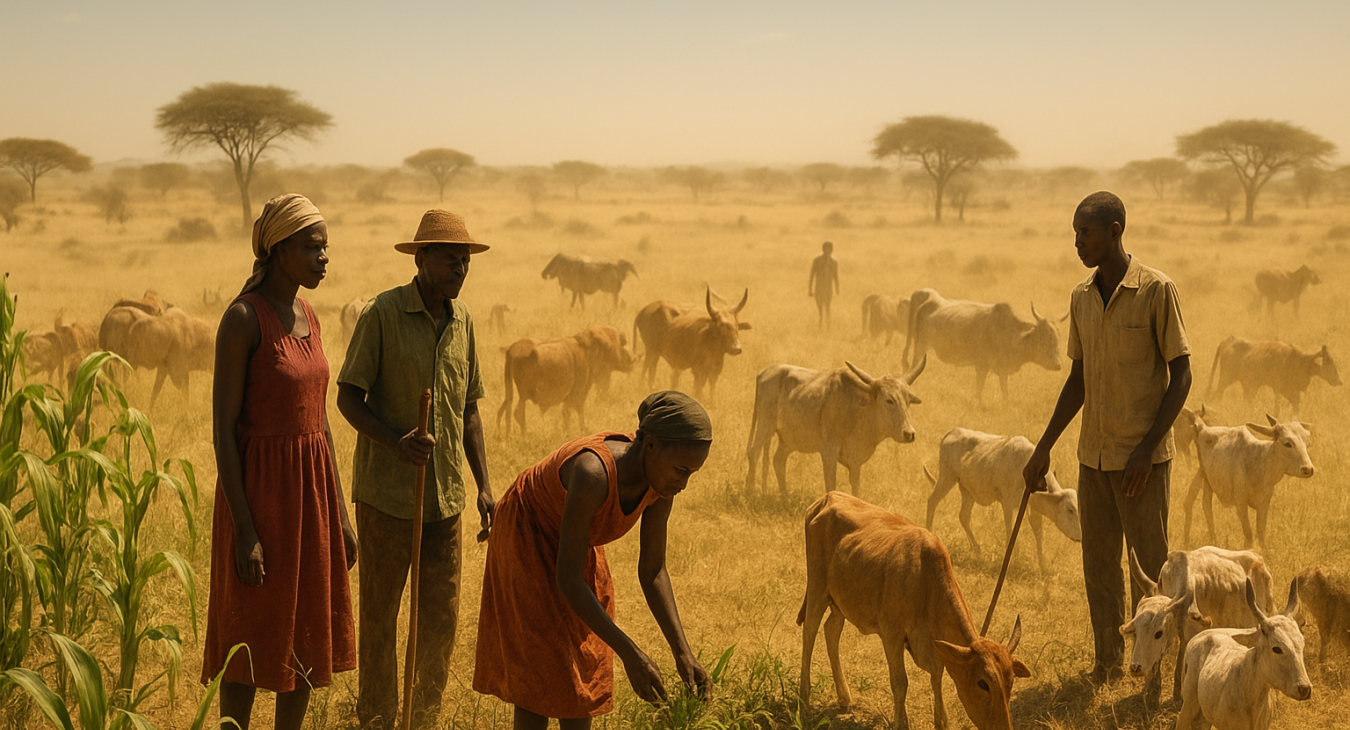
In the pastoral and agropastoral systems of sub-Saharan Africa, rising temperatures are increasingly pushing livestock beyond their thermoneutral zone. This physiological boundary is the temperature range within which an animal can maintain its body temperature through normal metabolic processes without extra energy expenditure. As ambient temperatures rise, animals like the Zebu cattle (Bos indicus) or various breeds of goats and sheep experience thermal stress, which leads to reduced reproductive rates, lower milk yields, and diminished work capacity. This biological vulnerability is not merely a matter of heat. Higher temperatures often favor the survival and proliferation of pathogens and ectoparasites, such as ticks and flies, thereby increasing the prevalence of vector-borne diseases. However, viewing the crisis through a strictly biological lens risks falling into the trap of environmental determinism, where the climate is seen as the sole architect of human misfortune. While the heat is real, the vulnerability of the livelihoods it affects is deeply rooted in complex socio-political and economic realities.The Erosion of Transhumance and the Myth of Purely Climatic Disruption
Historically, pastoralists have relied on transhumance, the seasonal movement of livestock between fixed summer and winter pastures, to mitigate the risks of seasonal climate variation. This movement was a sophisticated adaptive strategy designed to optimize resource use in a landscape of fluctuating availability. Today, this movement is being disrupted, but the cause is not solely the shifting rainfall patterns or rising heat. The disruption is accelerated by the hardening of political borders and the transition from communal land management to private ownership. When political boundaries restrict the movement of herders across regional lines, the traditional mobility that once served as a buffer against drought is severed. Consequently, what appears to be a climate-driven collapse of pastoralism is often a collision between ecological necessity and modern geopolitical structures.Land Tenure and the Privatization of the Commons
One of the most significant drivers of instability in African animal labor systems is the shift in land-tenure frameworks. For centuries, much of the landscape used for grazing was managed through communal legal frameworks that dictated access based on seasonal needs and community consensus. This communal agency allowed for a resilient management of resource scarcity. In recent decades, however, there has been a widespread trend toward the privatization of these communal lands. As land is converted into large-scale commercial agricultural plots, the corridors used for livestock migration are blocked. This loss of communal agency creates a zero-sum game between sedentary farmers and nomadic herders, often leading to localized conflicts. The threat to livelihoods is therefore as much about the erosion of customary laws as it is about the rising mercury in the atmosphere.Colonial Legacies and the Sedentary Shift
To understand the current crisis, one must contextualize it within the historical shift from nomadic pastoralism to sedentary agriculture, a process heavily influenced by colonial-era land administration. Colonial administrations often sought to map and fix populations in place to facilitate taxation and control, frequently at the expense of the flexible, mobile systems that defined African life. These historical boundaries have largely persisted in the post-colonial era, creating a structural rigidity that prevents the natural adaptation of livestock systems to a changing environment. The imposition of fixed borders has essentially transformed a flexible landscape of movement into a fragmented map of territories, making it difficult for traditional labor systems to respond to the very climate changes they are currently facing.Critiquing the NGO Model: Technology vs. Indigenous Knowledge
In response to these challenges, international non-governmental organizations (NGOs) frequently propose technological or veterinary interventions. These solutions often include the introduction of heat-tolerant breed varieties, intensive vaccination programs, or specialized fodder production. While these interventions may provide short-term relief, they often impose a Westernized model of livestock management that prioritizes intensification over resilience. By focusing on high-input, high-output systems, these models can inadvertently undermine indigenous ecological knowledge and the autonomy of local communities. Such interventions may address the biological symptoms of heat stress but fail to address the structural vulnerabilities of the social systems. There is a growing concern that these external solutions promote a dependency on global supply chains rather than strengthening the local capacity for self-organized adaptation.From Heat-Stressed Animals to Resilient Cultures
The discourse surrounding African animal labor must move from a narrative of 'heat-stressed animals' toward a nuanced understanding of 'resilient cultures navigating a landscape of shrinking communal agency.' While the physiological strain on livestock is an undeniable fact, the survival of these livelihoods depends on the ability of communities to regain control over their migratory routes and land-use rights. True adaptation will require more than just better veterinary care or heat-resistant breeds; it will require the restoration of the socio-political mechanisms that allow for movement and shared resource management. The crisis is not merely an ecological one; it is a crisis of space, law, and the ability of traditional actors to navigate a world of rigid borders and privatized commons.Read more articles
English