Reducing Pesticides One Flight at a Time
The Silent Sentinels of the Night
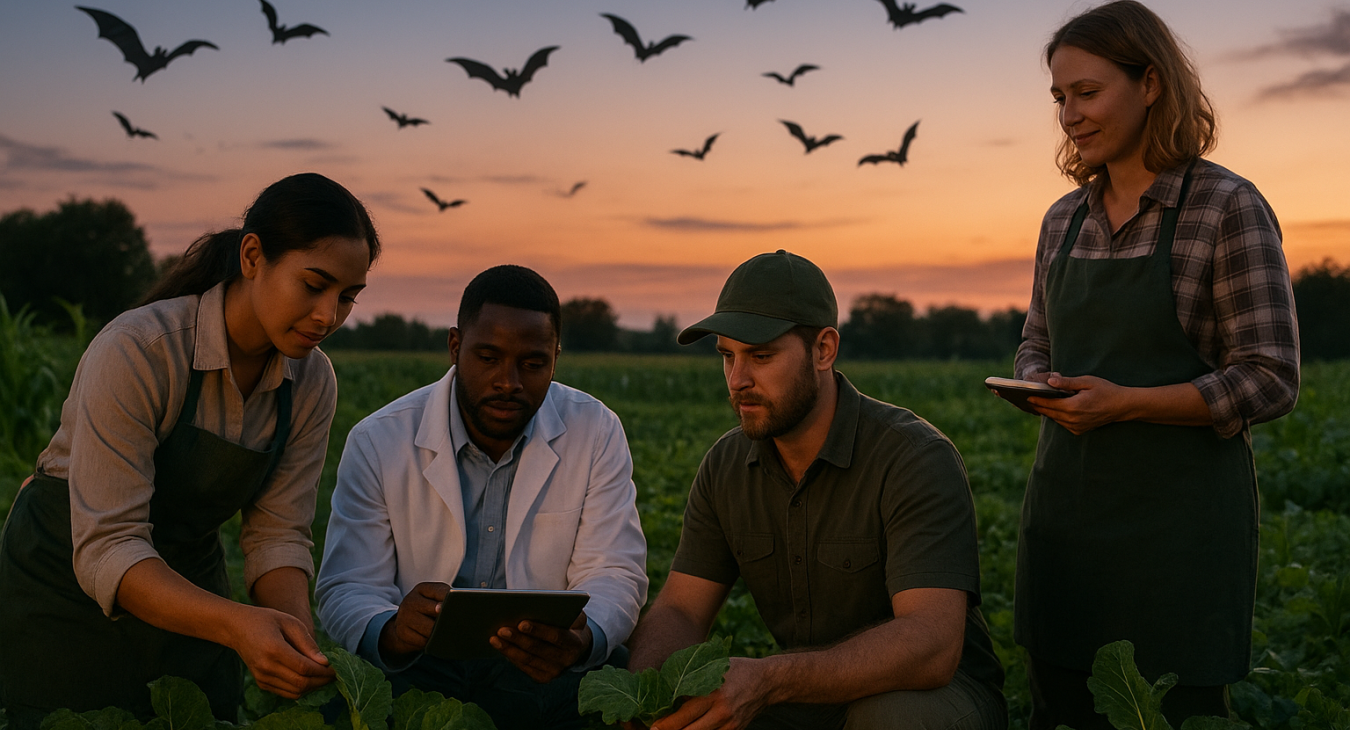
In the quiet hours of the twilight, as the sun dips below the horizon, a massive biological engine begins its nightly work. This engine is powered by Chiroptera, the scientific order encompassing all bat species. While often misunderstood due to folklore or fear, these nocturnal mammals serve as one of the most vital, yet underutilized, components of modern agricultural ecosystems. As the global community seeks ways to transition toward more sustainable food systems, scientists and farmers are looking upward toward the sky to find natural solutions to pest management.The Ecological Role of Insectivorous Bats
Most agricultural bats are insectivorous, meaning their diet consists primarily of insects. They are highly efficient hunters, using echolocation, also known as biological sonar, to navigate and locate prey in total darkness. A single small bat can consume thousands of insects in a single night. This feeding behavior is not merely a biological necessity for the bat but a massive service provided to human agriculture. By consuming vast quantities of insects, bats act as natural regulators of pest populations, potentially reducing the need for human intervention through chemical means.Pests and the Pesticide Paradox
Modern industrial agriculture has historically relied heavily on synthetic pesticides to protect crops from damage caused by insects. These chemicals, including organophosphates and neonicotinoids, are designed to kill specific pests. However, the widespread use of these substances often leads to a phenomenon known as the pesticide treadmill. As pests develop resistance to certain chemicals, farmers are forced to use higher doses or more toxic varieties. This creates a cycle that can damage biodiversity and lead to the unintended death of beneficial organisms, including the very bats that provide natural pest control.Bats as Biological Control Agents
In the context of Integrated Pest Management (IPM), bats are considered high value biological control agents. IPM is a science based approach that focuses on long term prevention of pests through a combination of techniques such as biological control, habitat manipulation, and resistant varieties. Using bats in this framework offers a non toxic way to manage pest levels. For instance, in many parts of the world, bats are known to consume significant numbers of moths that are the primary vectors for various agricultural diseases. By maintaining healthy bat populations, farmers can leverage a natural mechanism to keep pest thresholds below economically damaging levels.The Economic Value of Bat Services
Economists have begun to quantify the massive financial value that bats provide to the agricultural sector. Studies conducted in various regions have demonstrated that the ecosystem services provided by bats, specifically in terms of pest suppression, can be worth millions of dollars annually. When a farmer uses bats to manage pests, they save money on the purchase of synthetic pesticides and the labor required to apply them. This reduction in input costs, combined with higher crop yields due to less pest damage, makes bat conservation a sound economic strategy for sustainable farming operations.Threats to Bat Populations and Agricultural Stability
Despite their benefits, bat populations face significant threats from habitat loss, light pollution, and the very pesticides they are meant to mitigate. Urbanization and the conversion of natural forests into monoculture cropland have stripped bats of their roosting sites and foraging grounds. Furthermore, the use of indiscriminate broad spectrum insecticides can poison bats through secondary ingestion, a process where a bat eats an insect that has already consumed lethal doses of toxins. Protecting these mammals is therefore essential not just for biodiversity, but for the long term stability of global food production.Creating Bat Friendly Farms
Transitioning to a bat friendly farming model involves several practical steps for landowners. One of the most effective methods is the installation of bat boxes or artificial roosting structures in areas adjacent to crops. These structures provide shelter for bats in landscapes where old trees or caves may be scarce. Additionally, farmers can practice conservation tillage or maintain hedgerows, which provide both food and habitat for insect populations and bats alike. Creating a diverse landscape encourages a more complex and resilient ecosystem where natural predators can thrive.Reducing Light Pollution to Support Nocturnal Life
Light pollution is an often overlooked factor in the decline of nocturnal insectivores. Artificial light at night (ALN) can disrupt the foraging patterns of many bat species and can cause insects to aggregate around light sources, making them easy targets for predators but also disrupting their natural life cycles. By using motion sensors or directional lighting on farms, growers can reduce unnecessary illumination. This helps maintain the natural rhythms of the night, ensuring that bats can hunt effectively and that insect populations are not artificially concentrated in ways that disrupt the local ecology.The Future of Sustainable Pest Management
As the world moves toward a more ecological approach to farming, the integration of Chiroptera into agricultural planning is becoming increasingly relevant. The goal is not to eliminate pesticides entirely but to use them more judiciously by allowing natural biological controls to do the heavy lifting. By viewing bats as partners in the field rather than just wild animals, the agricultural industry can move toward a more sustainable, cost effective, and environmentally friendly model. Reducing pesticides one flight at a time is not just a poetic idea; it is a scientific necessity for a hungry planet.Read more articles
English