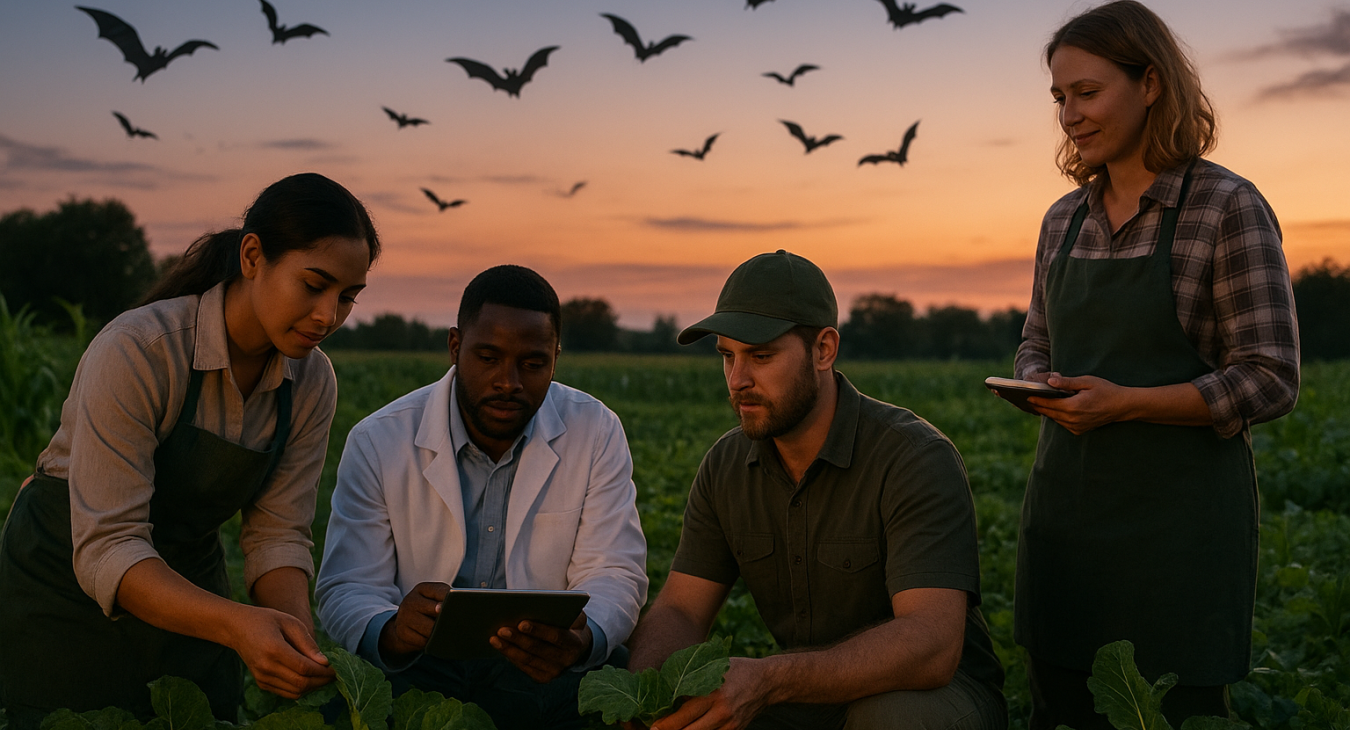
Bats are vital pollinators that play a critical role in maintaining biodiversity and supporting global food security. Unlike many other pollinators that are active during the day, bats are nocturnal, allowing them to pollinate a wide variety of plants that bloom at night. These plants often have pale, large flowers that release strong scents to attract bats in the darkness.
Many important agricultural crops rely heavily on bat pollination. This includes various species of agave, which is used for many products, as well as many types of tropical fruits like mangoes, bananas, and avocados. By transferring pollen from one flower to another, bats ensure the successful fertilization and reproduction of these plants, which sustains both wildlife habitats and human food supplies.
In many ecosystems, bats act as a primary driver of plant diversity. Without their nocturnal pollination services, many specialized plant species might fail to reproduce, leading to shifts in entire ecological communities. Protecting bat populations is therefore essential for preserving the health and resilience of diverse natural environments across the globe.